

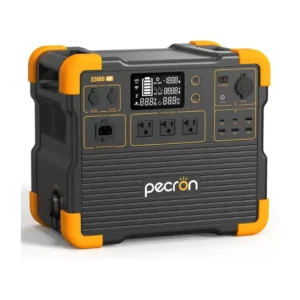
The Pecron E2400LFP crosses over in 9.8ms with a self-arming inverter, a feat few units at any price can manage, and delivers 90% of its rated capacity through a 400W XT60 DC output. It holds 2,048Wh behind a 2,400W inverter and sits in the mid-range price tier at exceptional value.
★★★★★
More details +
The pattern running through every review on this site is that most power stations sold as backup will not arm their own inverter, so they protect a house only while somebody is standing in it — and until now, every machine that solved that sat in the upper mid-range tier or above. This one solves it from the mid-range tier, waking on its own with a 9.8-millisecond crossover, and it pairs that with a 400-watt XT60 output roughly three times the typical car socket and a 90% DC yield that puts 154Wh more in your hands than its own AC outlets do. The costs are specific and worth weighing. Conversion through those outlets is 83%, the weakest at this capacity, and about an hour behind the leader in refrigerator times. The warranty runs for three years, while rivals offer five and one offers seven. Distortion measures 2.00%, sitting exactly on the threshold rather than inside it, which matters for a CPAP motor and not at all for tools. And at 54 decibels, it belongs in a garage rather than a bedroom. For a household that wants real automatic protection without paying for it, nothing else here is close.
PROS:
- A self-arming inverter with a 9.8ms crossover, and the cheapest unit in this data is able to do it.
- A 400W XT60 output, roughly three times the typical car socket, with 90% delivered through DC.
- Four-stage wall charging at 1,800 W provides finer rate control than most rivals provide.
- Solar accepted at 95 volts, high enough for a genuine series string of rigid panels.
- Standby loss of 1.0% an hour, low enough that leaving it armed is sustainable.
- Forty-five pounds and expansion support, both better than several rivals at this size.
CONS:
- Conversion of 83% through the outlets, the weakest AC figure at this capacity.
- A three-year warranty, while rivals in this capacity offer five, and one offers seven.
- A distortion of 2.00% sits exactly on the threshold rather than inside it.
- A full solar recharge falls outside the usual two-and-a-half-hour window.
- Fifty-four decibels rule out bedrooms and quiet offices.
- The main solar path will not engage below 32 volts, so single small panels need the secondary port.
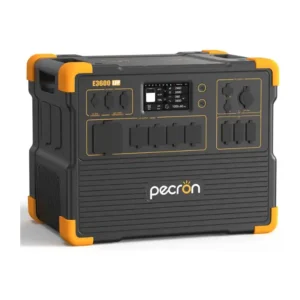
The Pecron E3600LFP delivers 2,760Wh of its 3,072Wh rating, powered by a 3,600W inverter with 7,200W of surge capacity. It draws 3,600W from a wall socket and 2,400W from solar across two channels, reaching 150 volts, at an exceptional value tier.
★★★★★
More details +
Pecron sells two machines that use three kilowatt-hours, with identical cells and conversion, and setting them side by side is the most useful thing about either. The cheaper one takes 1,800 watts from a socket, 1,600 from panels, and cannot see any array producing under 25 volts. This one takes 3,600 from the socket, 2,400 from panels across two channels, and adds a dedicated 12-volt low-voltage input, so a single foldable works alongside a 150-volt series string. Everything else holds up: 2,760 Wh delivered from a 3,072 Wh pack, a 3,600-watt inverter with 7,200 W of surge, a 400-watt XT60, four charging stages, a 9-millisecond handover, and 52 decibels. What it costs is sixteen pounds over the cheaper unit, taking it to seventy-nine and firmly into two-person territory, and it still will not arm its own inverter. Install it beside an array, and the faster charging is the entire reason to be here. Carry it anywhere,e and you have paid for hardware you cannot use.
PROS:
- Main charging of 3,600W, twice what the cheaper machine at this capacity accepts.
- A dedicated low-voltage solar channel from 12 volts, so small foldable panels work.
- A 150-volt main solar path allowing four or five rigid panels in series.
- An inverter rated at 3,600W, with 7,200W in reserve, topping out its power class.
- Conversion of 89% at the sockets and 88% through DC, so port choice barely matters.
- A 400W XT60 output, four-stage charging and expansion support, at an exceptional value tier.
CONS:
- Seventy-nine pounds, sixteen more than its own cheaper sibling and a two-person lift.
- The inverter will not arm itself, leaving an empty house unprotected.
- Cells rated tfor3,500 cycles, while both rivals at this capacity offer 4,000.
- A single 100W USB-C port on a machine at this price.
- A standby drain of 1.16% an hour is affordable rather than negligible.
- Distortion of 1.20% and noise of 1,750 mV are decent, though they don't approach the cleanest here.
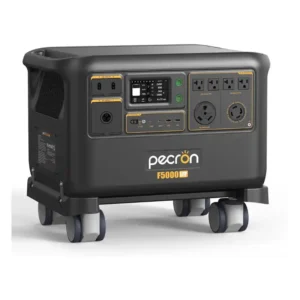
The Pecron F5000LFP delivers 4,440Wh of its 5,120Wh rating behind a 7,200W split-phase inverter that transfers instantaneously and arms itself. Solar reaches 6,400 W at 180 V; the DC output is rated at 1,000 W, and it sits in an exceptional value tier.
★★★★★
More details +
The specification list here belongs to a machine costing twice as much: 7,200 watts on split phase, transfer with no measurable gap and an inverter that raises itself, 6,400 watts of solar at 180 volts with 25 amps per channel, a 1,000-watt XT60 that is by a wide margin the largest DC output measured on this site, and five kilowatt-hours of storage; all at an exceptional value tier and 124 pounds, which is light for the class. Then there is the waveform. Harmonic distortion measures 3.50% against a 2% working limit, the highest figure across all machines tested at this site and well clear of the next-worst at 2.1%. Heaters and lighting will not notice. Motors run hotter on a distorted supply, and sensitive electronics were never designed for one, which rules out CPAP machines and medical equipment on the AC side entirely. Notably, three of the four worst distortion readings in this dataset come from Pecron machines, suggesting this is a design characteristic rather than a single bad sample. Feed it general household and resistive loads, or route twelve-volt equipment through that enormous DC port and skip the inverter altogether, and very little competes.
PROS:
- A 7,200W split-phase inverter matching the largest output in this dataset.
- Instantaneous transfer with a self-arming inverter, which few machines here manage.
- Solar of 6,400W at 180 volts and 25 amps per channel, high voltage and high current together.
- A 1,000W XT60 DC output is, by a wide margin, the highest DC figure measured here.
- Delivers 90% through DC, four points better than AC, bypassing the inverter entirely.
- One hundred and twenty-four pounds for five kilowatt-hours, light for the class, at an exceptional value tier.
CONS:
- Harmonic distortion of 3.50%, the highest recorded here and well above the 2% limit.
- Fifty-eight decibels, beyond what any occupied indoor room will tolerate.
- Main charging at 3,600W is adequate, rather than fast, for five kilowatt-hours.
- A 9,000W surge is a narrow headroom above a 7,200W continuous rating.
- Three of the four worst distortion figures in this dataset are Pecron machines.
- Conversion of 86% at the sockets trails the best machines at this size.
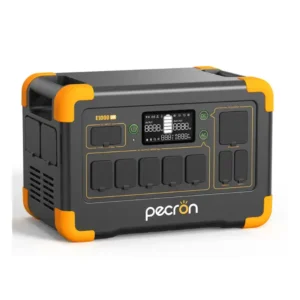
The Pecron E1000LFP delivers 1,024Wh through an 1,800W inverter and returns 90% of its rated capacity on the DC side, with a 300W XT60 output that dwarfs the usual car socket. Four-stage charging, 600W of solar, and expansion support put it in the entry-price tier at exceptional value.
★★★★★
More details +
This unit makes a choice almost nobody else at this size makes, and it makes it well: the twelve-volt side is treated as a real output rather than a convenience socket, with a 300-watt XT60 against the 130-odd watts typical here, and a DC path that returns 923Wh of the rated 1,024Wh where the AC outlets manage 880Wh. Run a camp fridge or a diesel heater on DC, and you keep roughly 5% more battery life, which, over a multi-day trip, translates to more hours. Twenty amps of solar current means rigid panels work rather than just foldables, and it requires an expansion battery while sitting in the entry-price tier. What it asks in return is real. A 2,000-watt surge ceiling leaves only 200 watts above the sustained rating, so a fridge starting while a microwave is running is past the limit. The warranty is three years, whereas its closest rivals offer five. For a vehicle build or a camp setup, this is the unit I would take. For a household running several appliances at once, the surge ceiling rules it out.
PROS:
- Returns 90% of rated capacity through DC against 85% through AC, so twelve-volt gear gains roughly 5% more energy.
- A 300W XT60 DC output, more than double the typical car socket, is enough for a diesel heater and a fridge without an inverter.
- Solar input accepts 20 amps, so rigid panels work rather than only small foldables.
- Four-stage charge control gives finer control than the usual two-speed switch.
- Takes an expansion battery while sitting in the entry-price tier.
- Fans at 53dB, six decibels quieter than the loudest unit in this class.
CONS:
- The surge ceiling of 2,000W is the lowest in this class, leaving only 200W of headroom above the sustained rating.
- The warranty runs for three years, whereas close rivals offer five, despite cells rated for 3,500 cycles.
- Mains charging peaks at 1,100W, the slowest figure among the units compared here.
- A 13.5ms crossover on a manually armed inverter is adequate for a fridge but marginal for a desktop.
- A standby loss of 1.5% per hour on AC is ordinary, not good.
- Inverter distortion of 1.8% is within limits but among the higher readings here.
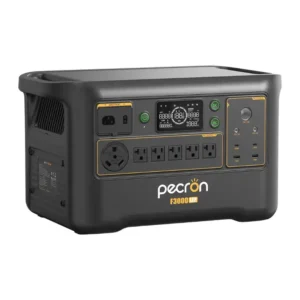
The Pecron F3000 holds 3,072 Wh behind a 3,000W inverter and delivers 2,750 Wh at the outlets, 89% of its rating. At 63 pounds, it is far lighter than rivals of this capacity and offers the lowest cost per watt-hour among units measured at this site.
★★★★★
More details +
Strip away capacity, brand, and features, and one question remains: how much energy does each pound buy? Across every machine measured at this site, the answer has ranged from about twenty-six cents per watt-hour to well over a dollar, and this unit sits at the very bottom of that range, with nothing else within about fifteen percent of it. What makes that remarkable rather than merely cheap is that the delivery figures hold up — 2,750Wh out of a 3,072Wh pack at the outlets, 91% through DC, an 8.6-millisecond handover, and a 182-watt car socket that clears a threshold most machines here miss. It also weighs sixty-three pounds, while its direct rival at the same capacity weighs ninety-one. The savings came from the charging: the mains input is 1,800 watts, less than half of what that rival accepts, and the solar path will not engage at all below 25 volts, so a single small foldable panel is simply invisible to it. Factor in 56 decibels and an inverter that stays down until switched on, and where this machine belongs becomes self-evident. This belongs in a workshop or an outbuilding with a properly wired array, and on those terms, nothing here gives you more for the money.
PROS:
- The lowest cost per watt-hour of any machine measured for this site, by a clear margin.
- Sixty-three pounds for three kilowatt-hours, twenty-eight pounds lighter than the closest equivalent.
- Conversion of 89% through AC and 91% through DC, matching machines costing considerably more.
- A handover of 8.6ms, among the quicker figures recorded here.
- A 182W car socket is above the 150-watt threshold that most sockets in this data miss.
- Solar current of 25 amps and four-stage wall charging; both generous for the price.
CONS:
- The main charging of 1,800W is less than half of what its direct rival accepts.
- The solar input will not engage below 25 volts, so small foldables are unusable.
- Fifty-six decibels rule out bedrooms, tents, and quiet offices.
- The inverter cannot arm itself, and a 1.25% hourly drain makes leaving it armed costly.
- Cells rated to 3,500 cycles, whereas both rivals at this capacity offer 4,000.
- Electrical noise above 2,000mv sits at the noisy end of this field.
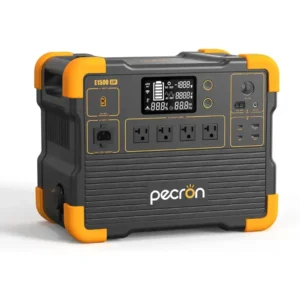
The Pecron E1500LFP stores 1,536Wh behind a 2,200W inverter and returns 94.1% of rated capacity through its DC side, the highest figure measured in this class. A 400W XT60 output, 800W of solar input to 95 volts, and expansion support put it in the entry-price tier at exceptional value.
★★★★★
More details +
The number that justifies this unit is 94.1%, the share of its rated capacity that comes back through the twelve-volt side, the highest DC yield measured anywhere in this dataset, and nine full points above what its own AC outlets return. Pair that with a 400W XT60, 1,536Wh at the entry-price tier, a 2,200W inverter that accepts 95 volts, and, on raw stored energy per dollar, nothing on this page competes. Everything surrounding the pack, though, feels like it was finished in a hurry. Wall charging runs at one fixed rate with no stages. Distortion measured 2.1%, over the threshold for a CPAP or sensitive audio. The 18-millisecond crossover is the slowest here and leaves no margin, and the inverter will not arm itself. Worst of all, the app supports Wi-Fi and nothing else, so it goes dark during a blackout and stays dark off-grid, which is exactly when you would want it. Buy this for the battery and the DC path; use the buttons on the front, and it is excellent value. Buy it expecting a finished product, and you will be irritated within a week.
PROS:
- Returns 94.1% of rated capacity through DC, the highest yield measured anywhere in this dataset.
- A 400W XT60 output, roughly three times the typical car socket in this class.
- Cheapest stored energy per dollar on this page, in the entry price tier.
- Solar to 95 volts across two ports, enough for a genuine series array.
- A 2,200W sustained and 4,000W peak inverter - generous for the price tier.
- Cells rated to 3,500 cycles under five years of cover, with expansion support.
CONS:
- The app runs on Wi-Fi only, so it cannot reach the unit during a blackout or off-grid.
- The 18ms crossover is the slowest here and leaves almost no margin below the safety line.
- Wall charging runs at one fixed rate, with none of the selectable stages rivals offer.
- Distortion measured 2.1%, just over the threshold for sensitive or medical equipment.
- Standby drain of 2.3% an hour on AC, above the 2% line.
- Forty pounds, and a firm two-handed carry.
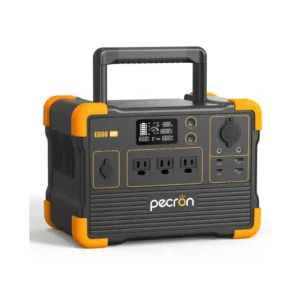
The Pecron E600LFP pairs a 1,200W inverter with 400W of solar input on a 614Wh pack, returns 91% through both output paths, and runs at 47dB with 3,500-cycle cells.
★★★★★
More details +
Double the Inverter and Double the Solar of Anything Its Size
Capacity and output are separate specifications, and no machine in our database separates them further than this one. It holds 614Wh, which is modest, and delivers 1,200 watts continuously, double the class norm and more than several units holding twice as much, meaning a microwave, a coffee maker, or a circular saw all run here, where no rival at this size could attempt them. The solar side is equally disproportionate, at 400 watts across a 12- to 95-volt window, whereas machines this size typically draw 100 to 200 watts and stop near 30 volts; 95 volts allows a proper series string of rigid panels. It converts at 91% on both paths, runs at 47 decibels behind that large inverter, outputs a correct 120 volts, and carries 3,500-cycle cells, the longest life of anything under 700Wh we have tested. The gaps are all on the other side: a 270-watt charging brick with no dual charging, no app of any kind, no transfer function, and 1.9% hourly drain while armed. PROS:
- A 1,200W inverter, double the class norm, running appliances no rival at this size can touch.
- Four hundred watts of solar across a 12 to 95 volt window, far beyond the class norm.
- Returns 91% through both AC and DC, among the better figures at any capacity.
- Cells rated to 3,500 cycles, the longest life of any machine under 700Wh we have tested.
- Forty-seven decibels behind a 1,200W inverter, and a correct 120V output.
- A 161W DC socket, a 100W USB-C port, and an exceptional value tier.
CONS:
- Wall charging of 270W through an external brick with no adjustable rate.
- No UPS mode fitted, so equipment loses power during a blackout.
- No app of any kind, no monitoring, no rate control, no firmware updates.
- Standby drain of 1.9% an hour with the inverter armed.
- Twenty pounds, heavier than most machines at this capacity.
- An audible whine from the inverter, a two-year warranty, and no dual charging.
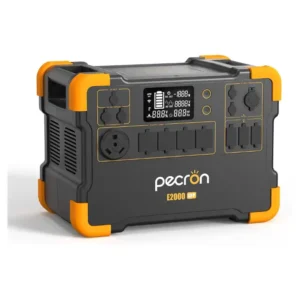
The Pecron E2000 LFP returns 1,830Wh of its 1,920Wh rating through the outlets and 1,838Wh through DC, both 95%, the only machine we have measured to reach that on both paths. It runs a 2,000W inverter and accepts 1,200W of solar.
★★★★★
More details +
All power stations have been measured at this site, and exactly one returns 95% of its rated capacity through both the AC outlets and the 12-volt side. This is that machine, and, on the specifications buyers most consistently overlook, it is the best thing here, a 1,920Wh pack behaving like an 1,830Wh one, whereas a typical rival at this size behaves like a 1,700Wh one. It is also light at 48 pounds, and its 786mv electrical noise reading is among the cleanest recorded. Then the output voltage: 110 volts, seven below the bottom of the accepted 117 to 123 band, making this the second machine in this database to fall outside it. Heaters and switching supplies will not notice; motors draw extra current to compensate, run hotter as a result, and fail earlier. Add no UPS mode at all, no app of any kind, a two-year warranty, and a 520-watt external charging brick, and the efficiency starts to look like a very good answer to a question most buyers aren't asking. Anker's S2000 matches the 95% at a correct 119 volts, has its own inverter, and costs a tier less.
PROS:
- Returns 95% through both AC and DC, the only machine in this database to do so.
- Electrical noise of 786mv, among the cleanest readings recorded here.
- Standby drain of 0.6% an hour, so the pack is still full months later.
- Solar of 1,200W across two tracked channels reaching 95 volts.
- Forty-eight pounds for nearly two kilowatt-hours, light for the class.
- Cells rated to 3,500 cycles with expansion support and phone assistance.
CONS:
- Output measured 110 volts, outside the 117 to 123 working band, and was hard on motors.
- No UPS is fitted, so connected equipment loses power during a blackout.
- No app of any kind, no monitoring, no rate control, no firmware updates.
- A two-year warranty, the shortest cover at this capacity.
- Wall charging at 520W with an external brick, close to 4 hours from empty.
- Fifty-eight decibels with audible inverter noise recorded separately, and a 32-volt solar floor.