Compare mid-range price power stations from $400 to $700. Read expert reviews on usable capacity, switchover speed, solar input, and value per watt-hour.
Mid-range covers $400 to $700, and some of our tested and reviewed power stations fall into this range. It is the band where the category starts behaving properly: capacity roughly doubles over the entry tier, charging speed doubles, and the compromises stop being structural.
It is also where the best value per watt-hour in the whole database sits: a machine at $0.30 per watt-hour, costing under $600.
Select the power stations you want to compare by clicking Compare on each product. When you have made your selections, click the ⚖️ scale icon to open a detailed side-by-side comparison of their key specifications, features, and performance data.
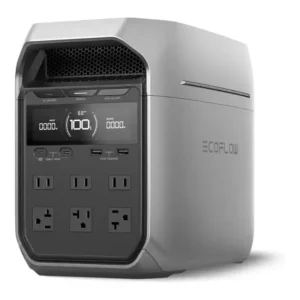
Built on 4,000-cycle LiFePO4 cells, EcoFlow Delta 3 Plus 1,024Wh power station delivers 1,800W of continuous output and a 3,600W surge, enough to start a full-size refrigerator. Whisper-quiet 41dB fans and a 10.2ms blackout switchover make it a mid-range pick for indoor emergency backup.
I judge every unit in the High-Demand Utility Class by one question: would I trust it to sit in a closet for a year and then work perfectly on the worst night of the winter? The Delta 3 Plus is one of the few I answer yes to. It delivered 880Wh of the rated 1,024Wh, switches over in 10.2 milliseconds, and runs at 41dB, the quietest in this class by a wide margin. The idle drain and the underpowered 12V socket are real flaws, and the Bluetti Elite 100 V2 sits a full tier below it on value. But if you are buying this to protect a refrigerator, a CPAP machine, and a router through a multi-day outage, the quiet fans, the fast switchover, and the auto-on inverter earn the premium.
Battery safety and chemistry (LiFePO4, 4,000 cycles)
10
Real-world inverter efficiency (85%)
7.5
UPS failover speed (10.2ms, auto-on)
9.5
Port selection and power distribution
7.5
Solar charging and MPPT performance (1,000W)
9.5
AC wall recharge speed (1,500W, adjustable)
10
Noise and thermal management (41dB)
10
Portability and build quality (27 lbs)
8
Expandability and ecosystem
8
Smart app and interface
8.5
PROS:
Whisper-quiet 41dB fans. The quietest in its class by a wide margin so it can sit in a bedroom.
10.2ms switchover with an auto-on inverter. Your PC and router stay up, even when nobody is home.
4,000-cycle LiFePO4 cells. Over ten years of daily use before it drops to 80% capacity.
Takes an expansion battery, so you can start at 1kWh and grow later.
1,500W wall charging with step-by-step speed control, plus 1,000W of solar input.
140W USB-C port charges a laptop with no wall brick.
CONS:
Sits in the premium value tier, while same-capacity units in this class sit in the exceptional tier.
Loses about 2.5% of its charge per hour when the AC inverter idles. Remember to switch it off.
The 12V car socket caps at 139W, which is short of the 150W I look for.
At 27 pounds, it is a two-hand carry. Fine for the house, less fun on a long walk.
Expansion batteries are proprietary, so you are locked into EcoFlow's ecosystem.
Inverter electrical noise measured high, which may matter for sensitive radio gear.
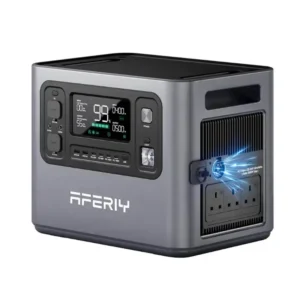
The AFERIY P280 delivers 1,880 Wh of its 2,048 Wh rated capacity to the sockets, a 91% conversion rate that is the best at this size. It runs a 2,800 W inverter with a 6,000 W surge, accepts 1,200 W of solar power across dual ports, and carries a seven-year warranty on 4,000-cycle cells.
Two numbers here are unmatched anywhere in this dataset: 91% conversion at the sockets, which is 120 to 140 watt-hours more usable energy than its closest rivals squeeze from identical nominal capacity, and a seven-year warranty where five is the class standard and several units manage three. Those cover how much you get and how long you keep it, and no other unit leads on both; while this one sits a price tier below the rivals it beats. Around them are a 2,800-watt inverter, 1,200 watts of solar across two independent ports, five-stage charging finer than anything else reviewed here, and 4,000-cycle cells. Then the firmware lets it down. The 8-millisecond crossover is genuinely quick and entirely conditional, because the inverter will not arm itself or guard a house unless someone is in it to switch it on. And at 57 decibels, the fans decide where it lives before you do. Put it in a garage, a workshop, or a vehicle,e and nothing at this capacity gives you more for the money. Ask it to sit in a cupboard and look after the house alone, and it can do so
Battery safety and chemistry (LiFePO4, 4,000 cycles)
10
Real-world efficiency and output (91% AC, 89% DC, 0.66% idle)
9.5
UPS and EPS switchover (8ms, no self-arming)
7.5
Port selection and distribution (dual 140W USB-C, 340W XT60)
9.5
Solar charging and MPPT (1,200W across dual ports)
9.5
AC recharge speed (1,800W, five-stage)
9.5
Noise and thermal management (57dB)
6
Portability and build quality (47 lbs)
7.5
Expandability and ecosystem (expansion supported)
9
Smart app and interface (Wi-Fi and Bluetooth)
7.5
PROS:
Conversion of 91% through the sockets, the best AC result recorded at this capacity.
A seven-year warranty, two years longer than anything else reviewed on this site.
Solar input of 1,200W across two independent 600W ports at 20 amps each.
A 2,800W sustained and 6,000W peak inverter, among the largest at this capacity.
Five-stage mains charging, the finest rate control of any unit reviewed here.
Cells rated to 4,000 cycles with standby loss of 0.66%pern hour, and dual 140W USB-C ports.
CONS:
The inverter cannot arm itself, so an 8ms crossover only helps when somebody switches it on.
Fans at 57dB, loud enough to exclude bedrooms, tents, and quiet offices.
AFERIY operates no telephone support, despite the longest warranty here.
The measured output of 117 volts sits at the bottom edge of the acceptable band.
Published weight figures are inconsistent between imperial and metric.
The 55-volt solar ceiling is marginally lower than the 60 volts most rivals allow.
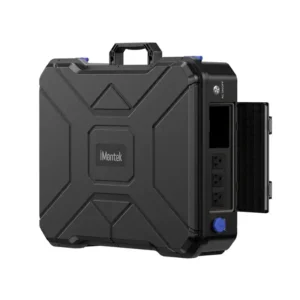
The Montek X1200 answers one question better than anything at its size: will it start the tool? A 7,000W surge ceiling swallows motor inrush that trips lesser inverters, 1,280Wh returns a class-leading 92% at the outlets, and solar accepts panels up to 150 volts.
Everything about this unit points to one moment: the instant a motor tries to start and the inverter either holds or quits. A 7,000W ceiling, roughly double what anything else at this capacity offers, is the whole reason it exists. Independent testing pulled 1,190Wh from the rated 1,280Wh, a 92% result that is the best I have seen in this size range and means it out-delivers some larger units. The 9.6ms switchover and auto-on inverter make it a credible home backup too. But 57dB fans put it well past comfortable bedside use; 2,500 cycles are short of the 4,000 its rivals carry; and there is no phone support if something goes wrong. Buy it for a garage, a workshop, or a truck bed, where the surge and the 150-volt solar input earn their keep. For a bedroom, the Bluetti AC240 is the better answer.
Battery safety and chemistry (LiFePO4, 2,500 cycles)
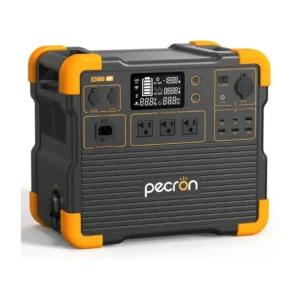
The Pecron E2400LFP crosses over in 9.8ms with a self-arming inverter, a feat few units at any price can manage, and delivers 90% of its rated capacity through a 400W XT60 DC output. It holds 2,048Wh behind a 2,400W inverter and sits in the mid-range price tier at exceptional value.
The pattern running through every review on this site is that most power stations sold as backup will not arm their own inverter, so they protect a house only while somebody is standing in it — and until now, every machine that solved that sat in the upper mid-range tier or above. This one solves it from the mid-range tier, waking on its own with a 9.8-millisecond crossover, and it pairs that with a 400-watt XT60 output roughly three times the typical car socket and a 90% DC yield that puts 154Wh more in your hands than its own AC outlets do. The costs are specific and worth weighing. Conversion through those outlets is 83%, the weakest at this capacity, and about an hour behind the leader in refrigerator times. The warranty runs for three years, while rivals offer five and one offers seven. Distortion measures 2.00%, sitting exactly on the threshold rather than inside it, which matters for a CPAP motor and not at all for tools. And at 54 decibels, it belongs in a garage rather than a bedroom. For a household that wants real automatic protection without paying for it, nothing else here is close.
Battery safety and chemistry (LiFePO4, 3,500 cycles)
8
Real-world efficiency and output (83% AC, 90% DC, 2.00% THD)
7.5
UPS and EPS switchover (9.8ms, self-arming)
10
Port selection and distribution (100W USB-C, 400W XT60)
9
Solar charging and MPPT (800W, 95V ceiling, 32V floor)
8
AC recharge speed (1,800W, four-stage, 2,000W dual)
9.5
Noise and thermal management (54dB)
6.5
Portability and build quality (45 lbs)
7.5
Expandability and ecosystem (expansion support)
8.5
Smart app and interface (Wi-Fi and Bluetooth)
8.5
PROS:
A self-arming inverter with a 9.8ms crossover, and the cheapest unit in this data is able to do it.
A 400W XT60 output, roughly three times the typical car socket, with 90% delivered through DC.
Four-stage wall charging at 1,800 W provides finer rate control than most rivals provide.
Solar accepted at 95 volts, high enough for a genuine series string of rigid panels.
Standby loss of 1.0% an hour, low enough that leaving it armed is sustainable.
Forty-five pounds and expansion support, both better than several rivals at this size.
CONS:
Conversion of 83% through the outlets, the weakest AC figure at this capacity.
A three-year warranty, while rivals in this capacity offer five, and one offers seven.
A distortion of 2.00% sits exactly on the threshold rather than inside it.
A full solar recharge falls outside the usual two-and-a-half-hour window.
Fifty-four decibels rule out bedrooms and quiet offices.
The main solar path will not engage below 32 volts, so single small panels need the secondary port.
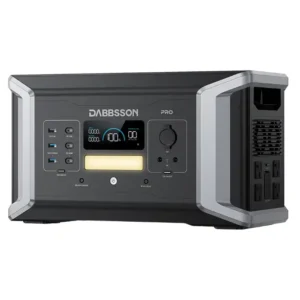
The Dabbsson 1000 Pro pairs 1,024Wh with a 2,000W inverter and a 4,000W surge, and its lithium iron phosphate cells carry a 4,500-cycle rating—the longest life measured in this class. Solar input reaches 1,200W at 25 amps, fans stay at 47dB, and it lands in the mid-range price tier.
No unit on this site presents a sharper contradiction. Its cells carry a 4,500-cycle rating, the longest measured anywhere in this dataset and roughly equivalent to twelve years of daily use, and it pairs that with a 2,000W inverter, 47dB fans, and a 25-amp solar ceiling, the most generous here. Then it loses 3.6% of its charge every hour it sits idle with the inverter awake, the worst standby figure recorded, and empties a full pack in under two days. Conversion is weak as well, at 83.9% through the sockets and 81.5% through DC, both below the line most rivals clear. Since the inverter cannot self-arm, you choose between a unit that drains itself while it waits and one that catches nothing when the power goes out. For a workshop or a vehicle where it is used and recharged constantly, the cycle rating and the solar headroom make it a serious tool. As something to charge and leave in a cupboard against a storm, it is close to the worst choice here.
Battery safety and chemistry (LiFePO4, 4,500 cycles)
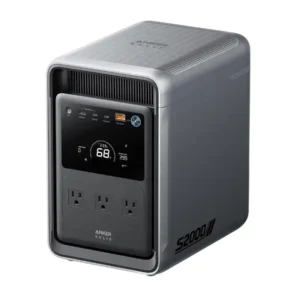
The Anker SOLIX S2000 delivers 1,920Wh of its 2,009Wh rating (a 95% conversion rate, unmatched in this data) and loses just 0.08% of its charge per hour while idle. It crosses over in 9.6ms with a self-arming inverter, weighs 35 pounds, and sits in the mid-range price tier at exceptional value.
Two numbers here are so far ahead of the field that they change how the unit should be judged. It converts 95% of its rated capacity into energy you can actually spend, whereas the next best result in this data is 92%, and the field average sits near 86%, meaning this 2,009Wh machine hands you more usable power than several 2,048Wh rivals. And it loses 0.08% of its charge per hour idle, compared with a previous best of 0.41%, which is so close to nothing that the usual trade-off between staying armed and staying charged simply vanishes. Add a self-arming inverter, a 9.6-millisecond crossover, 4,000 cycles, and 35 pounds (the lightest at this capacity by twelve), and, as a machine that waits for years and then works, it is close to ideal. Then the limits arrive hard. A 1,500-watt inverter is the smallest here, and a single space heater consumes all of it. 400 watts of solar is the lowest ceiling at this size and cannot refill the pack in a normal window, and there is no expansion path. Stay within those boundaries, and nothing in this dataset offers better value. Step outside them, and it fails at once.
Battery safety and chemistry (LiFePO4, 4,000 cycles)
9.5
Real-world efficiency and output (95% AC, 0.08% idle, 0.90% THD)
10
UPS and EPS switchover (9.6ms, self-arming)
10
Port selection and distribution (100W USB-C, no DC figure)
5
Solar charging and MPPT (400W, lowest at this capacity)
4.5
AC recharge speed (1,600W mains, 1,800W dual)
9
Noise and thermal management (53dB)
7
Portability and build quality (35 lbs)
9.5
Expandability and ecosystem (expansion support)
4
Smart app and interface (Wi-Fi and Bluetooth)
8.5
PROS:
Conversion of 95%, the best figure measured anywhere in this data, and three points clear of second place.
Standby loss of 0.08% an hour, five times better than the previous best recorded here.
A self-arming inverter with a 9.6ms crossover, so it protects an empty house without configuration.
Thirty-five pounds for two kilowatt-hours, the lightest at this capacity by twelve pounds.
Cells rated for 4,000 cycles under a five-year warranty, with phone support included.
Distortion of 0.90% and electrical noise of 1,350mv, both better than the class average.
CONS:
A 1,500W inverter, the smallest at this capacity, is consumed entirely by a single heating appliance.
The 400W solar input is the lowest for this size and cannot complete a recharge within the usual window.
No expansion battery support, making 2,009Wh a permanent ceiling.
One 100W USB-C port and no documented high-output DC socket.
No twelve-volt yield figure appears in the bench data at all.
Combined charging caps at 1,800W, modest for this capacity.
The VigorPool Captain 700 runs at 47dB, returns 93% of its DC output, and accepts an expansion battery, an unusual combination at 672 Wh. It charges internally at 600W with dual charging supported.
Machines at this size normally offer one good feature and ask you to accept the rest. This one runs at 47 decibels with a silent inverter, which is among the quietest readings we have recorded anywhere; returns 93% of its pack through the twelve-volt output, the fifth-best DC figure in the entire database, with no measurable standby loss on that path; charges internally at 600 watts with adjustable speed and supports dual charging; carries a proper Wi-Fi and Bluetooth app; and accepts an expansion battery, which almost nothing under a kilowatt-hour does. Its solar input can also refill the pack within the usual window, something several larger, pricier machines cannot manage. The compromises are modest by comparison: 84% through the AC sockets, a point under the class line; a handover measured at exactly 20 milliseconds, the threshold itself rather than a margin inside it; a 30-volt solar ceiling that excludes rigid panels; and two 60-watt USB-C ports where one at 100 watts would serve a laptop better.
Battery safety and chemistry (LiFePO4, 2,000 cycles)
6.5
Real-world efficiency and output (84% AC, 93% DC, 1.8% idle)
8
UPS and EPS switchover (20ms, at the threshold)
5.5
Port selection and distribution (dual 60W USB-C, 145W DC)
6.5
Solar charging and MPPT (240W, refills within window)
7
AC recharge speed (600W internal, dual charging supported)
8.5
Noise and thermal management (47dB, silent inverter)
9.5
Portability and build quality (20 lbs)
8
Expandability and ecosystem (expansion supported at 672Wh)
8.5
App, display and telemetry (Wi-Fi and Bluetooth)
8.5
PROS:
Forty-seven decibels with a silent inverter, quiet enough to sleep beside in a tent.
Returns 93% through DC, the fifth-best figure in our entire database.
An expansion battery port at 672Wh, which almost nothing at this size offers.
Internal charging at 600W with adjustable speed and dual charging supported.
A correct 120V output with 1,485mv of electrical noise, tidy for this class.
Solar that can refill the pack within the usual window, with a Wi-Fi and Bluetooth app.
CONS:
Only 84% through AC, a point below the line machines this size should reach.
The handover sits exactly on the 20ms threshold rather than inside it.
Standby drain of 1.8% an hour with the inverter armed.
A 30-volt solar ceiling that excludes most rigid panels.
Two 60W USB-C ports instead of one 100W port, so laptops charge slowly.
Two thousand cycles under three years of cover, modest for the class.
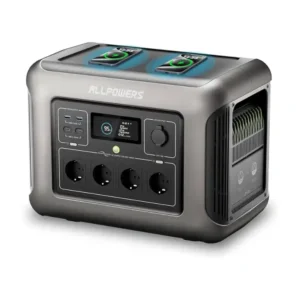
The ALLPOWERS R1500 holds 1,152Wh behind an 1,800W inverter with 3,000W of surge capacity and accepts solar input up to 95 volts—high enough to wire rigid panels in series, unlike most rivals. Four-stage charging, expansion support, and exceptional value per watt-hour in the mid-range price tier.
Everything about this unit points away from the wall socket and towards the roof. Solar accepts up to 95 volts, whereas nearly every rival stops at 60, which is the difference between wiring three rigid panels in series and making do with two foldables, and dual charging takes 1,500W combined against just 900W from the mains alone — the slowest wall input in this comparison and clearly a deliberate choice. It returned 950Wh of a rated 1,152Wh through the sockets, an 82% result that is the weakest AC conversion here, though the DC side redeems it at 87% and rewards anyone running twelve-volt loads. The 11.6-millisecond crossover is quick enough for a desktop, which makes the absence of a self-arming inverter genuinely annoying rather than merely disappointing, and ALLPOWERS runs no telephone support behind its five-year warranty. As a mains-charged backup box, it is mediocre. As the charging hub of a vehicle or a cabin with panels overhead, nothing else on this page does what it does for the money.
Battery safety and chemistry (LiFePO4, 3,000 cycles)
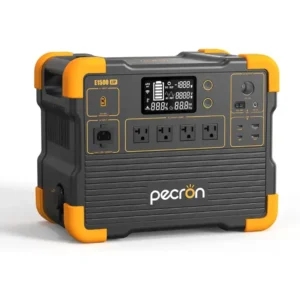
The Pecron E1500LFP stores 1,536Wh behind a 2,200W inverter and returns 94.1% of rated capacity through its DC side, the highest figure measured in this class. A 400W XT60 output, 800W of solar input to 95 volts, and expansion support put it in the entry-price tier at exceptional value.
The number that justifies this unit is 94.1%, the share of its rated capacity that comes back through the twelve-volt side, the highest DC yield measured anywhere in this dataset, and nine full points above what its own AC outlets return. Pair that with a 400W XT60, 1,536Wh at the entry-price tier, a 2,200W inverter that accepts 95 volts, and, on raw stored energy per dollar, nothing on this page competes. Everything surrounding the pack, though, feels like it was finished in a hurry. Wall charging runs at one fixed rate with no stages. Distortion measured 2.1%, over the threshold for a CPAP or sensitive audio. The 18-millisecond crossover is the slowest here and leaves no margin, and the inverter will not arm itself. Worst of all, the app supports Wi-Fi and nothing else, so it goes dark during a blackout and stays dark off-grid, which is exactly when you would want it. Buy this for the battery and the DC path; use the buttons on the front, and it is excellent value. Buy it expecting a finished product, and you will be irritated within a week.
Battery safety and chemistry (LiFePO4, 3,500 cycles)
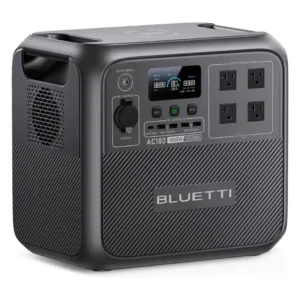
The Bluetti AC180 wraps 1,152 Wh of 3,500-cycle lithium iron phosphate around an 1,800 W inverter and crosses over in 8.7 milliseconds when the grid drops. Wall charging reaches 1,440W. It lands in the mid-range price tier while delivering exceptional value per watt-hour.
Every unit at this price is a set of compromises, and the AC180s are unusually easy to read: it spent its budget on cells and wall charging, and almost nothing on everything else. You get 990 Wh at the sockets from a 1,152 Wh pack, an 8.7-millisecond crossover that matches anything at this size, and mains charging at 1,440W that fills it within the hour. What you do not get is an inverter that arms itself, which makes that fast crossover conditional on somebody having switched it on; solar input above 500W, which is half the class standard; any expansion path at all; or fans quiet enough for a bedroom, at 54dB and 37 pounds. If capacity per dollar is genuinely the only thing you are optimizing for, it is a fair deal. If it is not, Bluetti's own Elite 100 V2 costs a tier less and beats it on four of the five things that go wrong later.
Battery safety and chemistry (LiFePO4, 3,500 cycles)
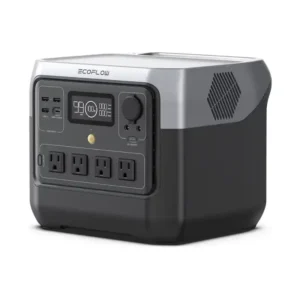
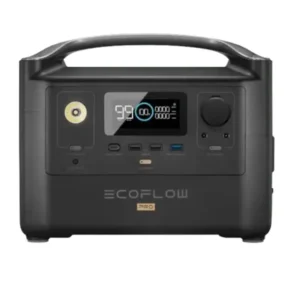
The EcoFlow Delta 2 carries 1,024Wh behind an 1,800W inverter with X-Boost, weighs 27 pounds, and loses just 0.8% of its charge per hour on standby. Cells are rated for 3,000 cycles over five years of coverage, and they sit in the mid-range price tier at good value.
This was the default recommendation in its category for a long time, and reviewing it now means separating that reputation from what you can actually buy today. Two things still stand out: standby loss of 0.8% per hour is among the lowest figures I have recorded, meaning it holds a charge through months of storage better than almost anything, and at 27 pounds, it is the lightest kilowatt-hour unit on this site. Everything else has been overtaken, much of it by EcoFlow's own successors. It returned 850Wh of the rated 1,024Wh, crossed over in 19.2 milliseconds, clearing the safety line by under a millisecond, will not arm its own inverter, accepts only 500W of solar, and carries 3,000 cycles, while rivals now offer 4,000. Then there are the fans, at 62 decibels, the loudest reading from any unit of any size in this entire review set, which rules out bedrooms, tents, and offices outright. The Delta 3 Plus costs the same tier and beats it on nearly every line. Buy this one only if long-term storage is the whole job and it lives somewhere nobody has to hear it.
Battery safety and chemistry (LiFePO4, 3,500 cycles)
The EcoFlow River 2 Pro charges from a wall socket at 940W and refills in under an hour, weighs 17 pounds for 768Wh, and has Wi-Fi and Bluetooth apps. Its fans read 60 dB, and the switchover measures 30ms.
Fastest Charging Under a Kilowatt-Hour, and Among the Loudest
Most power stations of this size normally charge via an external brick at 90 to 200 watts and take four to six hours to recharge. This one takes 940 watts through an internal charger and is full in under an hour, which is a generational rather than an incremental difference, and it does so in 17 pounds, returning 45.2 watt-hours per pound, the best energy density of any machine under a kilowatt-hour we have weighed. It also features a bidirectional 100-watt USB-C port, a Wi-Fi and Bluetooth app, 3,000-cycle cells, and a five-year warranty. The costs are concentrated and severe. Sixty decibels, with an audible whine from the inverter on top, on a machine sold for camping, where a tent offers no sound insulation. A 30-millisecond switchover, tied for the slowest reading anywhere in our database. 80% conversion through the outlets vs. 88% through DC. And 2.4% hourly standby drain while armed, which costs roughly 40% of the pack over a week of waiting. Charge it fast, use the DC side, and keep it outside the tent.
Battery safety and chemistry (LiFePO4, 3,000 cycles)
8.5
Real-world efficiency and output (80% AC, 88% DC, 2.4% idle)
6
UPS and EPS switchover (30ms, above the threshold)
3
Port selection and distribution (100W bi-directional USB-C, 140W DC)
7
Solar charging and MPPT (220W, cannot refill in window)
4.5
AC recharge speed (940W internal, adjustable)
9.5
Noise and thermal management (60dB plus inverter whine)
3.5
Portability and build quality (17 lbs, 45.2 Wh per pound)
9
Expandability and ecosystem (no expansion support)
4
Smart app and interface (Wi-Fi and Bluetooth)
8.5
PROS:
Wall charging of 940W through an internal charger, refilling in under an hour.
Seventeen pounds for 768Wh, 45.2 Wh per pound, the best density under a kilowatt-hour.
Returns 88% through DC, a genuinely strong figure with only 0.13% hourly loss on that path.
A bi-directional 100W USB-C port that charges a laptop at full rate.
Cells rated to 3,000 cycles under five years of warranty, with a Wi-Fi and Bluetooth app.
Adjustable charging speed and a correct 120V output.
CONS:
Sixty decibels with an audible inverter whine, unusually loud for this size.
A 30ms switchover, the joint slowest recorded anywhere in our database.
Only 80% through AC, five points below the class line.
Standby drain of 2.4% an hour with the inverter armed.
No dual charging, and 220W of solar that cannot refill the pack in the usual window.
An 800W inverter that rules out every heating appliance.
The EcoFlow River Pro returns just 530 Wh of its 720 Wh rating via AC, but 665 Wh via DC, the widest gap we have measured. It charges internally at 660W, weighs 16.8 pounds, and uses NMC cells rated for 800 cycles.
Most machines differ by three to five points between their AC and DC output paths. This one differs by nineteen “73% through the mains sockets versus 92% through the twelve-volt output,” the widest spread in our database, meaning the socket you choose changes what you receive by 135 watt-hours. That 73% is also the joint second-worst AC conversion we have measured, so more than a quarter of what you charge never reaches the outlets. Used on DC through its 158-watt socket, it becomes a decent camp battery: 665 Wh delivered, 16.8 pounds, internal charging at 660 watts with adjustable speed, expansion support, and a proper app. Three things limit it badly. The cells are NMC-rated for 800 cycles, the shortest life of any machine we have tested, and roughly two years of daily use. The solar input stops at 25 volts, the narrowest window in our database, which excludes nearly every rigid panel. And 58 decibels rules out the tent; this machine's weight otherwise suits.
Battery safety and chemistry (NMC, 800 cycles)
3
Real-world efficiency and output (73% AC, 92% DC)
6
UPS and EPS switchover (no UPS mode fitted)
2.5
Port selection and distribution (100W USB-C, 158W DC)
7.5
Solar charging and MPPT (197W, 25V ceiling)
2.5
AC recharge speed (660W internal, adjustable)
8
Noise and thermal management (58dB, silent inverter)
5
Portability and build quality (16.8 lbs)
8.5
Expandability and ecosystem (expansion supported)
7.5
Smart app and interface (Wi-Fi and Bluetooth)
8.5
PROS:
Returns 92% through DC, a genuinely strong figure paired with a 158W twelve-volt output.
Internal wall charging at 660W with adjustable speed, refilling in about an hour and a quarter.
Sixteen point eight pounds for 720Wh, a comfortable one-handed carry.
Expansion battery support and a Wi-Fi and Bluetooth app with a five-year warranty.
A correct 120V output with no audible whine from the inverter itself.
Priced in the premium value tier rather than luxury.
CONS:
Only 73% through AC, the joint second-worst conversion in our database.
NMC cells rated for 800 cycles, the shortest life of any machine we have tested.
A 25-volt solar ceiling, the narrowest in our database, excluding nearly all rigid panels.
Fifty-eight decibels, too loud for a tent or a bedroom.
No UPS mode fitted, and no dual charging.
A 600W inverter with 1,200W of surge, the lowest at this capacity.
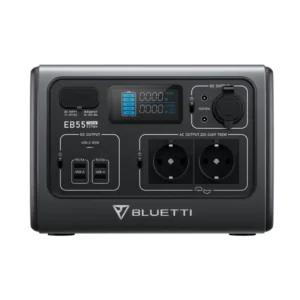
The Bluetti EB55 delivers 468Wh of its 537Wh rating, features a 700W inverter, runs at 48dB, and supports dual charging at 400W. Output measures 110 volts, charging runs through an external brick, and there is no app.
Judged on performance, this is a decent compact machine: 87% returned through the sockets and 89% through DC, both above the class line; 48 decibels, quiet enough to sleep beside in a tent; a 700-watt inverter that is generous for 537Wh; a 100-watt USB-C port; and dual charging at 400 watts combined, the highest figure of any compact unit we have measured. Judged on price, it sits among the most expensive machines per watt-hour we have reviewed, ahead of the flagship split-phase systems and the modular home installations several times its size. What that premium buys is an external 200-watt charging brick, no app of any kind, no transfer function, a 28-volt solar ceiling that excludes rigid panels, 2,000-cycle cells under two years of cover, and an output measuring 110 volts, below the accepted band and harder on any motor. The Pecron E600LFP offers greater capacity, converts four points more efficiently, outputs the correct voltage, delivers 1,500 more cycles, and takes nearly triple the solar, for considerably less per watt-hour.
Battery safety and chemistry (LiFePO4, 2,000 cycles)
5.5
Real-world efficiency and output (87% AC, 89% DC, 110V output)
6.5
UPS and EPS switchover
2.5
Port selection and distribution (100W USB-C, 135W DC)
7
Solar charging and MPPT (155W, refills within window)
5.5
AC recharge speed (200W via brick, 400W dual)
5
Noise and thermal management (48dB with inverter whine)
8
Portability and build quality (16.5 lbs)
7.5
Expandability and ecosystem (no expansion support)
4
App, display and telemetry
3
PROS:
Forty-eight decibels under load, quiet enough to sleep beside in a tent.
Returns 87% through AC and 89% through DC, both above the class line.
Dual charging at 400W combined, the highest of any compact machine we have tested.
A 700W inverter, generous for 537Wh, with a 100W USB-C port.
Solar that can refill the pack within the usual window, with the array permanently connectable.
Bluetti's support network with a 24-hour response commitment.
CONS:
The highest price per watt-hour of any machine in our entire database.
Output measured 110 volts, below the accepted band and hard on motors.
Wall charging of 200W through an external brick with no adjustable rate.
A 28-volt solar ceiling that excludes most rigid panels.
No UPS mode, no app, and no expansion path.
Two thousand cycles under two years of cover, and an audible inverter whine.
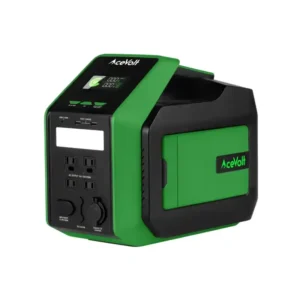
The Acevolt Campower 700 runs at 46dB, the quietest reading we have measured, and returns 89% through both AC and DC. Mains power arrives at 200W from a separate brick, with neither a handover function nor connectivity.
Across every machine tested for this site, at every capacity and from every brand, none runs quieter under load than this one. Forty-six decibels is roughly a quiet refrigerator heard across a room, and in a tent (where canvas absorbs nothing, and the unit sits an arm's length from your head) that is the specification that decides whether you sleep. It backs the quiet with an unusually consistent 89% conversion through both the AC sockets and the 12-volt output, so the choice of socket costs nothing, plus 2,500-cycle cells and a 100-watt USB-C port that charges a laptop at full speed. The costs are concentrated in how energy gets in and what the machine knows about itself: 200 watts through an external charging brick at one fixed rate, around three and a half hours from empty; a 175-watt solar ceiling capped at 28 volts that excludes nearly every rigid panel; no app of any kind; and no transfer function. The awkward comparison is the VigorPool Captain 700, one decibel louder and better in almost every other way.
Battery safety and chemistry (LiFePO4, 2,500 cycles)
6.5
Real-world efficiency and output (89% AC, 89% DC, 2.4% idle)
7.5
UPS and EPS switchover
2.5
Port selection and distribution (100W USB-C, 145W DC)
7.5
Solar charging and MPPT (175W, 28V ceiling)
3
AC recharge speed (200W via external brick)
3
Noise and thermal management (46dB, but audible inverter whine)
8.5
Portability and build quality (22 lbs)
7
Expandability and ecosystem (no expansion support)
4
App, display and telemetry
3
PROS:
Forty-six decibels under load, the quietest fan reading in our entire database.
Returns 89% through both AC and DC, so the choice of socket costs nothing.
Cells rated to 2,500 cycles, more than either rival at this capacity.
A 100W USB-C port that charges a laptop at full rate.
No measurable standby loss on the DC path, and a 145W twelve-volt socket.
Output inside the accepted voltage band, unlike several rivals at this size.
CONS:
Wall charging of 200W through an external brick, three and a half hours from empty.
No UPS mode fitted, so equipment loses power during a blackout.
No app of any kind, no monitoring, no rate control, no firmware updates.
A 175W solar ceiling capped at 28 volts, excluding most rigid panels.
Standby drain of 2.4% an hour with the inverter armed.
An audible whine from the inverter, and no expansion path.
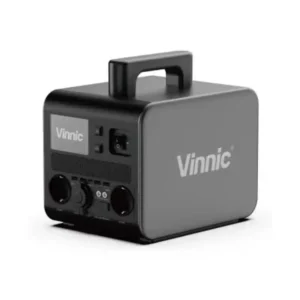
The Vinnic PS700 carries cells rated for 4,000 cycles, double that of any other compact machine we have tested, and is powered by a 700W inverter. It returns 430 Wh of its 512 Wh rating and charges at 200W via an external brick.
★★★★★
More details +
Almost every compact power station we have tested carries cells rated for 2,000 cycles or fewer. This one is rated for 4,000, matching units four and five times its capacity, which, at one cycle a day, works out to roughly 11 years before the pack falls to 80%, compared to 5 and a half for its rivals. It backs that with a 700-watt inverter, generous for 512Wh, a full 100-watt USB-C port, 88.6% returned via DC, 14.3 pounds, and a 9-volt solar floor, the lowest we have recorded, so almost any panel engages it. The costs are concentrated in price and detail. Only one machine in our entire database asks more per watt-hour. The output measures 110 volts, below the accepted range, which is particularly ironic for a unit built to outlast the appliances it feeds. Charging runs at 200 watts through an external brick with no dual charging, the solar ceiling stops at 30 volts, and there is no app to tell you anything about the pack across those eleven years.
Battery safety and chemistry (LiFePO4, 4,000 cycles)
8.5
Real-world efficiency and output (83% AC, 88.6% DC, 110V output)
5.5
UPS and EPS switchover
2.5
Port selection and distribution (100W USB-C)
7
Solar charging and MPPT (154W, 9V floor, 30V ceiling)
4.5
AC recharge speed (200W via brick, no dual charging)
4
Noise and thermal management
6
Portability and build quality (14.3 lbs at 512Wh)
8
Expandability and ecosystem (no expansion support)
4
App, display and telemetry
3
PROS:
Cells rated for 4,000 cycles, double any other compact machine we have tested.
A 700W inverter, generous for 512Wh, with a 100W USB-C port.
A 9-volt solar floor, the lowest we have recorded, so almost any panel engages.
Returns 88.6% through DC, clearing the class line on the twelve-volt path.
Fourteen point three pounds, light for the capacity and easy to carry.
LiFePO4 chemistry with the array permanently connectable.
CONS:
Close to the highest price per watt-hour in our entire database.
Output measured 110 volts, below the accepted band and hard on motors.
Wall charging at 200W via an external brick, with no dual charging.
Only 83% through AC, two points below where machines this size should land.
A 30-volt solar ceiling that excludes most rigid panels.
No app, no transfer function, and no idle drain measured on either path.
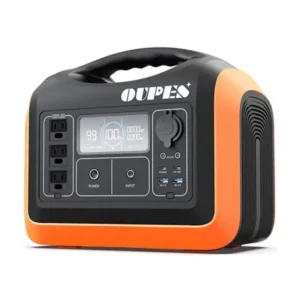
The Oupes 1100 delivers 810 Wh of its 992 Wh rating through a 1,100 W inverter. Main power comes in at 180W via a separate brick; panels stop at 161W and 30 volts, and neither a handover function nor connectivity is fitted.
By the third machine from a manufacturer, a repeated flaw stops being a coincidence. Across the Oupes 600, this 1100, and the Oupes 1800, the same list appears every time: no automatic transfer function, mains charging through an external brick, no app of any kind, and a solar input that stops around 30 volts, thereby excluding most rigid panels. This is the middle machine of that group, and it adds a 110-volt output that falls below the accepted band and is harder on any motor, plus it has the weakest conversion of the three at 81.6% through the sockets and 80% through DC. Charging runs at 180 watts and takes more than five hours from empty, with no dual charging to shorten it. What works is genuine but modest: a 1,100-watt inverter with a comfortable 2x surge margin, 52 decibels, and 24 pounds. The Bluetti Elite 100 V, at almost the same capacity, charges nearly seven times faster, hands over in 8.7 milliseconds while arming itself, and outputs the correct voltage.
Battery safety and chemistry (LiFePO4, 2,000 cycles)
The GoLabs R500 returns just 370 Wh of its 518 Wh rating via AC, the lowest conversion figure in our database. It charges at 86W via an external brick, and its solar input is capped at 23.5 V.
Across the power stations we have tested and reviewed, ranging from 240Wh to 6,144Wh, none returns less of its rated pack through the AC sockets than this one. Seventy-one percent means 148 watt-hours of a 518Wh battery never reach you, more than a quarter of what you charged, and roughly the entire capacity of a small camping unit. The twelve-volt path is better at 79%, yet still below what most machines achieve on their weaker route. Everything else belongs to the same generation: 86 watts of wall charging through an external brick, around six hours from empty with no dual charging to help; a solar input capped at 23.5 volts and 5 amps, among the narrowest windows and the lowest current limit we have recorded, which excludes essentially every rigid panel; an output measuring 110 volts; and no app of any kind. What it genuinely offers is 14.3 pounds, the lightest at this capacity, and a 100-watt bi-directional USB-C port. Both rivals at this size return 14 to 16 more points from their battery.
Battery safety and chemistry (LiFePO4, 2,000 cycles)
5.4
Real-world efficiency and output (71% AC, 79% DC, 110V output)
2.5
UPS and EPS switchover
2.5
Port selection and distribution (100W bi-directional USB-C)
6
Solar charging and MPPT (105W, 23.5V ceiling, 5A)
2
AC recharge speed (86W via brick, no dual charging)
2
Noise and thermal management
6
Portability and build quality (14.3 lbs at 518Wh)
8
Expandability and ecosystem (no expansion support)
4
App, display and telemetry
3
PROS:
Fourteen point three pounds for 518Wh, the lightest of the three at this capacity.
A 100W bi-directional USB-C port that charges a laptop at full rate.
LiFePO4 chemistry with a 24-hour customer service response commitment.
The array can stay permanently connected, with pass-through charging supported.
Two thousand rated cycles, matching both rivals at this capacity.
A simple design with few points of failure.
CONS:
Conversion of 71% through AC, the weakest figure in our entire database.
Wall charging at 86W with an external brick, around 6 hours from empty.
A 23.5-volt solar ceiling at 5 amps, among the most restrictive in our data.
Output measured 110 volts, below the accepted band and hard on motors.
No UPS mode, no app, no dual charging, and no expansion path.
Show next
Mid-range power stations offer a balance of capacity, output, and price. See our portable power station cost guide to compare pricing and value across different models.
What the Mid-Range Tier Actually Delivers
Measurement
Range across the power stations we have tested
Price
$409 to $680, averaging $549
Rated capacity
512Wh to 2,048Wh, averaging 1,123Wh
Continuous AC output
500W to 2,800W, averaging 1,455W
Surge output
1,000W to 7,000W, averaging 2,900W
AC recharge rate
86W to 1,800W, averaging 945W
Weight
14.3 to 48 lbs, averaging 29 lbs
Price per watt-hour
$0.30 to $0.97, averaging $0.58
Fan noise
41 to 62 dB were measured. The quietest machine in our database is in this tier.
Why this tier is the sweet spot for most buyers
Capacity roughly doubles over the entry tier while price rises by about 70%. Average recharge rate doubles from 477W to 945W. Average continuous output rises from 893W to 1,455W.
The best value per watt-hour in our entire database is $0.30, on a machine with just over 2,000 Wh. That is more capacity than most entry units, at a cost per watt-hour less than half the entry average.
More than half of our reviewed power stations listed here have a clear 1,000 Wh capacity, the threshold at which a power station becomes genuine household backup rather than a device battery.
Average rises from 592Wh to 1,123Wh, which moves the class from device charging into overnight refrigeration.
Roughly double the charging speed
Average AC input rises from 477W to 945W. Internal chargers become the norm rather than the exception.
Enough output for heating appliances
Average continuous output of 1,455W clears the 1,000W threshold that rules out kettles and heaters in the entry tier.
Working transfer functions
Several machines here hand over fast enough to protect a computer, which almost nothing in the entry tier does.
Apps become common
Wi-Fi and Bluetooth connectivity appear on most machines here, bringing remote monitoring and firmware updates.
Five-year warranties
The market standard appears at this tier, against two years in entry.
Genuine quiet
The quietest machine in our entire database, at 41 dB, sits in this band, alongside units at 62 dB. Check individually.
What Still Gets Cut
Expansion is inconsistent. Some machines accept an extra battery; others are fixed at whatever you bought. If you might want more capacity later, check this before buying.
Solar ceilings remain modest on many units, and voltage windows still exclude rigid panels on several. This is the specification most likely to disappoint after purchase.
Split-phase 240V output does not exist at this price. Anything on a two-pole breaker is out of scope.
The value spread remains wide, ranging from $0.30 to $0.97 per watt-hour, so the tier still rewards checking.
What This Tier Runs Well
Load
Typical draw
Verdict
Full-size refrigerator
150W running, 1,200W+ startup
Yes, on most machines here. This is the tier where it becomes reliable.
Router, lighting and phones
50–100W combined
Ideal, and for many days on the larger units.
CPAP without humidifier
40W
Ideal. A full night comfortably, with quiet options available.
Television and console
150–350W
Ideal.
Coffee maker
800–1,200W
Yes, on machines rated 1,500W and up.
Microwave
1,200–1,500W draw
Yes, on the larger machines here, in short bursts.
Space heater
1,500W
Borderline. Needs 1,800W continuous, which only the top of this tier offers.
Power tools
1,200–1,800W running, high surge
Yes, on machines with generous surge headroom. One unit here offers 7,000W.
Well pump or electric range
2,000W+ at 240V
No. Needs split-phase, which starts in the flagship tier.
How to Buy Well in This Tier
1. Aim for under $0.55 per watt-hour
The tier averages $0.58 and the best machine reaches $0.30. Anything above $0.70 in this band is being priced on brand rather than delivery, and there are better options for the same money.
2. Decide whether you need a transfer function, and whether it self-arms
This is the tier where blackout backup becomes realistic, and where the distinction starts to matter. Switchover speed is one question; whether the inverter arms itself is a separate one, and fewer than a third of all machines we have tested can.
A machine that must be switched on in advance protects a house only while somebody is in it.
3. Check the expansion path
Some machines here accept an expansion battery, and some do not, and the specification sheet doesn’t always make that obvious. If there is any chance your needs grow, this decision is permanent.
4. Check noise before deciding where it lives
This tier contains both the quietest machine in our database at 41dB and units at 62dB, which is more than four times louder in perceived terms. Neither price nor capacity predicts it.
5. Verify the solar window against your own panels
Read the voltage range, not just the wattage. The ceiling determines how many panels you can wire in series; the floor determines whether a foldable panel engages at all. Several machines in this band stop below 30 volts.
How We Test and Score
Every runtime figure comes from tested usable capacity, measured at the AC outlets and the twelve-volt output separately, rather than from the rating printed on the machine.
Price per watt-hour is calculated from rated capacity and the price recorded at the time of testing, so it compares consistently across all reviewed power stations.
Fan noise is measured under load at a fixed distance, and inverter noise is recorded separately because some machines whine independently of airflow.
Output voltage is measured because a machine delivering less than its rated watts within the accepted band makes motors work harder.
Scores are the simple average of ten categories, calculated before anyone determines which affiliate program a product belongs to.
The Bottom Line
Mid-range is where the category stops making excuses. Capacity and charging roughly double over the entry tier; apps and five-year warranties become normal, and refrigeration during an outage becomes reliable rather than marginal.
It is also where the best value in the entire database is located. Aim for under $0.55 per watt-hour, confirm the transfer function and the expansion path, and check the noise figure before deciding which room it lives in.