

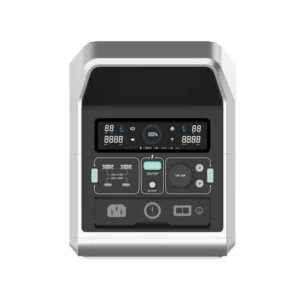
The VigorPool Captain 700 runs at 47dB, returns 93% of its DC output, and accepts an expansion battery, an unusual combination at 672 Wh. It charges internally at 600W with dual charging supported.
★★★★★
More details +
The Most Complete Machine Under a Kilowatt-Hour
Machines at this size normally offer one good feature and ask you to accept the rest. This one runs at 47 decibels with a silent inverter, which is among the quietest readings we have recorded anywhere; returns 93% of its pack through the twelve-volt output, the fifth-best DC figure in the entire database, with no measurable standby loss on that path; charges internally at 600 watts with adjustable speed and supports dual charging; carries a proper Wi-Fi and Bluetooth app; and accepts an expansion battery, which almost nothing under a kilowatt-hour does. Its solar input can also refill the pack within the usual window, something several larger, pricier machines cannot manage. The compromises are modest by comparison: 84% through the AC sockets, a point under the class line; a handover measured at exactly 20 milliseconds, the threshold itself rather than a margin inside it; a 30-volt solar ceiling that excludes rigid panels; and two 60-watt USB-C ports where one at 100 watts would serve a laptop better. PROS:
- Forty-seven decibels with a silent inverter, quiet enough to sleep beside in a tent.
- Returns 93% through DC, the fifth-best figure in our entire database.
- An expansion battery port at 672Wh, which almost nothing at this size offers.
- Internal charging at 600W with adjustable speed and dual charging supported.
- A correct 120V output with 1,485mv of electrical noise, tidy for this class.
- Solar that can refill the pack within the usual window, with a Wi-Fi and Bluetooth app.
CONS:
- Only 84% through AC, a point below the line machines this size should reach.
- The handover sits exactly on the 20ms threshold rather than inside it.
- Standby drain of 1.8% an hour with the inverter armed.
- A 30-volt solar ceiling that excludes most rigid panels.
- Two 60W USB-C ports instead of one 100W port, so laptops charge slowly.
- Two thousand cycles under three years of cover, modest for the class.
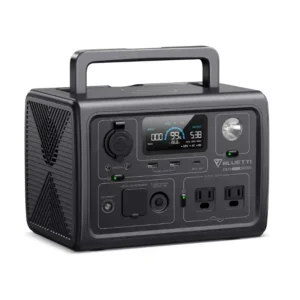
The Bluetti EB3A packs a 20ms transfer, a 600W inverter, and 430W internal charging into a 268Wh unit, with a Bluetooth app and 49dB operation. It sheds 5% of its charge every hour the inverter is armed.
★★★★★
More details +
Remarkable Specification, Worst Standby Drain Measured
Power stations at 268Wh normally charge devices quietly and do nothing else. This one carries a 600-watt inverter (more output than several units holding twice as much), a 20-millisecond transfer function that makes it the smallest machine in our database to offer one at all, 430 watts of internal charging that fills the pack in around thirty-seven minutes, adjustable charge rates, dual charging, a Bluetooth app that works off-grid, a correct 120-volt output and 49 decibels. For 10.1 pounds,s that is an extraordinary specification sheet. Then the standby figure: 5% of the charge disappears every hour the inverter sits armed (the worst idle loss recorded on any machine we have tested at any capacity), and it empties a full pack in roughly 20 hours of doing nothing. That cancels most of what the transfer function exists for, since waiting for a power cut is precisely what drains it. Charge it, use it, switch it off, and it is genuinely clever. PROS:
- A 20ms transfer, the smallest machine in our database to offer one at all.
- Internal charging at 430W with adjustable speed, filling the pack in under forty minutes.
- A 600W inverter on 268Wh, more output than several machines holding twice as much.
- A correct 120V output with no audible whine from the inverter, and 49dB fans.
- A Bluetooth app that works off-grid, plus dual charging and pass-through support.
- Ten point one pounds, a genuine one-handed carry, with solar that refills within the window.
CONS:
- Standby drain of 5% an hour, the worst figure recorded on any machine we have tested.
- Only 78% through AC, seven points below the class line.
- A 28-volt solar ceiling that excludes most rigid panels.
- Priced among the higher figures per watt-hour in our database.
- A 136W twelve-volt socket that falls just under the 150-watt threshold.
- Two thousand cycles under two years of cover, modest for the class.
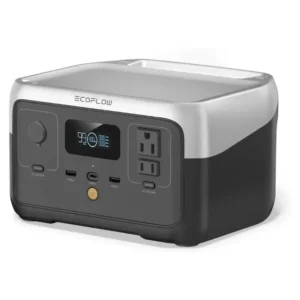
The EcoFlow River 2 weighs 7.4 pounds, the lightest in our database, and charges internally at 360W. It delivers just 190 Wh of its 256 Wh rating via AC but 228 Wh via DC, and includes Wi-Fi and Bluetooth app support.
★★★★★
More details +
At 7.4 pounds, this is the lightest machine we have put on a scale across 81 units spanning 240Wh to 6,144Wh, and for something carried rather than installed,d that counts for more than almost any other figure. EcoFlow pairs it with specifications that nothing else this small offers: 360 watts of internal charging that fills the pack in around forty-three minutes, adjustable rates, both Wi-Fi and Bluetooth, 3,000-cycle cells, and a five-year warranty—the longest coverage at this capacity. Then the conversion. Seventy-four percent reaches the AC sockets, compared with 89% through the twelve-volt path, a fifteen-point gap worth 38 watt-hours on a battery that was small to begin with. The inverter also sheds 4.4% of the charge every hour it sits armed, emptying the pack in roughly a day, and its 30-millisecond transfer ties for the slowest we have measured. Route everything onto DC and USB, switch the inverter off between sessions, and it is an excellent thing to carry.
PROS:
- Seven point four pounds; the lightest machine in our entire database.
- Internal charging at 360W with adjustable speed, filling in around forty-three minutes.
- Returns 89% through DC, fifteen points better than the AC path.
- Both Wi-Fi and Bluetooth connectivity, which nothing else at this capacity offers.
- Cells rated to 3,000 cycles under five years of cover, the longest at this size.
- Quiet at 45 decibels, correctly wired at 120 volts, and panels that finish a charge in the standard window.
CONS:
- Only 74% through the AC sockets, so a quarter of a small pack never reaches you.
- Standby drain of 4.4% an hour, which empties the pack in about a day while armed.
- A 30ms transfer, tied for the slowest reading in our database.
- A 30-volt solar ceiling that excludes most rigid panels.
- Electrical noise above 2,000mv with an audible whine from the inverter.
- A 60W USB-C port and a 100W twelve-volt socket, both modest.
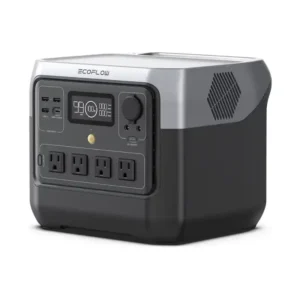
The EcoFlow River 2 Pro charges from a wall socket at 940W and refills in under an hour, weighs 17 pounds for 768Wh, and has Wi-Fi and Bluetooth apps. Its fans read 60 dB, and the switchover measures 30ms.
★★★★★
More details +
Fastest Charging Under a Kilowatt-Hour, and Among the Loudest
Most power stations of this size normally charge via an external brick at 90 to 200 watts and take four to six hours to recharge. This one takes 940 watts through an internal charger and is full in under an hour, which is a generational rather than an incremental difference, and it does so in 17 pounds, returning 45.2 watt-hours per pound, the best energy density of any machine under a kilowatt-hour we have weighed. It also features a bidirectional 100-watt USB-C port, a Wi-Fi and Bluetooth app, 3,000-cycle cells, and a five-year warranty. The costs are concentrated and severe. Sixty decibels, with an audible whine from the inverter on top, on a machine sold for camping, where a tent offers no sound insulation. A 30-millisecond switchover, tied for the slowest reading anywhere in our database. 80% conversion through the outlets vs. 88% through DC. And 2.4% hourly standby drain while armed, which costs roughly 40% of the pack over a week of waiting. Charge it fast, use the DC side, and keep it outside the tent. PROS:
- Wall charging of 940W through an internal charger, refilling in under an hour.
- Seventeen pounds for 768Wh, 45.2 Wh per pound, the best density under a kilowatt-hour.
- Returns 88% through DC, a genuinely strong figure with only 0.13% hourly loss on that path.
- A bi-directional 100W USB-C port that charges a laptop at full rate.
- Cells rated to 3,000 cycles under five years of warranty, with a Wi-Fi and Bluetooth app.
- Adjustable charging speed and a correct 120V output.
CONS:
- Sixty decibels with an audible inverter whine, unusually loud for this size.
- A 30ms switchover, the joint slowest recorded anywhere in our database.
- Only 80% through AC, five points below the class line.
- Standby drain of 2.4% an hour with the inverter armed.
- No dual charging, and 220W of solar that cannot refill the pack in the usual window.
- An 800W inverter that rules out every heating appliance.
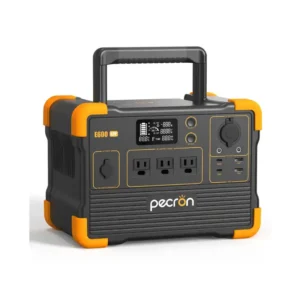
The Pecron E600LFP pairs a 1,200W inverter with 400W of solar input on a 614Wh pack, returns 91% through both output paths, and runs at 47dB with 3,500-cycle cells.
★★★★★
More details +
Double the Inverter and Double the Solar of Anything Its Size
Capacity and output are separate specifications, and no machine in our database separates them further than this one. It holds 614Wh, which is modest, and delivers 1,200 watts continuously, double the class norm and more than several units holding twice as much, meaning a microwave, a coffee maker, or a circular saw all run here, where no rival at this size could attempt them. The solar side is equally disproportionate, at 400 watts across a 12- to 95-volt window, whereas machines this size typically draw 100 to 200 watts and stop near 30 volts; 95 volts allows a proper series string of rigid panels. It converts at 91% on both paths, runs at 47 decibels behind that large inverter, outputs a correct 120 volts, and carries 3,500-cycle cells, the longest life of anything under 700Wh we have tested. The gaps are all on the other side: a 270-watt charging brick with no dual charging, no app of any kind, no transfer function, and 1.9% hourly drain while armed. PROS:
- A 1,200W inverter, double the class norm, running appliances no rival at this size can touch.
- Four hundred watts of solar across a 12 to 95 volt window, far beyond the class norm.
- Returns 91% through both AC and DC, among the better figures at any capacity.
- Cells rated to 3,500 cycles, the longest life of any machine under 700Wh we have tested.
- Forty-seven decibels behind a 1,200W inverter, and a correct 120V output.
- A 161W DC socket, a 100W USB-C port, and an exceptional value tier.
CONS:
- Wall charging of 270W through an external brick with no adjustable rate.
- No UPS mode fitted, so equipment loses power during a blackout.
- No app of any kind, no monitoring, no rate control, no firmware updates.
- Standby drain of 1.9% an hour with the inverter armed.
- Twenty pounds, heavier than most machines at this capacity.
- An audible whine from the inverter, a two-year warranty, and no dual charging.
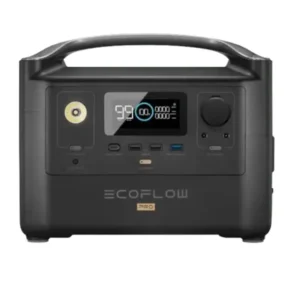
The EcoFlow River Pro returns just 530 Wh of its 720 Wh rating via AC, but 665 Wh via DC, the widest gap we have measured. It charges internally at 660W, weighs 16.8 pounds, and uses NMC cells rated for 800 cycles.
★★★★★
More details +
Most machines differ by three to five points between their AC and DC output paths. This one differs by nineteen “73% through the mains sockets versus 92% through the twelve-volt output,” the widest spread in our database, meaning the socket you choose changes what you receive by 135 watt-hours. That 73% is also the joint second-worst AC conversion we have measured, so more than a quarter of what you charge never reaches the outlets. Used on DC through its 158-watt socket, it becomes a decent camp battery: 665 Wh delivered, 16.8 pounds, internal charging at 660 watts with adjustable speed, expansion support, and a proper app. Three things limit it badly. The cells are NMC-rated for 800 cycles, the shortest life of any machine we have tested, and roughly two years of daily use. The solar input stops at 25 volts, the narrowest window in our database, which excludes nearly every rigid panel. And 58 decibels rules out the tent; this machine's weight otherwise suits.
PROS:
- Returns 92% through DC, a genuinely strong figure paired with a 158W twelve-volt output.
- Internal wall charging at 660W with adjustable speed, refilling in about an hour and a quarter.
- Sixteen point eight pounds for 720Wh, a comfortable one-handed carry.
- Expansion battery support and a Wi-Fi and Bluetooth app with a five-year warranty.
- A correct 120V output with no audible whine from the inverter itself.
- Priced in the premium value tier rather than luxury.
CONS:
- Only 73% through AC, the joint second-worst conversion in our database.
- NMC cells rated for 800 cycles, the shortest life of any machine we have tested.
- A 25-volt solar ceiling, the narrowest in our database, excluding nearly all rigid panels.
- Fifty-eight decibels, too loud for a tent or a bedroom.
- No UPS mode fitted, and no dual charging.
- A 600W inverter with 1,200W of surge, the lowest at this capacity.
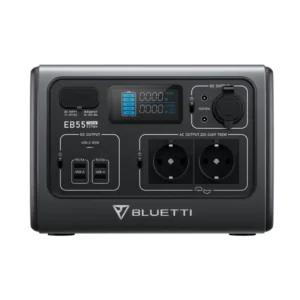
The Bluetti EB55 delivers 468Wh of its 537Wh rating, features a 700W inverter, runs at 48dB, and supports dual charging at 400W. Output measures 110 volts, charging runs through an external brick, and there is no app.
★★★★★
More details +
Judged on performance, this is a decent compact machine: 87% returned through the sockets and 89% through DC, both above the class line; 48 decibels, quiet enough to sleep beside in a tent; a 700-watt inverter that is generous for 537Wh; a 100-watt USB-C port; and dual charging at 400 watts combined, the highest figure of any compact unit we have measured. Judged on price, it sits among the most expensive machines per watt-hour we have reviewed, ahead of the flagship split-phase systems and the modular home installations several times its size. What that premium buys is an external 200-watt charging brick, no app of any kind, no transfer function, a 28-volt solar ceiling that excludes rigid panels, 2,000-cycle cells under two years of cover, and an output measuring 110 volts, below the accepted band and harder on any motor. The Pecron E600LFP offers greater capacity, converts four points more efficiently, outputs the correct voltage, delivers 1,500 more cycles, and takes nearly triple the solar, for considerably less per watt-hour.
PROS:
- Forty-eight decibels under load, quiet enough to sleep beside in a tent.
- Returns 87% through AC and 89% through DC, both above the class line.
- Dual charging at 400W combined, the highest of any compact machine we have tested.
- A 700W inverter, generous for 537Wh, with a 100W USB-C port.
- Solar that can refill the pack within the usual window, with the array permanently connectable.
- Bluetti's support network with a 24-hour response commitment.
CONS:
- The highest price per watt-hour of any machine in our entire database.
- Output measured 110 volts, below the accepted band and hard on motors.
- Wall charging of 200W through an external brick with no adjustable rate.
- A 28-volt solar ceiling that excludes most rigid panels.
- No UPS mode, no app, and no expansion path.
- Two thousand cycles under two years of cover, and an audible inverter whine.
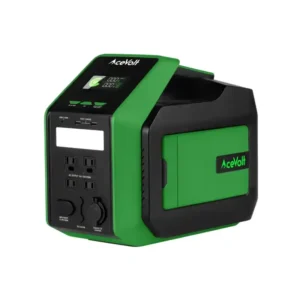
The Acevolt Campower 700 runs at 46dB, the quietest reading we have measured, and returns 89% through both AC and DC. Mains power arrives at 200W from a separate brick, with neither a handover function nor connectivity.
★★★★★
More details +
The Quietest Machine We Have Measured
Across every machine tested for this site, at every capacity and from every brand, none runs quieter under load than this one. Forty-six decibels is roughly a quiet refrigerator heard across a room, and in a tent (where canvas absorbs nothing, and the unit sits an arm's length from your head) that is the specification that decides whether you sleep. It backs the quiet with an unusually consistent 89% conversion through both the AC sockets and the 12-volt output, so the choice of socket costs nothing, plus 2,500-cycle cells and a 100-watt USB-C port that charges a laptop at full speed. The costs are concentrated in how energy gets in and what the machine knows about itself: 200 watts through an external charging brick at one fixed rate, around three and a half hours from empty; a 175-watt solar ceiling capped at 28 volts that excludes nearly every rigid panel; no app of any kind; and no transfer function. The awkward comparison is the VigorPool Captain 700, one decibel louder and better in almost every other way. PROS:
- Forty-six decibels under load, the quietest fan reading in our entire database.
- Returns 89% through both AC and DC, so the choice of socket costs nothing.
- Cells rated to 2,500 cycles, more than either rival at this capacity.
- A 100W USB-C port that charges a laptop at full rate.
- No measurable standby loss on the DC path, and a 145W twelve-volt socket.
- Output inside the accepted voltage band, unlike several rivals at this size.
CONS:
- Wall charging of 200W through an external brick, three and a half hours from empty.
- No UPS mode fitted, so equipment loses power during a blackout.
- No app of any kind, no monitoring, no rate control, no firmware updates.
- A 175W solar ceiling capped at 28 volts, excluding most rigid panels.
- Standby drain of 2.4% an hour with the inverter armed.
- An audible whine from the inverter, and no expansion path.
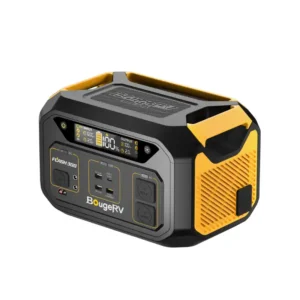
The BougeRV Flash 300 accepts 600W of solar on a 286Wh pack and charges from the wall at 600W, filling in under half an hour. Behind it sit NMC cells rated for 700 cycles, and with a shutoff, there is no way to switch them off.
★★★★★
More details +
Twice the Solar Input of Its Own Battery, at the Highest Price Per Watt-Hour
Solar input is normally sized to the pack behind it, and a 286Wh machine typically accepts 60 to 160 watts. This one accepts 600 across a 12- to 45-volt window at 25 amps, a panel input more than twice the size of its own battery, and a ratio that nothing else in our database approaches. Wall charging matches it at 600 watts through an internal charger, filling the machine in around twenty-nine minutes. That is the case for it, and it is real. Everything about living with it points the other way: NMC cells rated for 700 cycles, roughly two years at daily use where LiFePO4 rivals offer 2,000; an automatic shutoff the grading data records as impossible to disable, which stops low-draw loads unattended; 58 decibels plus an audible inverter whine; an output measuring 110 volts; an eighteen-month warranty; and the highest price per watt-hour of any machine in our entire database, by a clear margin over second place. PROS:
- Six hundred watts of solar on a 286Wh pack, a ratio unmatched anywhere in our database.
- Internal wall charging at 600W, filling the pack in under half an hour.
- Twenty-five amps of solar current, matching machines ten times its capacity.
- A 600W inverter and a 100W bi-directional USB-C port.
- A 45-volt solar ceiling, allowing a small series pair where most compact machines cannot.
- An internal charger rather than an external brick, unusual at this size.
CONS:
- The most expensive machine per watt-hour we have tested, by a clear margin.
- NMC cells rated for 700 cycles, roughly two years at daily use.
- An auto shutoff that cannot be disabled, which stops low-draw loads unattended.
- Fifty-eight decibels with an audible inverter whine, too loud for a tent.
- Output measured 110 volts, below the accepted band and hard on motors.
- An eighteen-month warranty, no app, and no dual charging.
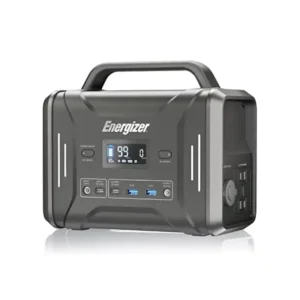
The Energiser 320Wh weighs nine pounds, the lightest machine in our database, and runs at 43dB. From a 320Wh label, it hands back 260Wh at a proper 120 volts, though refilling runs at 63W from a brick in the cable.
★★★★★
More details +
The Lightest and Third Quietest Machine We Have Measured
Across power stations we have tested and reviewed ranging from 240Wh to 6,144Wh, nothing in our database weighs less than 9 pounds, and only two run quieter than 43 decibels. For a backpacking trip or a small tent, that pairing counts for more than almost any other line on a specification sheet, and this machine adds a correct 120-volt output, an inverter recorded as silent, 1,316mv of electrical noise that is clean for its size, an 89% return through the twelve-volt path and a 155-watt DC socket that clears the useful threshold. The costs depend on how much energy you put in and how much you can draw. Wall charging is 63 watts through an external brick, more than five hours from empty, with no dual charging to help. The solar ceiling of 65 watts is the lowest maximum input of any machine in our entire database, on a 3-amp limit and a 23.5-volt window that excludes essentially every rigid panel. And the 300-watt inverter is the smallest continuous output we have recorded, ruling out most appliances. PROS:
- Nine pounds, the lightest machine in our entire database.
- Forty-three decibels with a silent inverter, the third quietest reading measured.
- Returns 89% through DC, a strong figure for a machine this small.
- A correct 120V output with 1,316mv of electrical noise, clean for this size.
- A 100W bi-directional USB-C port and a 155W twelve-volt socket.
- LiFePO4 cells at a premium value tier with a 24-hour response commitment.
CONS:
- Sixty-five watts of solar, the lowest maximum input we have recorded.
- Wall charging of 63W through an external brick, over five hours from empty.
- A 300W inverter, the smallest continuous output in our database.
- Only 81% through AC, four points below the class line.
- No UPS mode, no app, no dual charging and no expansion path.
- A 23.5-volt solar ceiling that excludes essentially every rigid panel.
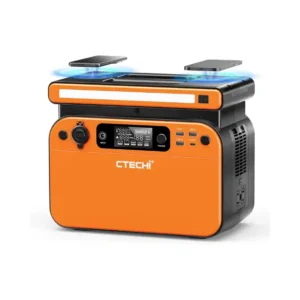
The CTechi 500Wh runs at 45dB and outputs a correct 115 volts, returning 420 Wh of its 518 Wh rating. It has no pass-through charging and carries a one-year warranty, the shortest in our database.
★★★★★
More details +
Quiet and Correctly Wired
Compact power stations live in tents and vehicles, where quiet matters more than any figure on the box, and this one measures 45 decibels, with the inverter recorded as silent, among the quietest readings in our database. It also delivers 115 volts, within the accepted band, which four compact machines we have tested fail to manage, and fits a 167-watt twelve-volt socket, the best in its class, alongside 87.6% DC conversion and the only dual charging of the three units at this capacity. Two things count against it heavily. It is one of just two machines in our entire database with no pass-through charging at all (the other holds seven times the capacity), so filling and using are mutually exclusive, which, on a four-and-a-half-hour wall charge, means most of an afternoon doing nothing for you. And the warranty runs for one year, the shortest we have recorded, on cells rated to last five and a half years. PROS:
- Forty-five decibels with a silent inverter, among the quietest in our database.
- Output at 115 volts, inside the accepted band where four compact rivals fall below it.
- A 167W twelve-volt socket, comfortably clearing the 150-watt threshold.
- Returns 87.6% through DC, clearing the line on the twelve-volt path.
- Dual charging at 175W, which neither rival at this capacity offers.
- Fifteen point four pounds and a premium value tier.
CONS:
- No pass-through charging, so the machine cannot supply loads while it refills.
- A one-year warranty, the shortest cover of any machine we have tested.
- Only 81% through AC, four points below the class line.
- Wall charging at 120W through a brick, around 4.5 hours from empty.
- A 60W USB-C port that slows a modern laptop, and no app.
- Solar caps around 101W, with no voltage window recorded in our data.
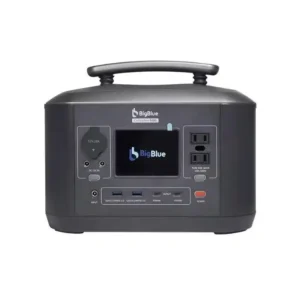
The BigBlue CellPowa 500 delivers 460Wh of its 537Wh rating at the correct 120 volts, converts at 88% efficiency via DC, and supports dual charging at 213W. Its solar input caps at 85W, the lowest we have measured.
★★★★★
More details +
Correct Voltage and Sound Conversion, With Token Solar
Few compact power stations we have reviewed deliver 110 volts or less, which makes any motor draw extra current and run hotter over repeated cycles. This one delivers a correct 120, pairs it with conversion efficiencies of 85% through the sockets and 88% through DC (at or above the class line on both paths), plus dual charging at 213 watts and a price per watt-hour that undercuts its closest rivals. What it gives up is the solar input, which holds a record at the wrong end: 85 watts is the lowest maximum of any machine in our entire database, across every capacity and brand, and it comes with a 30-volt ceiling that excludes most rigid panels and a 4-amp current limit among the lowest recorded. Wall charging is 92 watts through an external brick, taking close to six hours from empty, though dual charging brings that down to two and a half on a bright day. Two 60-watt USB-C ports also slow down a modern laptop, whereas one 100-watt port would not. PROS:
- A correct 120V output, which four compact machines in our database fail to deliver.
- Returns 85% through AC and 88% through DC, both at or above the class line.
- Dual charging at 213W, which more than doubles the socket alone.
- Two bi-directional USB-C ports that can also refill the machine.
- A premium value tier rather than luxury, undercutting rivals at this capacity.
- LiFePO4 chemistry with a 24-hour customer service response commitment.
CONS:
- Solar capped at 85W, the lowest maximum input of any machine in our database.
- Wall charging at 92W with an external brick, close to 6 hours from empty.
- Two 60W USB-C ports instead of one 100W port, so laptops charge slowly.
- No UPS mode, no app, and no expansion path.
- A 30-volt solar ceiling and 4-amp limit, both restrictive.
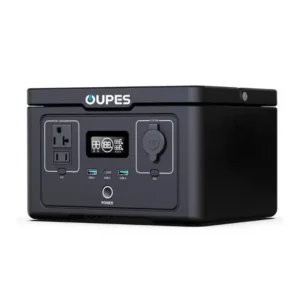
The Oupes 600 delivers 470Wh of its 595Wh rating, is powered by a 600W inverter, weighs 14.9 pounds, and charges at 97W via an external brick. Output measures 110 volts, and there is no transfer function or app.
★★★★★
More details +
Tested Oupes, and the Same Four Gaps
We have tested several Oupes power stations, and all share the same list: mains charging through an external brick, no automatic transfer function, no app of any kind, and a solar input capped around 30 volts that excludes most rigid panels. The smallest of them repeats every one, then adds an output measuring 110 volts and conversion of 78% through the sockets, seven points below where machines this size should land. Charging runs at 97 watts, more than six hours from empty, though dual charging at least lifts the combined figure to 160. What it genuinely offers is weight: 14.9 pounds is the lightest of any machine at this capacity we have put on a scale, a real one-handed carry-over distance, and the 160-watt, twelve-volt socket clears the threshold most compact machines miss. The Pecron E600LFP, at almost identical capacity, converts 13 points better, carries double the inverter, takes more than 3 times the solar, and costs less per watt-hour. PROS:
- Fourteen point nine pounds, the lightest machine at this capacity we have weighed.
- Dual charging supported at 160W, which its own rivals at this capacity lack.
- Returns 84% through DC, six points better than the AC path.
- A 160W twelve-volt socket that clears the 150-watt threshold.
- A bi-directional 60W USB-C port and an exceptional value tier.
- LiFePO4 chemistry with a 24-hour customer service response commitment.
CONS:
- Wall charging of 97W through an external brick, over six hours from empty.
- Only 78% through AC, seven points below the class line.
- Output measured 110 volts, below the accepted band and hard on motors.
- Solar capped at 115W with a 30-volt ceiling that excludes most rigid panels.
- No UPS mode, no app, and no expansion path.
- Fifty-one decibels with an audible inverter whine, and 2,000-cycle cells.
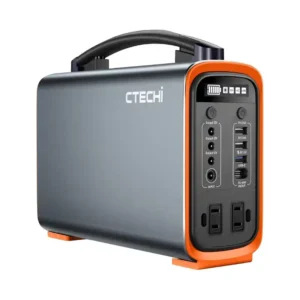
The CTECHi GT200 240Wh portable power station is the smallest machine we have tested, weighing 7.9 pounds and delivering 190Wh at the correct 120 volts. Its 200W inverter is the smallest in our database.
★★★★★
More details +
The Smallest and Cheapest Machine We Have Tested
Two hundred and forty watt-hours behind a 200-watt inverter makes this the smallest machine in our database on both counts, and at 7.9 pounds it is the second lightest we have weighed. There is a real argument for something this modest: if your loads are a laptop, a camera, some lighting and a phone, anything larger is weight and money carried for nothing. It also gets one thing right: four compact machines four times its size do not. Output measures a correct 120 volts, so the small things you run are treated properly. It returns 87% through the twelve-volt path, supports dual charging at 120 watts combined, and costs less per watt-hour than anything else at this capacity. The limits are plain and mostly definitional. The 200-watt inverter rules out everything beyond devices and lighting. Wall charging is 60 watts via an external brick, taking 4 hours from empty, and the solar ceiling of roughly 60 watts is among the lowest we have recorded. Cover runs for a single year. PROS:
- The smallest and cheapest machine in our database, at an entry price tier.
- Seven point nine pounds, the second lightest machine we have weighed.
- A correct 120V output, which four compact machines in our database fail to deliver.
- Returns 87% through DC, clearing the class line on the twelve-volt path.
- Dual charging at 120W combined, which halves the wait in decent sun.
- LiFePO4 cells rated to 2,000 cycles with the array permanently connectable.
CONS:
- A 200W inverter, the smallest continuous output we have recorded.
- Wall charging at 60W with an external brick, around 4 hours from empty.
- Solar of about 60W, among the lowest ceilings in our data.
- Only 79% through AC, six points below where machines this size should land.
- No app, no transfer function, and no expansion path.
- No fan noise or electrical noise is present in our data, and the cover runs for one year.
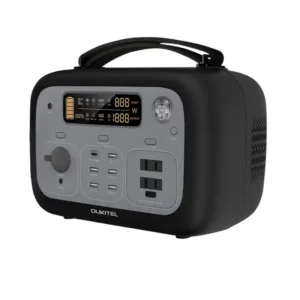
The Oukitel P501 uses NMC cells rated for just 500 cycles, the shortest life in our database, and has an automatic shutoff that turns the machine off under light loads. It returns 430 Wh of its 505 Wh rating.
★★★★★
More details +
Shortest Cell Life in the Database
Across the power stations we have tested, nothing is rated for fewer charge cycles than this. Five hundred cycles on NMC chemistry amounts to only a few months with one charge a day, with the nearest comparison in our database being 800. Most machines at this capacity offer 2,000. The second problem affects every use, not just the long term: an automatic shutoff that the grading data records as impossible to disable. Machines with this feature turn themselves off when the draw falls below a few watts, assuming nothing is connected, which a CPAP between breaths, a fridge between compressor cycles, or a camera battery near full can all trigger. What the machine does well is genuine but narrow: 92% returned through DC, the strongest twelve-volt figure of the three at this capacity; 12.3 pounds, the lightest we have weighed at this size; and a full 100-watt USB-C port. Test any overnight load before you depend on it. PROS:
- Returns 92% through DC, the strongest twelve-volt figure of the three at this capacity.
- Twelve point three pounds, the lightest machine we have weighed at this capacity.
- A 100W USB-C port that charges a laptop at full rate.
- Meets the class line at 85% through the AC sockets.
- The array can stay permanently connected, with pass-through charging supported.
- A premium value tier with a 24-hour customer service response commitment.
CONS:
- NMC cells rated for 500 cycles, the shortest life of any machine in our database.
- An automatic shutoff that cannot be disabled, which stops low-draw loads unattended.
- Output measured at 110 volts, below the accepted band and hard on motors.
- Wall charging at 122W with an external brick, around 4 hours from empty.
- No app, no dual charging, and no expansion path.
- Neither a solar voltage window nor a fan noise figure is recorded in our data.
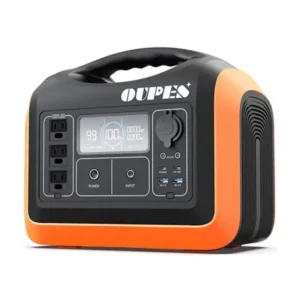
The Oupes 1100 delivers 810 Wh of its 992 Wh rating through a 1,100 W inverter. Main power comes in at 180W via a separate brick; panels stop at 161W and 30 volts, and neither a handover function nor connectivity is fitted.
★★★★★
More details +
By the third machine from a manufacturer, a repeated flaw stops being a coincidence. Across the Oupes 600, this 1100, and the Oupes 1800, the same list appears every time: no automatic transfer function, mains charging through an external brick, no app of any kind, and a solar input that stops around 30 volts, thereby excluding most rigid panels. This is the middle machine of that group, and it adds a 110-volt output that falls below the accepted band and is harder on any motor, plus it has the weakest conversion of the three at 81.6% through the sockets and 80% through DC. Charging runs at 180 watts and takes more than five hours from empty, with no dual charging to shorten it. What works is genuine but modest: a 1,100-watt inverter with a comfortable 2x surge margin, 52 decibels, and 24 pounds. The Bluetti Elite 100 V, at almost the same capacity, charges nearly seven times faster, hands over in 8.7 milliseconds while arming itself, and outputs the correct voltage.
PROS:
- An 1,100W inverter with 2,200W of surge has a comfortable 2x margin for compressor starts.
- Fifty-two decibels under load, quieter than several machines at this capacity.
- Twenty-four pounds for 992Wh, a manageable one-handed carry.
- The array can stay permanently connected, with pass-through charging supported.
- LiFePO4 chemistry with a 24-hour customer service response commitment.
- Priced in the premium value tier rather than the luxury one.
CONS:
- Wall charging at 180W via an external brick, taking over five hours from empty.
- No UPS mode is fitted, so the equipment loses power during a blackout.
- Solar capped at 161W with a 30-volt ceiling that excludes most rigid panels.
- Output measured 110 volts, below the accepted band and hard on motors.
- Conversion of 81.6% through AC and 80% through DC, both below the class line.
- A 60W USB-C port, no app, no expansion path, and no dual charging.
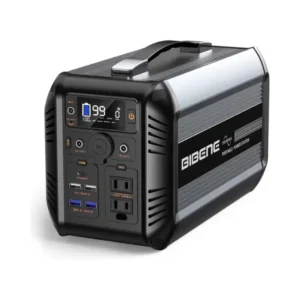
The Bibene 614Wh returns just 451Wh via AC but 561Wh via DC, an 18-Wh gap. Solar caps at 94W across a 12- to 24-volt window, among the tightest measured, and charging runs at 94W through a brick.
★★★★★
More details +
Two Very Different Machines Depending on Which Socket You Use
Ask this machine's AC sockets for energy, and 73% of the rated pack arrives, the joint-second-worst conversion figure in our database. Ask the twelve-volt output and 91% arrives, which is genuinely good. That eighteen-point spread is the second widest we have measured and is worth 110 watt-hours (nearly a fifth of everything you charged), so the socket you choose fundamentally changes what you own. Used on D,C, it is a reasonable camp battery: 561 Wh delivered, 16.8 pounds, and electrical noise of 1,096 mV that is cleaner than machines costing several times as much. Everything else is at or near the bottom of the category. The solar input caps at 94 watts across a 12- to 24-volt window, among the smallest ceilings and tightest ranges we have measured, which excludes essentially every rigid panel made. Wall charging runs at 94 watts through a brick, more than six hours from empty. And a 500-watt inverter delivering 110 volts is the weakest output at this capacity. PROS:
- Returns 91% through DC, a strong figure for camp and vehicle loads.
- Electrical noise of 1,096mv, cleaner than machines costing several times as much.
- Sixteen point eight pounds for 614Wh, a comfortable one-handed carry.
- LiFePO4 chemistry at an exceptional value tier.
- The array can stay permanently connected, with pass-through charging supported.
- A 24-hour customer service response commitment behind the warranty.
CONS:
- Only 73% through AC, the joint second-worst conversion in our database.
- Solar capped at 94W across a 12 to 24 volt window, among the tightest measured.
- A 500W inverter at 110 volts, the lowest rating at this capacity.
- Wall charging of 94W through a brick, more than six hours from empty.
- No UPS mode, no app, no expansion path,th and no dual charging.
- No fan noise measurements are available in our data, and cells are rated for only 2,000 cycles.
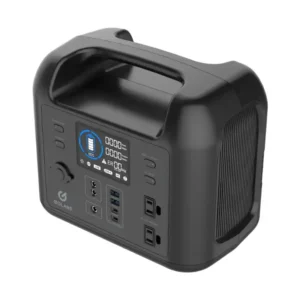
The GoLabs R500 returns just 370 Wh of its 518 Wh rating via AC, the lowest conversion figure in our database. It charges at 86W via an external brick, and its solar input is capped at 23.5 V.
★★★★★
More details +
Across the power stations we have tested and reviewed, ranging from 240Wh to 6,144Wh, none returns less of its rated pack through the AC sockets than this one. Seventy-one percent means 148 watt-hours of a 518Wh battery never reach you, more than a quarter of what you charged, and roughly the entire capacity of a small camping unit. The twelve-volt path is better at 79%, yet still below what most machines achieve on their weaker route. Everything else belongs to the same generation: 86 watts of wall charging through an external brick, around six hours from empty with no dual charging to help; a solar input capped at 23.5 volts and 5 amps, among the narrowest windows and the lowest current limit we have recorded, which excludes essentially every rigid panel; an output measuring 110 volts; and no app of any kind. What it genuinely offers is 14.3 pounds, the lightest at this capacity, and a 100-watt bi-directional USB-C port. Both rivals at this size return 14 to 16 more points from their battery.
PROS:
- Fourteen point three pounds for 518Wh, the lightest of the three at this capacity.
- A 100W bi-directional USB-C port that charges a laptop at full rate.
- LiFePO4 chemistry with a 24-hour customer service response commitment.
- The array can stay permanently connected, with pass-through charging supported.
- Two thousand rated cycles, matching both rivals at this capacity.
- A simple design with few points of failure.
CONS:
- Conversion of 71% through AC, the weakest figure in our entire database.
- Wall charging at 86W with an external brick, around 6 hours from empty.
- A 23.5-volt solar ceiling at 5 amps, among the most restrictive in our data.
- Output measured 110 volts, below the accepted band and hard on motors.
- No UPS mode, no app, no dual charging, and no expansion path.
Show next