
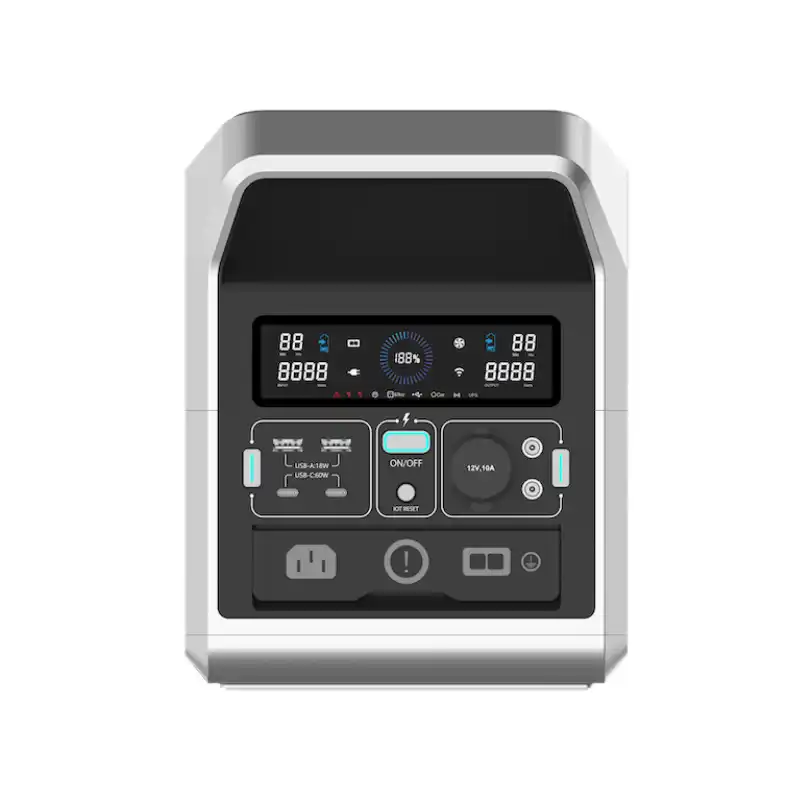
VigorPool Captain 700 Review

The VigorPool Captain 700 runs at 47dB, returns 93% of its DC output, and accepts an expansion battery, an unusual combination at 672 Wh. It charges internally at 600W with dual charging supported.
My Quick Verdict
Almost nothing at this capacity does three things at once: run quietly enough for a tent, deliver more than 90% through its DC output, and accept an expansion battery. This does all three.
Forty-seven decibels is among the quietest readings we have recorded. 93% through DC is one of the best figures we have seen in power stations we have tested and reviewed. And an expansion port with 672 Wh is genuinely rare.
It also charges internally at 600 watts, supports dual charging, and carries a proper Wi-Fi and Bluetooth app.
The AC path is the weak half at 84%, and the handover sits exactly on the 20-millisecond threshold rather than inside it.
Best for: Quiet camping and van builds running twelve-volt equipment, with room to grow the system later.
Not for: protecting a computer, heating appliances, or rigid solar arrays.
Key Stats
Introduction
Machines at this size usually give you one good feature and ask you to live with the rest. Quiet but slow to charge, or efficient but with no app, or capable but fixed at whatever capacity you bought.
The Captain 700 breaks that pattern. It runs at 47 decibels, returns 93% of its pack through the 12-volt output, charges internally at 600 watts with dual charging support, includes a working app, and accepts an expansion battery.
An expansion port at 672Wh is the rarest of those. Very few machines under a kilowatt-hour offer any path to more capacity at all.
The pack claims 2,000 lithium iron phosphate cycles and comes with a 3-year warranty.
What It Can Actually Run
Seven hundred watts sustained with 1,400 in a burst. Enough for a fridge, a screen, lamps and chargers; nothing that makes heat.
Rated at 672 Wh, the sockets returned 560 Wh (84%), just under the class line. Mains calculations rest on 560Wh, twelve-volt ones on the better 625Wh.
- Refrigerator at 150W: three and three-quarter hours.
- CPAP at 40W with the humidifier off: fourteen hours.
- Starlink dish at 50W: eleven hours.
- A 45W twelve-volt camp fridge on DC: close to 14 hours, using 625 Wh.
The line held exactly 120 volts, the inverter stayed silent, and 1,485 mV of electrical noise is tidy for this class.
Charging and Smart Features
Wall input reaches 600 watts through an internal charger with adjustable speed. From empty,y that is a little over an hour.
The panel side handles 240 watts at 12 volts, or 20 amps at 12 volts, and the sheet confirms that sunshine alone fills the pack within the standard window.
Dual charging is supported at 600 watts shared, so mains and panels can run together.
The handover measured 20 milliseconds. Upper mid-range price tier, premium value tier.
Charging Speed Benchmarks
Where the VigorPool Captain 700 lands on recharging within the 300Wh to 999Wh capacity class, based on all 28 units in our charging database. Mean wall input there is 279W and mean solar input is 192W. Every rating is calculated inside this class, so it ranks the machine among its own size peers and nothing larger.
Internal charging at 600W is more than double the 279W class average, a clear High rating, and dual charging is supported so panels can stack on top. A 672Wh pack refills in roughly 1.1 hours from a socket. What makes the figure count on this particular machine is the expansion battery: a unit designed to grow needs a charger sized for more than its base pack, and most machines at this capacity are fed by a 200W brick that would struggle with the second battery.
Solar accepts 240W, above the 192W class average and a High rating, though well under the 600W bracket ceiling. The array fills the pack in about 2.8 hours in strong light, roughly two and a half times the wall socket. That is a reasonable pairing for a machine meant to be carried rather than installed, but it does mean an expansion battery roughly doubles the solar day while leaving the panel ceiling exactly where it was.
Need a faster grid recharge at this size? The EcoFlow River 2 Pro draws 940W from a wall socket, more than half again the Captain 700 and near the top of the class, filling a larger 768Wh pack in around 0.8 hours. Solar falls slightly to 220W, and its fans read 60dB against 47dB here, so the speed comes with noise you will notice indoors.
Real Capacity: What You Actually Get
The two paths diverge by nine points, and the twelve-volt side is much the stronger.
A meter on the sockets recorded 560 Wh, compared with a claimed 672 Wh. 84% sits a point below the line power stations are expected to reach.
Twelve volts delivered 625 Wh (93%), ranking fifth across all metrics measured here and topped only by far larger units.
Standby follows the same split. Armed, it sheds 1.8% per hour; at 12 volts, the meter registered nothing.
The practical conclusion is clear: route everything you can onto twelve volts, where the machine gives back nearly everything it holds and loses nothing while waiting.
My takeaway: Reckon on 560 Wh at the outlets, 625 Wh at 12 volts. The twelve-volt path returns nine points more and holds its charge indefinitely, which is where this machine belongs.
Power Output and Surge: What It Can Turn On
Seven hundred watts continuous is appropriate for the capacity. The fridge, screen, lamps, and chargers are all comfortable. Kettles and heaters are not.
A household compressor waking up sits well inside the 1,400-watt burst.
At 145 watts, the twelve-volt outlet falls just shy of the 150-watt bar, yet 93% efficiency makes it the port worth using.
USB-C is the weaker specification: two ports at 60 watts each, rather than one at 100 watts. That charges phones and tablets at full rate but slows a modern laptop.
Everything about the power is sound: correct voltage, a quiet inverter, and noise figures better than most units this size.
Real Appliance Runtimes
Main figures are based on 560 Wh; the DC line uses the higher 625 Wh.
The CPAP and camp fridge lines together describe what this machine is for: a full night of quiet operation in a tent, or fourteen hours of twelve-volt refrigeration with almost nothing lost.
Recharging: Wall and Solar
From a Wall Outlet
Six hundred watts from an internal charger fills the pack in a little over an hour, which is quick for this capacity and generation rate.
Charging speed is adjustable, so a gentler overnight rate is available when time allows.
Dual charging is supported at 600 watts shared between the two inputs, so panels and mains can run together. That is unusual at this size and genuinely useful for a van or camp setup.
It also uses an internal charger rather than an external brick, which sets it apart from several rivals at this capacity that deliver 200 watts through a separate component.
From Solar Panels
The panel input draws 240 watts at 12-30 volts and 12 amps.
Two hundred and forty watts is slim, yet the sheet confirms the panels finish the job within the standard window, something a number of bigger and pricier machines fail to do.
Engaging from 12 volts, one folding panel registers at once, which fits the camp and van work this is meant for.
Thirty volts at the ceiling is the constraint. Rigid panels generally exceed it and go unrecognised, leaving parallel foldables as the route.
The array can stay permanently connected,ed and pass-through charging is supported.
Blackout Backup: The Part I Care About Most
The handover measured 20 milliseconds, which is the safety threshold itself rather than a margin inside it.
For a refrigerator, lighting, or a router,r that is fine. For a desktop or a network drive, whether it survives depends on the equipment’s internal power supply rather than on the power station.
At this capacity, a transfer function of any kind is unusual, so having one at all puts the Captain 700 ahead of most of its rivals, several of which have none.
The 1.8% hourly standby drain means leaving the inverter armed costs something. Over a week, that is roughly a third of the pack, so switch it off between uses.
Why this matters to me: a transfer function at 672Wh is rare enough to be worth having, but 20 milliseconds is the line rather than a comfortable distance from it. Treat this as protection for a fridge, not for a computer.
Noise and Living With It
Forty-seven decibels under load, which is among the quietest readings we have recorded at any capacity.
The inverter itself is also silent, so the fans are the only source of noise, a combination that several rivals at this size cannot claim.
For camping, that specification matters most because a tent offers no sound insulation. Comparable EcoFlow units measure 60 and 58 decibels respectively.
Twenty pounds, 9 kilograms, is fair for what it holds. Wi-Fi and Bluetooth both work, backed by three years of cover and a same-day response pledge.
Where It Falls Short
Three limitations, and none of them is severe.
1. 84% Through AC
One point under the standard for this size, leaving 112 watt-hours of the label unreachable at the outlets.
93% on twelve volts more than makes up for it, for whatever you can put there.
2. A 20-Millisecond Handover and 1.8% Standby Drain
The handover sits exactly on the threshold rather than inside it, so a computer may or may not ride through.
Leaving the inverter live costs 1.8% per hour, or about a third of the pack over a week. Keep to twelve volts, where nothing escapes.
3. A 30-Volt Solar Ceiling and Dual 60W USB-C
Anything rigid usually runs past 30 volts, and the input ignores it.
And two 60-watt USB-C ports charge phones and tablets at full speed but slow down any modern laptop, where a single 100-watt port would be better.
How It Compares
Two comparisons at almost identical capacity, both of which this machine beats on the measures that matter for camping.
The Acevolt Campower 700 converts 5% better through AC and is 1 decibel quieter. Everything else favours the VigorPool: three times the charging speed, dual charging, a working transfer function, correct 120-volt output, an expansion port,ort and an app.
The Bluetti EB70 trails both. It charges via a 200-watt brick, outputs 110 volts, and has no transfer function or app.
Among machines at this capacity, the Captain 700 is the most complete package we have tested, and the scoring agrees.
Who Should Buy It, and Who Should Skip It
Buy It If
- Quiet operation matters and the machine sleeps in the same space as you.
- Your loads run on 12 volts, with 93% arriving and nothing leaking while idle.
- You want a path to more capacity later, which almost nothing at this size offers.
- Charging from the mains and panels together suits your travel.
Skip It If
- You are protecting a compute, where 20 milliseconds is the line, not a margin.
- A heater or kettle is on your load list.
- Your array is rigid panels, which the 30-volt ceiling shuts out.
- You charge laptops frequently and want a full 100-watt USB-C port.
The Bottom Line
This is the most complete machine we have tested under a kilowatt-hour. Forty-seven decibels, 93% through DC, an expansion port, dual charging, a working app, and a correct 120-volt output is a combination nothing else at this size assembles.
The compromises are real but modest: 84% through the sockets, a handover sitting exactly on the threshold, and a solar ceiling that rules out rigid panels.
For a tent, a van, or a quiet room, run it on twelve volts,lts and it does almost everything well. That is a rarer thing at this capacity than the price suggests.


There are no reviews yet.