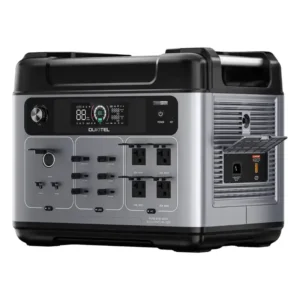
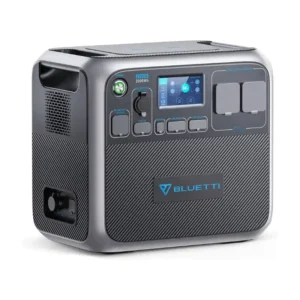
2000W to 3000W high-capacity power stations, tested and compared.Heavy-duty units for RV air conditioning, extended home backup, and high-amp tool operation.
The 2,000 to 3,000 Wh band is the largest tier we test, with most of our tested power stations living here. It bridges heavy outdoor adventure power and whole-house emergency prep: enough capacity for a luxury RV or critical medical survival, without the installation demands of a split-phase system.
It is also the tier where weight becomes a genuine consideration. Machines here run from 35 to 127 pounds, and above about 60 pounds, you want telescoping pull handles and wheels rather than a top handle.
Select the power stations you want to compare by clicking Compare on each product. When you have made your selections, click the ⚖️ scale icon to open a detailed side-by-side comparison of their key specifications, features, and performance data.
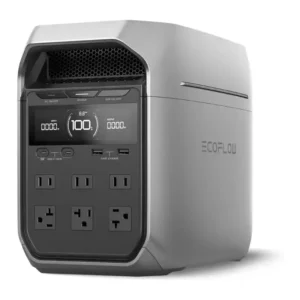
The EcoFlow Delta 3 Max Plus holds 2,048Wh behind a 3,000W inverter with 6,000W of surge, crossing over in 7.9ms with a self-arming inverter. Distortion measures 0.30% “the cleanest recorded” fans stay at 42dB, and dual charging reaches 2,600W. Upper mid-range price tier, good value.
On almost all power stations we have reviewed, nearly every one has carried a defect that decides who should not buy it: fans too loud for a bedroom, an inverter that will not arm itself, a solar window too narrow for real panels, a pack that drains while it waits. This is the first one in which the shortcomings are matters of degree rather than exclusion. It crosses over in 7.9 milliseconds and arms itself, which only three of the previous thirteen could do, and it loses just 0.9% an hour, so leaving it armed costs nothing. Distortion measured 0.30%, around a fifth of the field average,e and the cleanest waveform recorded anywhere here, and the fans hold 42 decibels despite a 3,000-watt inverter behind them. Dual charging reaches 2,600 watts across two independent solar ports. What it does not do is deliver cheap energy: 84% conversion is the only ordinary figure on the sheet; it weighs 48 pounds and sits in the good value tier, while rivals at this capacity reach exceptional. You are paying a price tier for finished engineering rather than for watt-hours, which is rare enough in this category to be worth saying plainly.
Battery safety and chemistry (LiFePO4, 3,500 cycles)
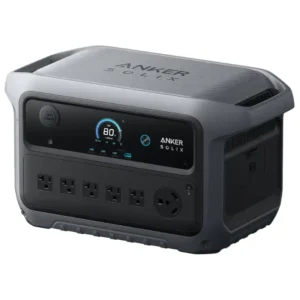
The Anker SOLIX C2000 Gen 2 stores 2,048Wh behind a 2,400W inverter, crosses over in 7.2ms with a self-arming inverter, and loses only 0.41% of its charge per hour idle, both the best figures in this dataset. Cells rate at 4,000 cycles and sit in the upper-mid-range price tier at exceptional value.
Backup power fails in two ways, and this unit posts the best figures in the dataset for both: 7.2 milliseconds to take the load, the quickest crossover recorded here, and 0.41% per hour on standby, the lowest idle drain I have measured anywhere. These are the numbers that determine whether a power station is actually protecting your equipment. A fast crossover is useless if the battery has drained itself in storage, and a full battery is useless if the handover takes too long.
It also arms itself automatically, which most units in this dataset cannot do, so there is no configuration to remember. Add 4,000 cycles, 0.60% distortion, 44 decibels, 41 pounds, and 1,760Wh delivered from a 2,048Wh battery, and the package earns an exceptional value rating. The flagship, which this unit outperforms on those measures, only reaches the good tier.
The one limitation is specific: the solar panels cannot remain connected continuously. That rules out a permanently wired solar array, but little else. If your solar setup is roof-mounted, look elsewhere. For everything else at this capacity, this is the power station I would buy.
Battery safety and chemistry (LiFePO4, 4,000 cycles)
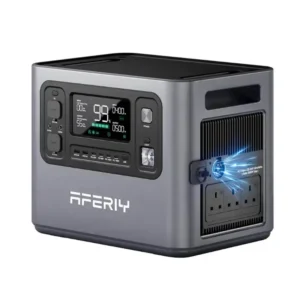
The AFERIY P280 delivers 1,880 Wh of its 2,048 Wh rated capacity to the sockets, a 91% conversion rate that is the best at this size. It runs a 2,800 W inverter with a 6,000 W surge, accepts 1,200 W of solar power across dual ports, and carries a seven-year warranty on 4,000-cycle cells.
Two numbers here are unmatched anywhere in this dataset: 91% conversion at the sockets, which is 120 to 140 watt-hours more usable energy than its closest rivals squeeze from identical nominal capacity, and a seven-year warranty where five is the class standard and several units manage three. Those cover how much you get and how long you keep it, and no other unit leads on both; while this one sits a price tier below the rivals it beats. Around them are a 2,800-watt inverter, 1,200 watts of solar across two independent ports, five-stage charging finer than anything else reviewed here, and 4,000-cycle cells. Then the firmware lets it down. The 8-millisecond crossover is genuinely quick and entirely conditional, because the inverter will not arm itself or guard a house unless someone is in it to switch it on. And at 57 decibels, the fans decide where it lives before you do. Put it in a garage, a workshop, or a vehicle,e and nothing at this capacity gives you more for the money. Ask it to sit in a cupboard and look after the house alone, and it can do so
Battery safety and chemistry (LiFePO4, 4,000 cycles)
10
Real-world efficiency and output (91% AC, 89% DC, 0.66% idle)
9.5
UPS and EPS switchover (8ms, no self-arming)
7.5
Port selection and distribution (dual 140W USB-C, 340W XT60)
9.5
Solar charging and MPPT (1,200W across dual ports)
9.5
AC recharge speed (1,800W, five-stage)
9.5
Noise and thermal management (57dB)
6
Portability and build quality (47 lbs)
7.5
Expandability and ecosystem (expansion supported)
9
Smart app and interface (Wi-Fi and Bluetooth)
7.5
PROS:
Conversion of 91% through the sockets, the best AC result recorded at this capacity.
A seven-year warranty, two years longer than anything else reviewed on this site.
Solar input of 1,200W across two independent 600W ports at 20 amps each.
A 2,800W sustained and 6,000W peak inverter, among the largest at this capacity.
Five-stage mains charging, the finest rate control of any unit reviewed here.
Cells rated to 4,000 cycles with standby loss of 0.66%pern hour, and dual 140W USB-C ports.
CONS:
The inverter cannot arm itself, so an 8ms crossover only helps when somebody switches it on.
Fans at 57dB, loud enough to exclude bedrooms, tents, and quiet offices.
AFERIY operates no telephone support, despite the longest warranty here.
The measured output of 117 volts sits at the bottom edge of the acceptable band.
Published weight figures are inconsistent between imperial and metric.
The 55-volt solar ceiling is marginally lower than the 60 volts most rivals allow.
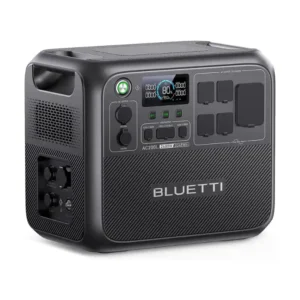
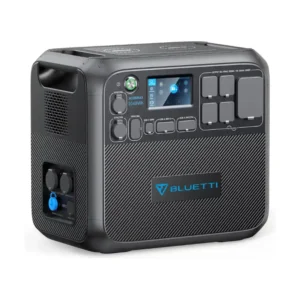
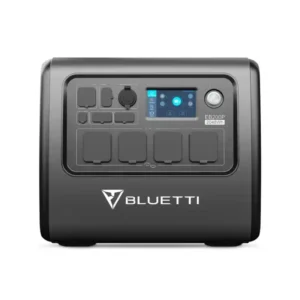
The Bluetti AC200L delivers 1,830 Wh of its 2,048 Wh rated capacity, an 89% return, powered by a 2,400W inverter. Solar accepts up to 145 volts, more than double what most units at this capacity permit, and wall charging reaches 2,400W. Upper mid-range price tier, exceptional value.
One figure here reshapes what the unit is for: the solar input accepts 145 volts, where most machines at this capacity stop at 60. That is not a marginal advantage but a different installation entirely, because it lets you wire four or five panels in a single series string the way a permanent array is designed, with lower current, thinner cable,le and smaller losses over a long run. Around it sit genuinely strong numbers: 1,830Wh delivered from a 2,048Wh pack, an 89% conversion rate second only to one rival at this capacity; 2,400 watts of wall charging that fills it from empty in under an hour; 48-decibel fans behind a 2,400-watt inverter; and a standby loss of 0.5% per hour. What decides against it are two facts that will not change. It weighs 61 pounds, the heaviest at this capacity and a two-person lift, and its inverter cannot arm itself, so a 13.8-millisecond crossover only helps while somebody is home. Install it beside a fixed array, and it is the best unit here for that job. Ask it to be portable or to guard an empty house, and it cannot do either.
Battery safety and chemistry (LiFePO4, 3,000 cycles)
8
Real-world efficiency and output (89% AC, 82% DC, 1.10% THD)
9.5
UPS and EPS switchover (13.8ms, no self-arming)
6.5
Port selection and distribution (100W USB-C, 142W 12V)
7.5
Solar charging and MPPT (1,200W, 145V ceiling)
10
AC recharge speed (2,400W mains and dual)
10
Noise and thermal management (48dB)
9
Portability and build quality (61 lbs)
5.5
Expandability and ecosystem (expansion support)
9
Smart app and interface (Wi-Fi and Bluetooth)
8.5
PROS:
Solar input to 145 volts, more than double what most units at this capacity permit and enough for a genuine series string.
Conversion of 89% at the sockets, second best at this size, and four points above most rivals.
Wall charging at 2,400 WW, filling the pack from empty in under an hour.
Fans at 48dB despite a 2,400W inverter, quiet enough for a room adjoining a bedroom.
Distortion of 1.10% and standby loss of 0.5% per hour, both better than the class average.
Solar input of 1,200W, tied highest at this capacity, with panels able to stay connected permanently.
CONS:
Sixty-one pounds, the heavy capacity at this capacity, and a two-person lift.
The inverter cannot arm itself, so a 13.8ms crossover only protects an occupied house.
Cells rate for 3,000 cycles, while the strongest rivals at this capacity offer 4,000.
The USB-C port supplies 100W, where the best units now provide 140W, often across two ports.
The DC path returns only 82; unusually, there is no efficiency gain from twelve-volt loads.
A crossover of 13.8ms is adequate, not good, and well behind the sub-nine leaders.
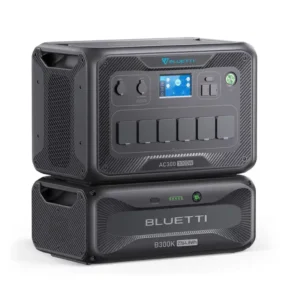
The Bluetti AC300 pairs an inverter head containing no battery with a B300K module, delivering 2,620Wh behind a 3,000W inverter. Cells are rated at 6,000 cycles, fans run at 44dB, and up to four modules can be added over time.
Every other machine on this site is one sealed object holding a fixed amount of energy behind a fixed amount of electronics; grow your needs, and you buy both again. Bluetti splits them: the AC300 head contains the inverter, controllers, display,y and port, with no cells at all, and it takes up to four B300K modules underneath. Buy the expensive half once, then add capacity as the budget allows. The supporting numbers are strong: a 6,000-cycle rating, the joint-highest in this dataset; 0.70% distortion and 990 mV of electrical noise, among the cleanest at this capacity; 44 decibels behind a 3,000-watt inverter; and 5,400 watts of combined charging. Weighed against that: 85% conversion, where sealed rivals manage 89, 127 pounds with just one module fitted, and 2% of the charge is lost for every hour it waits armed. That last figure is the discordant one, because it fights the permanent installation the whole design is built around. Buy it if the capacity you want today is not the capacity you want in three years. Otherwise, a sealed machine does more for less.
Battery safety and chemistry (LiFePO4, 6,000 cycles)
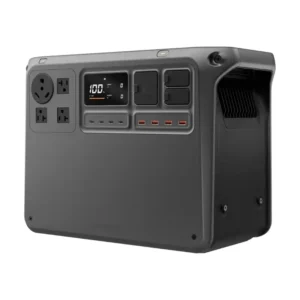
The DJI Power 2000 stores 22,048 Wh behind a 33,000 Wh inverter with a 6,000 W surge, and transfers to the battery with no measurable gal. Solar input reaches 1,800W over a 43-amp path, the most current any unit here accepts, and dual charging takes 2,300W. Upper mid-range price tier, exceptional value.
Only one unit reviewed here before this had a transfer time of zero, and it was a premium-tier fixture from a solar company that surrendered nearly everything else to achieve it. This one matches that figure while carrying a 3,000-watt inverter, 1,800 watts of solar input arriving over a 43-amp path (the largest current allowance recorded anywhere here), and an exceptional value tier rating. It also returns 86% at the sockets, better than several rivals costing more, and its 140-watt USB-C and 300-watt fast-charge ports are inherited from DJI's own equipment ecosystem. Two measurements spoil it. The fans hit 62 decibels, tied for the loudest reading ever recorded on this site, which decides where the unit can live before anything else gets a say. And only 75% of the pack reaches you through the twelve-volt path, eleven points below its own AC figure and tied for the worst DC result here, which undercuts precisely the vehicle and camp builds that a solar input this large would otherwise suit. One loose end worth chasing before you buy: the zero transfer sits alongside a grading entry recording no self-arming capability, and the sources do not reconcile it.
Battery safety and chemistry (LiFePO4, 3,000 cycles)
8
Real-world efficiency and output (86% AC, 75% DC, 0.66% idle)
7.5
UPS and EPS switchover (0ms transfer, self-arming unresolved)
9.5
Port selection and distribution (140W USB-C, 300W SDC)
9.5
Solar charging and MPPT (1,800W at 43A, highest current here)
10
AC recharge speed (1,800W mains, 2,300W dual, two speeds)
8.5
Noise and thermal management (62dB)
4.5
Portability and build quality (48 lbs)
7.5
Expandability and ecosystem (expansion support)
9
Smart app and interface (Wi-Fi and Bluetooth)
8.5
PROS:
Transfer to battery with no measurable gap, matching a unit two value tiers above it.
Solar input of 1,800W with a 43-amp low-voltage path, the largest current allowance recorded here.
A 3,000W sustained and 6,000W peak inverter, among the largest at this capacity.
Conversion of 86% at the sockets, above the class line and better than several pricier rivals.
A 140W USB-C port and a 300W SDC fast-charge output for camera and drone batteries.
Exceptional value tier despite the inverter size and solar ceiling.
CONS:
Fans at 62dB, tied for the loudest measurement recorded on this site.
Only 75% of the pack reaches you through DC, eleven points below its own AC figure.
Wall charging offers just two speeds, with no gentle overnight setting.
The zero transfer time sits alongside a grading entry that records no self-arming, which remains unresolved.
Electrical noise exceeds 2,000 mV at the high end of the field.
Cells rated for 3,000 cycles, while the best rivals at this capacity reach 4,000.
The Bluetti Fridge Power holds 2,016Wh behind an 1,800W inverter, crosses over in 8.7ms with a self-arming inverter, and sheds only 0.5% of its charge per hour on standby. Its 4,000-cycle cells and 1,000W solar input sit in the upper mid-range price tier at exceptional value.
This is the rare unit that picked a single job and let everything else go, and that job is the one most people actually buy a power station for. The backup implementation is excellent: an 8.7-millisecond crossover, an inverter that arms itself-which fewer than a third of the units reviewed here can manage-and a standby loss of 0.5% per hour, so arming it and forgetting it for months costs almost nothing. Add 4,000-cycle cells, 1,000 watts of solar at 20 amps, 43 pounds, and 51 decibels, and, as an appliance kept permanently in a utility room, it is very hard to fault. What it gave up is startling. The USB-C port supplies 18 watts, an eighth of what rivals at this capacity provide, so a laptop has to be charged through an AC outlet instead. No twelve-volt yield or high-output DC port appears in the data at all. And at 1,800 watts, it runs the smallest inverter in this size class. Buy it knowing it can never be repurposed, because that decision has already been made for you.
Battery safety and chemistry (LiFePO4, 4,000 cycles)
9.5
Real-world efficiency and output (84% AC, DC untested, 0.5% idle)
8
UPS and EPS switchover (8.7ms, self-arming)
10
Port selection and distribution (18W USB-C, no DC figure)
3
Solar charging and MPPT (1,000W, 20A)
9
AC recharge speed (1,440W mains, 2,200W dual)
9
Noise and thermal management (51dB)
8
Portability and build quality (43 lbs)
8
Expandability and ecosystem (expansion supported)
9
App, display and telemetry (Wi-Fi and Bluetooth)
8
PROS:
A self-arming inverter with an 8.7ms crossover, which fewer than a third of the units reviewed here can match.
Standby loss of 0.5% an hour, so leaving it armed for months costs almost nothing.
Cells rated to 4,000 cycles, roughly eleven years of daily use, under five years of cover.
Solar input of 1,000W at 20 amps, generous enough for rigid panels.
Forty-three pounds and 51dB, both better than most rivals at two kilowatt-hours.
Dual charging to 2,200W, with panels able to stay connected permanently.
CONS:
An 18W USB-C port that charges a phone but cannot charge a laptop at all.
No twelve-volt yield or high-output DC port appears in the bench data.
An 84% conversion is just under the line most units at this capacity clear.
The smallest inverter at this capacity, so heating loads cannot run alongside anything else.
The output measured 118 volts, closer to the bottom of the acceptable band than to the middle.
The 1,440W charger trails the 1,800W units at this capacity.
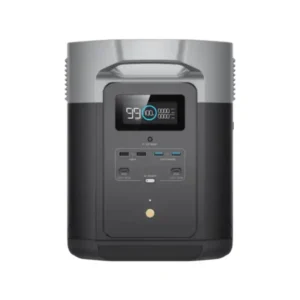
The EcoFlow Delta 2 Max carries 2,048Wh behind a 2,400W inverter, runs at 46dB, and sheds only 0.8% of its charge per hour on standby. Distortion measures 0.90%, dual charging reaches 2,600W, and it weighs 51 pounds. Upper mid-range price tier, good value.
Placed beside its own smaller sibling, this unit is a study in what a manufacturer chose to fix. The kilowatt-hour Delta 2 is the loudest machine in this entire dataset at 62 decibels; scaled up to two kilowatt-hours behind a larger inverter, it runs at 46, which is a transformation rather than an improvement and makes it genuinely usable in a room where someone sleeps. Conversion improved to 87%, distortion dropped to 0.90%, dual charging reached 2,600 watts (the smaller unit supports none at all), and a standby drain of 0.8% per hour means it holds its charge through months of storage. What EcoFlow left alone is the handover, at 17.5 milliseconds; the second slowest at this capacity, clearing the safety line by very little, on an inverter that still will not wake by itself. That combination keeps it out of the job most buyers want a power station for. Buy it as a quiet, efficient battery for a house where someone lives. For automatic protection, EcoFlow's Delta 3 Max Plus fixed this precisely at the same price tier.
Battery safety and chemistry (LiFePO4, 3,000 cycles)
8
Real-world efficiency and output (87% AC, 81% DC, 0.90% THD)
8.5
UPS and EPS switchover (17.5ms, no self-arming)
5
Port selection and distribution (two 100W USB-C, 139W 12V)
7
Solar charging and MPPT (1,000W across dual-tracked ports)
9
AC recharge speed (1,800W mains, 2,600W dual)
10
Noise and thermal management (46dB)
9.5
Portability and build quality (51 lbs)
7
Expandability and ecosystem (expansion support)
9
Smart app and interface (Wi-Fi and Bluetooth)
8.5
PROS:
Forty-six decibels under load, sixteen decibels quieter than the smaller unit in the same family.
Standby drain of 0.8% an hour, near the top of this dataset, so leaving it armed is practical.
Distortion of 0.90%, under half the class average, and well suited to sensitive equipment.
Conversion of 87% at the sockets, four points better than the kilowatt-hour Delta 2.
Combined charging to 2,600W, among the highest ceilings at this size.
Two independently tracked 500W solar ports, so shaded and unshaded arrays do not average out.
CONS:
A handover of 17.5ms is the second slowest at this capacity and clears the safety line by a small margin.
The inverter will not wake on its own, so automatic protection is not available.
The DC path returns 81% against 87% on AC, reversing the usual efficiency advantage.
Cells rated to 3,000 cycles,s where the best units at this capacity reach 4,000.
The 139W car socket is ordinary and falls short of the 150-watt mark.
Fifty-one pounds is mid-field, heavier than the lightest units at this capacity.
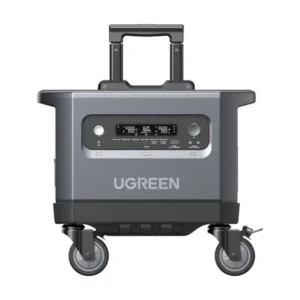
The UGREEN PowerRoam 2200 delivers 1,800Wh of its 2,048Wh capacity through the outlets and 1,835Wh through DC, powered by a 2,400W inverter. It switches over in 9.8ms, carries a 140W USB-C port, and takes an expansion battery.
Every figure we hold on this machine is good and several are better than the class average: 87% conversion through the outlets and 89% through DC, a 9.8-millisecond switchover that clears the eleven-millisecond mark where genuine protection starts, standby drain of just 0.8% an hour, a 140-watt USB-C port that only a handful of rivals at this capacity match, and a 75-volt solar ceiling above the class norm across two independently tracked channels. The trouble is what is missing. This unit has not been through our current twenty-criterion grading standard, so there is no fan noise reading, no harmonic distortion figure, no confirmation of whether the inverter arms itself, and no price in our data at all. Those four decide, respectively, which room it can live in, whether medical equipment is safe in it, whether an empty house is covered, and whether any of it represents value. The score is provisional for that reason. Shortlist it, ask UGREEN those four questions, and if the answers are good, this belongs near the top of its class.
Battery safety and chemistry (LiFePO4, 3,000 cycles)
8
Real-world efficiency and output (87% AC, 89% DC, 0.8% idle)
9
UPS and EPS switchover (9.8ms, self-arming unrecorded)
7.5
Port selection and distribution (140W USB-C, expansion support)
8.5
Solar charging and MPPT (1,200W across dual 75V ports)
8.5
AC recharge speed (1,800W, no dual charging)
7
Noise and thermal management
6.5
Portability and build quality (56.5 lbs)
7
Expandability and ecosystem (expansion support)
9
Smart app and interface (Wi-Fi and Bluetooth)
8.5
PROS:
Conversion of 87% through AC and 89% through DC, both above the class line.
A 9.8ms switchover, beneath the eleven-millisecond mark where real protection begins.
Standby drain of 0.8% an hour, so it holds a charge through months of storage.
A 140W USB-C port, which only a handful of machines at this capacity match.
Solar of 1,200W across two tracked ports reaching 75 volts, above the class norm.
Electrical noise of 1,045mv, cleaner than most of this field, with expansion support.
CONS:
Fan noise, harmonic distortion, and self-arming are all unmeasured in our data.
No dual charging, so mains and panels cannot feed the machine together.
There is no price in our data, so it cannot be placed in a price or value tier.
Cells rated to 3,000 cycles, the class baseline, where rivals now offer 4,000.
Fifty-six and a half pounds is mid-field rather than light for two kilowatt-hours.
The overall score is provisional and could move once the missing figures are measured.
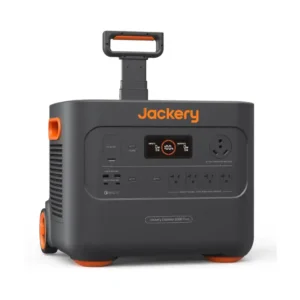
The Jackery Explorer 2000 Plus delivers 1,780Wh of its 2,042Wh rating, powered by a 3,000W inverter with a 6,000W surge. Solar input reaches 1,400W at 24 amps, the second-highest at this capacity, and electrical noise measures a clean 750 mV. Upper mid-range price tier, good value.
One number here needs reading twice. Jackery advertises 4,000 charge cycles, which looks identical to the 4,000-cycle ratings on rival units at this capacity; except this one is measured to 70% of original capacity, whereas the rest of the field measures to 80%. Letting a pack fall a further ten points before declaring it worn out is a materially easier test, so the headline figure is not interchangeable with a competitor's; however, the shelf tags invite you to compare them. Set that aside, and there is a strong machine underneath: 1,400 watts of solar accepted at 24 amps, the second-highest input at this size and unusually generous on current, which is what actually stops most large arrays from s working; a 3,000-watt inverter with 6,000 of surge; 1,780Wh delivered from 2,042Wh; and electrical noise of 750mv, among the cleanest measured anywhere in this data. Against it: 61.5 pounds, combined charging capped at 1,800 watts, only two wall speeds, and an inverter that will not wake on its own. Buy it for the panels and the inverter, not for the cycle count.
Battery safety and chemistry (LiFePO4, 4,000 cycles)
7.5
Real-world efficiency and output (87% AC, 89% DC, 750mv noise)
9
UPS and EPS switchover (12.8ms, no self-arming)
6.5
Port selection and distribution (two 100W USB-C, 155W 12V)
8
Solar charging and MPPT (1,400W at 24A)
9.5
AC recharge speed (1,500W mains, 1,800W dual, two speeds)
8
Noise and thermal management (53dB)
7
Portability and build quality (61.5 lbs)
5.5
Expandability and ecosystem (expansion support)
9
Smart app and interface (Wi-Fi and Bluetooth)
8.5
PROS:
Solar input of 1,400W at 24 amps, second highest at this capacity and generous on current.
A 3,000W sustained and 6,000W peak inverter, among the largest at this size.
An electrical noise level of 750 mV is among the cleanest readings in this dataset.
Conversion of 87% at the sockets and 89% through DC, both above the class line.
A 155W car socket, one of the few here to clear the 150-watt mark.
Wi-Fi and Bluetooth support, with phone assistance, backed by a five-year warranty.
CONS:
The 4,000-cycle rating is measured at 70% capacity, not the 80% every rival here uses.
Combined charging caps at 1,800W, well behind the 2,400W and 2,600W units.
Wall charging offers only two speeds, with no gentle overnight setting.
Sixty-one and a half pounds, a two-person lift, and heavy for the capacity.
The inverter cannot arm itself, so a 12.8ms handover only helps an occupied house.
Idle drain of 1.15% an hour costs a third of the pack over a fortnight left armed.
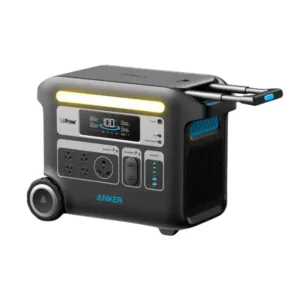
The Anker SOLIX F2000 delivers 1,850 Wh (90% of its 2,048 Wh rating) and is powered by a 2,400W inverter. It's 270W; the 12-volt socket is the highest-rated car outlet in this data, three USB-C ports deliver 100W each, and the fans operate at 45dB. Upper mid-range price tier, good value.
Nobody compares car sockets, which is exactly why this one is worth pointing at: 270 watts, where the rest of this field sits between 120 and 145, high enough that a compressor fridge, a diesel heater, or a run of vehicle accessories goes straight into the port it was designed for instead of through a breakout cable and an inverter. Around that sits a genuinely capable machine: 1,850Wh delivered from a 2,048Wh pack at 90%, beaten by only two units at this size; three separate 100-watt USB-C ports, which nothing else here offers; and 45 decibels behind a 2,400-watt inverter. The costs are high and specific. Sixty-seven pounds is the largest figure at this capacity anywhere in this data, a 15.1-millisecond handover on a manually armed inverter rules out protecting an empty house, mains and solar refuse to charge it together, and the app speaks Bluetooth with no Wi-Fi behind it. Put it in a van, and it earns its place. Put it in a hallway,y and Anker's own C2000 Gen 2 does the job better for the same money.
Battery safety and chemistry (LiFePO4, 3,000 cycles)
8
Real-world efficiency and output (90% AC, 84% DC, 1.5% idle)
9
UPS and EPS switchover (15.1ms, no self-arming)
6
Port selection and distribution (three 100W USB-C, 270W 12V socket)
8.5
Solar charging and MPPT (1,000W at 20A, no dual charging)
8
AC recharge speed (1,440W, no dual charging)
7.5
Noise and thermal management (45dB)
9.5
Portability and build quality (67 lbs)
4.5
Expandability and ecosystem (expansion support)
9
Smart app and interface (Bluetooth)
6.5
PROS:
A 270W twelve-volt car socket, roughly double the class norm and the highest rating in this data.
Conversion of 90% at the sockets, beaten by only two units at this size.
Three separate 100W USB-C ports, so three devices charge at full rate together.
Fans at 45dB behind a 2,400W inverter, quiet enough for a room adjoining a bedroom.
Solar input of 1,000W at 20 amps, comfortable for rigid panels, with the array able to stay wired.
Expansion is supported, with phone assistance available for five years under warranty.
CONS:
Sixty-seven pounds, the heaviest unit at this capacity, and a two-person lift.
Handover of 15.1ms with no self-arming, which rules out reliable unattended protection.
Mains and solar cannot charge it simultaneously, unlike most rivals at this price.
The app runs on Bluetooth only, so there is no monitoring from elsewhere in the house.
An idle drain of 1.5% per hour is normal, and a week armed costs a quarter of the pack.
No harmonic distortion figure appears in the bench data at all.
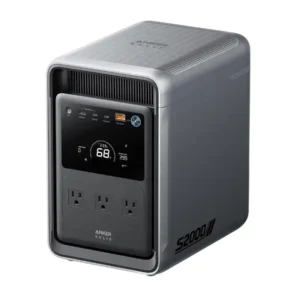
The Anker SOLIX S2000 delivers 1,920Wh of its 2,009Wh rating (a 95% conversion rate, unmatched in this data) and loses just 0.08% of its charge per hour while idle. It crosses over in 9.6ms with a self-arming inverter, weighs 35 pounds, and sits in the mid-range price tier at exceptional value.
Two numbers here are so far ahead of the field that they change how the unit should be judged. It converts 95% of its rated capacity into energy you can actually spend, whereas the next best result in this data is 92%, and the field average sits near 86%, meaning this 2,009Wh machine hands you more usable power than several 2,048Wh rivals. And it loses 0.08% of its charge per hour idle, compared with a previous best of 0.41%, which is so close to nothing that the usual trade-off between staying armed and staying charged simply vanishes. Add a self-arming inverter, a 9.6-millisecond crossover, 4,000 cycles, and 35 pounds (the lightest at this capacity by twelve), and, as a machine that waits for years and then works, it is close to ideal. Then the limits arrive hard. A 1,500-watt inverter is the smallest here, and a single space heater consumes all of it. 400 watts of solar is the lowest ceiling at this size and cannot refill the pack in a normal window, and there is no expansion path. Stay within those boundaries, and nothing in this dataset offers better value. Step outside them, and it fails at once.
Battery safety and chemistry (LiFePO4, 4,000 cycles)
9.5
Real-world efficiency and output (95% AC, 0.08% idle, 0.90% THD)
10
UPS and EPS switchover (9.6ms, self-arming)
10
Port selection and distribution (100W USB-C, no DC figure)
5
Solar charging and MPPT (400W, lowest at this capacity)
4.5
AC recharge speed (1,600W mains, 1,800W dual)
9
Noise and thermal management (53dB)
7
Portability and build quality (35 lbs)
9.5
Expandability and ecosystem (expansion support)
4
Smart app and interface (Wi-Fi and Bluetooth)
8.5
PROS:
Conversion of 95%, the best figure measured anywhere in this data, and three points clear of second place.
Standby loss of 0.08% an hour, five times better than the previous best recorded here.
A self-arming inverter with a 9.6ms crossover, so it protects an empty house without configuration.
Thirty-five pounds for two kilowatt-hours, the lightest at this capacity by twelve pounds.
Cells rated for 4,000 cycles under a five-year warranty, with phone support included.
Distortion of 0.90% and electrical noise of 1,350mv, both better than the class average.
CONS:
A 1,500W inverter, the smallest at this capacity, is consumed entirely by a single heating appliance.
The 400W solar input is the lowest for this size and cannot complete a recharge within the usual window.
No expansion battery support, making 2,009Wh a permanent ceiling.
One 100W USB-C port and no documented high-output DC socket.
No twelve-volt yield figure appears in the bench data at all.
Combined charging caps at 1,800W, modest for this capacity.
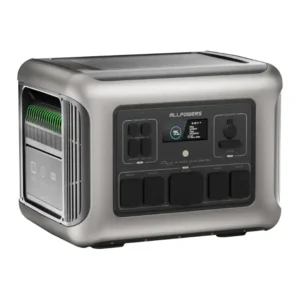
The AllPowers R2500 pairs 2,016Wh with a 2,500W inverter and accepts solar between 12 and 150 volts, a ceiling few units reach. It delivers 1,720 Wh to the outlets and takes an expansion battery. Upper mid-range price tier, exceptional value per watt-hour.
Twenty-two units in this dataset, every one has delivered an output voltage between 117 and 122, comfortably within the working band that household equipment expects. This one measured 112 (about seven percent low) and was the only failure of that standard recorded here. Heaters and lighting will not care, and neither will anything running on a switching supply. Motors will: they draw extra current to make up the shortfall, run hotter for it, and fail earlier, which is exactly the sort of damage that shows up as a dead compressor a year later rather than as anything you notice on the night. That is a hard problem to overlook on a machine most people would buy to protect a refrigerator. It is also a genuine shame, because the solar design is one of the best here (1,000 watts accepted up to 150 volts, high enough for a proper series string) and the 2,500-watt inverter is the largest at this capacity. Add 2.16% hourly standby drain on an inverter that will not self-arm, 63 pounds, 57 decibels, and no phone line behind the warranty, and the picture settles: fine for a workshop running resistive loads, wrong for the job most buyers have in mind.
Battery safety and chemistry (LiFePO4, 3,500 cycles)
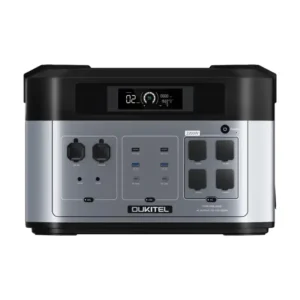
The FFpower BP2000 (marketed as Oukitel BP2000) transfers to battery in 6.2ms, the fastest measurable switchover we have recorded. It has a 2,048 Wh capacity, is powered by a 2,200W inverter, charges internally at 1,800W, and accepts an expansion battery.
Leaving aside the handful of machines that show no measurable gap at all, nothing tested for this site transfers faster than this one: 6.2 milliseconds, ahead of every branded rival, including several premium-tier systems from manufacturers with vastly larger marketing budgets. At that speed, no processor registers the changeover; a desktop keeps running; a network drive stays mounted. It backs that with internal charging at 1,800 watts, where three machines it competes with on price still use 470-watt external bricks and take over four hours; 2,500 watts from both inputs combined; a usefully wide 12- to 120-volt solar range; two 100-watt USB-C ports; and expansion support. The compromises sit on the periphery: no app of any kind, 77% returned through DC against 87% on AC, and 59-decibel fans that rule out quiet rooms. One question remains unanswered in our data, and worth settling before you buy: whether the inverter arms itself. A 6.2-millisecond transfer that still needs somebody to switch it on is only half a product.
Battery safety and chemistry (LiFePO4, 3,500 cycles)
7.5
Real-world efficiency and output (87% AC, 77% DC, 1.6% idle)
7
UPS and EPS switchover (6.2ms, self-arming unrecorded)
9
Port selection and distribution (two 100W USB-C, 191W DC)
8
Solar charging and MPPT (1,000W across 12 to 120 volts)
8.5
AC recharge speed (1,800W internal, 2,500W combined)
9.5
Noise and thermal management (59dB)
5
Portability and build quality (52 lbs)
6.5
Expandability and ecosystem (expansion support)
8.5
Smart app and interface
3
PROS:
A 6.2ms transfer, the fastest measurable switchover recorded anywhere in this database.
Internal wall charging at 1,800W and 2,500W combined, with no external brick to carry.
Two 100W USB-C ports, where several machines in this cohort fit one, or manage 60W.
Solar of 1,000W across a wide 12 to 120 volt range, covering foldables and rigid strings.
Conversion of 87% at the outlets, ahead of several better-known machines at this capacity.
Expansion battery support, a 191W DC socket and a 2,200W inverter.
CONS:
No app of any kind, no monitoring, no rate control, and no firmware updates.
Only 77% returned through DC, ten points behind its own AC path.
Fifty-nine decibels, beyond what any occupied indoor room will tolerate.
Whether the inverter arms itself is recorded in our data.
Standby drain of 1.6% an hour, middling rather than good.
Electrical noise above 2,000mv, with no distortion figure recorded, and a three-year warranty.
The Bluetti AC200Max has 2,048Wh of capacity, a 2,200W inverter, and delivers 1,840Wh at the outlets. Solar reaches 900W at up to 145 volts; the DC output is rated at 400W, and the cells carry a 3,500-cycle rating with four years of coverage.
Every other machine at this capacity reviewed on this site hands over to battery in some measurable time, anywhere from zero to twenty milliseconds. This one has no UPS mode fitted at all, so equipment plugged into it during a blackout simply loses power, a desktop restarts, a network drive shuts down uncleanly, a router drops. That is a missing function rather than a poor measurement, and in a category defined by backup, the specification decides everything. Underneath sits a decent battery: 1,840Wh returned from a 2,048Wh pack at 89%, standby drain of 0.6% an hour, so it holds its charge for months, a 145-volt solar ceiling that allows a proper series string, and a 400-watt DC output. The rest is dated. Wall charging is 470 watts via an external brick at a single fixed rate, over four hours from empty; connectivity is Bluetooth only, with no Wi-Fi; the warranty is four years rather than five; and per watt-hour, it lands in the luxury tier. Bluetti's own AC200L matches the capacity and conversion, adds a working switchover, and charges five times faster for a lower price tier.
Battery safety and chemistry (LiFePO4, 3,500 cycles)
8
Real-world efficiency and output (89% AC, 83% DC, 0.6% idle)
8.5
UPS and EPS switchover
5
Port selection and distribution (100W USB-C, 400W DC)
8
Solar charging and MPPT (900W to 145 volts)
8
AC recharge speed (470W via brick, single rate)
3
Noise and thermal management (54dB)
6.5
Portability and build quality (60 lbs)
5
Expandability and ecosystem (expansion support)
8.5
Smart app and interface
6
PROS:
Conversion of 89% at the outlets, stronger than most machines at this capacity.
Standby drain of 0.6% an hour, so it holds a charge through months of storage.
Solar to 145 volts, allowing a genuine series string of rigid panels.
A 400W DC output, roughly three times a typical car socket.
Cells rated to 3,500 cycles with pass-through charging and expansion support.
Fifty-four decibels, quieter than several machines at this size.
CONS:
No UPS is installed, so connected equipment loses power when the grid does.
Wall charging of 470W through an external brick, with no adjustable rate.
Luxury value tier, among the most expensive energy at two kilowatt-hours.
Bluetooth-only connectivity, with no Wi-Fi for remote monitoring.
Four-year warranty, a year short of the class standard.
Sixty pounds, heavy for the capacity, with a 2,200W inverter below the class norm.
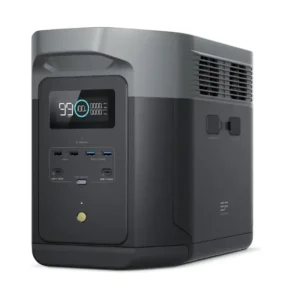
The EcoFlow Delta Max delivers 1,830Wh of its 2,016Wh rating, a 90% return, and is backed by a 2,400W inverter. At 48 pounds, it is light for its capacity and charges at 1,800W from the wall, though its NMC cells are rated for only 800 cycles.
Of the power stations tested for this site, three still use NMC cells rather than lithium iron phosphate, and this is one of them. The rating is 800 charge cycles, compared to the 3,000 to 4,000 its rivals carry; at one cycle a day, that's a little over two years to the 80% mark, whereas competitors reach 11. That single line governs everything else, because the rest of the machine is genuinely competent: 1,830Wh returned from a 2,016Wh pack at 90%, which beats most of this capacity class; 48 pounds, light for two kilowatt-hours; 1,800 watts of adjustable wall charging and 2,600 combined, far better than the 470-watt bricks on the older Bluettis it competes with; and 0.5% hourly standby. Two things compound the chemistry problem. The switchover measured 30 milliseconds, the slowest reading on this site and half again past the twenty-millisecond threshold, so assume equipment restarts rather than rides through. And it runs at 60 decibels with audible inverter noise recorded separately. Buy it only if heavily discounted; for lightweight, rarely cycled. EcoFlow's own Delta 2 Max fixes the chemistry, the noise, and the switchover at a lower price tier.
Battery safety and chemistry (NMC, 800 cycles)
3
Real-world efficiency and output (90% AC, 81% DC, 0.5% idle)
8.5
UPS and EPS switchover (30ms, above the threshold)
3
Port selection and distribution (two 100W USB-C, 135W 12V)
7
Solar charging and MPPT (800W to 100 volts)
7.5
AC recharge speed (1,800W adjustable, 2,600W combined)
9.5
Noise and thermal management (60dB)
4.5
Portability and build quality (48 lbs at 2,016Wh)
7
Expandability and ecosystem (expansion support)
8.5
Smart app and interface (Wi-Fi and Bluetooth)
8.5
PROS:
Conversion of 90% at the sockets, beaten by only a handful of machines at any capacity.
Forty-eight pounds for two kilowatt-hours, light for the class.
Wall charging: 1,800W with adjustable rate; 2,600W combined.
Two 100W USB-C ports rather than the single port most of this cohort provides.
Standby drain of 0.5% an hour, so it holds a charge well between uses.
Solar to 100 volts with an 11-volt floor and expansion support.
CONS:
NMC cells are rated for 800 cycles, compared to 3,000 to 4,000 for LiFePO4 rivals.
A 30ms switchover, the slowest recorded on this site and past the safety threshold.
Sixty decibels under load, with audible inverter noise recorded separately.
Luxury value tier, the most expensive energy at two kilowatt-hours in our data.
The 135W car socket falls short of the 150-watt threshold.
The DC path returns 81% against 90% on AC, a nine-point gap.
The Bluetti EB200P stores 2,048Wh behind a 2,200W inverter and returns 1,780Wh at the outlets. Solar reaches 900 W at up to 145 V, and the DC output is rated at 400 W, though there is no app and no expansion support.
Manufacturers routinely sell two machines built on the same hardware, one with features enabled and one without, and the gap is usually modest. Here it is not. The EB200P shares a pack, an inverter, and a solar input with Bluetti's AC200Max, and comes with no app at all, no expansion port, 3 points less AC conversion, 5 points less through DC, and more than 3 times the standby drain at 2% an hour. It inherits both of its siblings' worst traits too: a 470-watt external charging brick at a single fixed rate, over four hours from empty, and no automatic transfer function whatsoever — equipment plugged in during a blackout simply loses power. What survives intact is the solar input, and it is genuinely good: 900 watts accepted from 10 volts up to 145, which allows a proper series string of rigid panels while still working with foldables. As a battery charged by panels for planned trips, it does its job. For waiting, monitoring,g or growing a system, Bluetti's AC200L beats both of these machines and costs a tier less.
Battery safety and chemistry (LiFePO4, 3,500 cycles)
8
Real-world efficiency and output (86% AC, 78% DC, 2% idle)
6.5
UPS and EPS switchover
5
Port selection and distribution (100W USB-C, 400W DC)
8
Solar charging and MPPT (900W to 145 volts)
8
AC recharge speed (470W via brick, single rate)
3
Noise and thermal management (54dB)
6.5
Portability and build quality (61 lbs)
5
Expandability and ecosystem (no expansion support)
4
Smart app and interface
3
PROS:
Solar to 145 volts at 900W, allowing a proper series string of rigid panels.
A 400W DC output, roughly three times a typical car socket.
Cells rated to 3,500 cycles with pass-through charging supported.
A 10-volt solar floor, so foldable panels work alongside a rigid string.
Conversion of 86% at the outlets, over the class line.
Combined charging of 1,400W, marginally better than the AC200Max.
CONS:
No UPS mode is fitted, so connected equipment loses power during a blackout.
No app of any kind — no Bluetooth, no Wi-Fi, no firmware updates.
No expansion battery support, so capacity is permanently fixed.
Standby drain of 2% per hour, more than three times that of its sibling.
Wall charging of 470W via an external brick at a single fixed rate.
Sixty-one pounds and a four-year warranty, both behind current rivals.
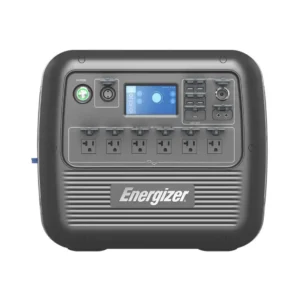
The Energizer PPS2000W has a 2,150Wh capacity, a 2,100W inverter, and delivers 1,780Wh at the outlets. Wall charging runs through an external brick at 470W; there is no app or expansion support, and cells are rated for 2,000 cycles.
★★★★★
More details +
Four hundred and seventy watts into a 2,150Wh pack, delivered through an external charging brick rather than an internal charger, is the worst charging-to-capacity ratio anywhere in this database, more than four and a half hours from empty, where rivals at this capacity manage a little over one. That single figure would be survivable if the rest held up, and it does not. Conversion is 82% through the outlets and 76% through DC, both the weakest at this size; the cells carry 2,000 cycles where rivals offer 4,000; there is no expansion path; there is no app of any kind, so no remote monitoring and no firmware updates ever; standby drain sits at 2% an hour; and per watt-hour it is the most expensive machine at two kilowatt-hours in our data. One specification genuinely stands out: the solar input reaches 145 volts, well above the class norm, which is well-suited to a permanent series array. If that is how you will refill it and you never touch a socket, the picture softens. On any other basis, two machines at this capacity beat it on every measure while costing less.
Battery safety and chemistry (LiFePO4, 2,000 cycles)
5.5
Real-world efficiency and output (82% AC, 76% DC, 2% idle)
6
UPS failover speed
5
Port selection and distribution (100W USB-C, no DC socket)
6
Solar charging and MPPT (900W to 145 volts)
8
AC recharge speed (470W via external brick)
5
Noise and thermal management
6.5
Portability and build quality (66 lbs)
5
Expandability and ecosystem (no expansion support)
5
Smart app and interface
3
PROS:
Solar input to 145 volts, well above the 60 volts most machines at this capacity allow.
A 2,100W inverter with 4,200W of surge is sufficient for ordinary household loads.
A wide 10-volt solar floor, so foldable panels work alongside a rigid string.
LiFePO4 chemistry rather than older NMC cells.
Electrical noise of 1,671mv, mid-field for the category.
A recognizable brand name, if that carries weight for you.
CONS:
Wall charging of 470W via an external brick has the worst charging-to-capacity ratio in this data.
No app of any kind, so no remote monitoring, rate control, or firmware updates.
Cells rated to 2,000 cycles, the shortest life at this capacity.
Conversion of 82% through AC and 76% through DC, both the weakest at this capacity.
No expansion support and no switchover figure were recorded in our data.
Luxury value tier, the most expensive energy at two kilowatt-hours.
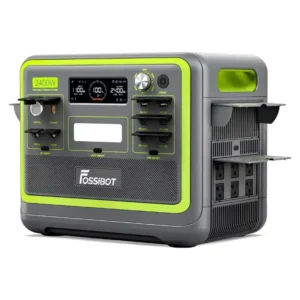
The FOSSiBOT F2400 delivers 1,650Wh of its 2,048Wh rating, backed by a 2,400W inverter with 4,800W of surge power. Cells are rated at 3,500 cycles, and it hands over in 12.4ms, though the output measures 110 volts and there is no app.
Three machines we have reviewed weigh 48 pounds, hand over in 12.4 milliseconds, output 110 volts, accept 500 watts of solar over the same 20-amp input,t and charge at 1,100 watts. They wear three different badges. The FOSSiBOT is the version that got the better parts: a 2,400-watt inverter (its siblings have 2,000), cells rated for 3,500 cycles (their 2,000), adjustable charging speed that neither sibling offers, a 330-watt DC output, and the highest usable capacity of the three at 1,650Wh. That makes it the one to choose if these three are your shortlist. What it cannot escape is the shared design: 110 volts sits below the accepted working band and makes motors draw extra current and run hotter; 80% conversion leaves roughly 220 watt-hours on the table against a strong performer at this size; there is no app of any kind, no expansion path, and the solar array has to be disconnected between charging sessions. A working transfer function is a real advantage over several better-known machines that have none at all.
Battery safety and chemistry (LiFePO4, 3,500 cycles)
7
Real-world efficiency and output (80% AC, 78% DC, 110V output)
5
UPS and EPS switchover (12.4ms, self-arming unrecorded)
7.5
Port selection and distribution (100W USB-C, 330W DC)
7
Solar charging and MPPT (500W at 20A, cannot stay connected)
5
AC recharge speed (1,100W adjustable, 1,600W combined)
6
Noise and thermal management (59dB plus inverter noise)
4
Portability and build quality (48 lbs)
6.5
Expandability and ecosystem (no expansion support)
4
Smart app and interface
3
PROS:
A 2,400W inverter with 4,800W of surge, 400W larger than either sibling machine.
Cells rated to 3,500 cycles, where both siblings manage 2,000.
A working 12.4ms transfer, which three older machines in this database lack entirely.
Adjustable charging speed, the only one of the three siblings to offer it.
A 330W DC output and 20 amps of solar current, both generous for the price.
Dual charging at 1,600W and pass-through charging are supported.
CONS:
Output measured 110 volts, below the accepted working band and hard on motors.
Conversion of 80% at the outlets; below-the-line machines at this capacity normally clear.
No app of any kind, no monitoring, no rate control, no firmware updates.
The solar array cannot stay connected between charging sessions.
Fifty-nine decibels with audible inverter noise recorded separately.
No expansion support and a two-year warranty against a five-year class standard.
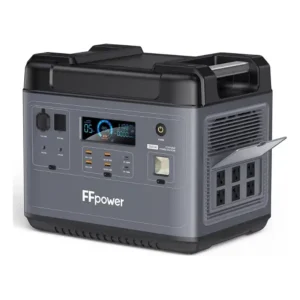
The FFpower P2001 delivers 1,570Wh of its 2,048Wh rating, backed by a 2,000W inverter with 4,000W of surge power. It hands over in 12.4ms with a 225W DC output, though the output measures 110 volts, and there is no app or expansion path.
This is the third badge on a design we have now measured three times, and there is little to add that was not true of the first two. Forty-eight pounds, a 12.4-millisecond transfer, a 110-volt output, 500 watts of solar across a 12 to 48 volt window at 20 amps, and a 1,100-watt charger, identical across all three. What separates them is the number of cells, inverter size, and price, and this is the cheapest. It is also the weakest converter of the three at 78% through the outlets and 74% through DC, so 478 watt-hours of the rated pack never reach you. Two things genuinely count in its favor: a working transfer function that several far better-known machines in this database lack entirely, and standby drain of 1% an hour that beats units costing considerably more. Against that: 110 volts is below the accepted range and hard on motors; the cells support 2,000 cycles; there is no app or expansion path; and the array cannot remain connected between sessions. If this chassis is what you want, this is the cheapest way to own it.
Battery safety and chemistry (LiFePO4, 2,000 cycles)
5.5
Real-world efficiency and output (78% AC, 74% DC, 110V output)
4
UPS and EPS switchover (12.4ms, self-arming unrecorded)
7.5
Port selection and distribution (two 100W USB-C, 225W DC)
7.5
Solar charging and MPPT (500W at 20A, 48V ceiling)
4.5
AC recharge speed (1,100W single rate, 1,600W combined)
5.5
Noise and thermal management (53dB plus inverter noise)
5.5
Portability and build quality (48 lbs)
6.5
Expandability and ecosystem (no expansion support)
4
Smart app and interface
3
PROS:
The cheapest of three identical machines, and the best value position of the group.
A working 12.4ms transfer, which several better-known machines cannot match at all.
Two 100W USB-C ports and a 225W DC output that clears the 150-watt threshold.
Standby drain of 1% per hour, better than several machines that cost far more.
Twenty amps of solar current, generous for a parallel bank of panels.
Fifty-three decibels, the quietest of the three siblings.
CONS:
Conversion of 78% through AC and 74% through DC, the weakest of the three siblings.
Output measured 110 volts, below the accepted band and hard on motors.
Cells rated to 2,000 cycles, about five and a half years of daily use.
No app, no expansion path, and no adjustable charging speed.
The array cannot stay connected between sessions, and the ceiling is 48 volts.
A two-year warranty against a five-year class standard.
The Oukitel P2001 delivers 1,590Wh of its 2,048Wh rating, backed by a 2,000W inverter with 4,000W of surge power. It hands over in 12.4ms and offers a 225W DC output, though the output measures 110 volts and there is no app or expansion path.
Two machines in this database carry the model number P2001 and share a chassis, a weight, a 12.4-millisecond transfer, a 110-volt output, an identical solar specification, the same 1,100-watt charging ceiling, and the same 2,000-cycle cells. Our bench figures put them 20 watt-hours apart. The Oukitel is the more expensive one, and what the extra money buys is those 20 watt-hours and one decibel of quiet. There is something real here worth acknowledging: a working transfer function that three far better-known machines in this database do not have at all, plus a 225-watt DC socket that clears the threshold most twelve-volt outlets miss and two 100-watt USB-C ports. Against that sits 79% conversion, so nearly 460 watt-hours of the rated pack never reach you; a 110-volt output that makes motors run hot; 2,000 cycles, or about five and a half years of daily use; no app; no expansion; and an array that must be disconnected between sessions. If these badges are your shortlist, the FOSSiBOT version of the same chassis is the better machine.
Battery safety and chemistry (LiFePO4, 2,000 cycles)
5.5
Real-world efficiency and output (79% AC, 76% DC, 110V output)
4.5
UPS and EPS switchover (12.4ms, self-arming unrecorded)
7.5
Port selection and distribution (two 100W USB-C, 225W DC)
7.5
Solar charging and MPPT (500W at 20A, 48V ceiling)
4.5
AC recharge speed (1,100W single rate, 1,600W combined)
5.5
Noise and thermal management (54dB plus inverter noise)
5.5
Portability and build quality (48 lbs)
6.5
Expandability and ecosystem (no expansion support)
4
Smart app and interface
3
PROS:
A working 12.4ms transfer, which three better-known machines in this database lack entirely.
A 225W DC output, clearing the 150-watt threshold for a genuinely useful twelve-volt socket.
Two 100W USB-C ports, better than several machines at this capacity provide.
Standby drain of 1% an hour, the best retention of the three siblings.
Twenty amps of solar current, generous for a parallel bank of panels.
Dual charging at 1,600W with pass-through supported.
CONS:
Priced above the FFpower P2001, which is the same machine with a different badge.
Output measured 110 volts, below the accepted band and hard on motors.
Conversion of 79% through AC, leaving nearly 460 watt-hours unreachable.
Cells rated to 2,000 cycles, roughly five and a half years of daily use.
No app, no expansion, and no adjustable charging speed.
The array cannot stay connected between sessions, and the solar ceiling is 48 volts.
The Bluetti AC200P holds 2,000Wh behind a 2,000W inverter and returns 1,750Wh at the outlets. Solar reaches 700W at up to 150 volts, and the DC output is rated at 335 W, though there is no app, no expansion, and no transfer function.
This is the third machine from the same manufacturer in this database with no automatic transfer function at all, which stops being a quirk and becomes a generation: hardware built before switchover speed was something anyone competed on. Equipment plugged in during a blackout simply loses power. Beside that sit two more specifications from an earlier era, a USB-C port supplying 60 watts, half what nearly every rival provides and beaten by only one machine in this whole database, and 700 watts of solar, the lowest ceiling at this capacity, on an input that ignores anything below 35 volts. Wall charging is 470 watts via an external brick; there is no app of any kind, no expansion port, and the pack sheds 2% per hour while it waits. What survives is real: 88% conversion is above the class line, the 150-volt solar ceiling is among the best at this size, and a 335-watt DC output carries proper twelve-volt equipment. But Bluetti's own AC200L replaced this machine and beats it on every single line while costing a tier less.
Battery safety and chemistry (LiFePO4, 3,500 cycles)
7.5
Real-world efficiency and output (88% AC, 85% DC, 2% idle)
7.5
UPS failover speed
2
Port selection and distribution (60W USB-C, 335W DC)
5.5
Solar charging and MPPT (700W, 35 to 150 volts)
6.5
AC recharge speed (470W via external brick)
3
Noise and thermal management (54dB, silent inverter)
6.5
Portability and build quality (59 lbs)
5
Expandability and ecosystem (no expansion support)
4
Smart app and interface
3
PROS:
Conversion of 88% at the outlets, above the class line and ahead of several newer machines.
A 150-volt solar ceiling, among the highest at this capacity.
A 335W DC output, roughly two and a half times a typical car socket.
The inverter itself runs silently, with only the fans audible.
Cells rated to 3,500 cycles with pass-through charging supported.
Telephone support is behind the warranty.
CONS:
No UPS mode is fitted, so connected equipment loses power during a blackout.
A 60W USB-C port, half what nearly every rival provides.
Solar wattage is capped at 700W, the lowest at this capacity, with a 35-volt floor.
Standby drain of 2% an hour, enough to empty most of the pack in a fortnight.
No app and no expansion support, so no monitoring and no growth.
Wall charging at 470W via an external brick, with only three years of cover.
Show next
Who Needs 2kWh Power Station?
Luxury RV and fifth-wheel owners running an air conditioner, a residential fridge, and entertainment off-grid.
Households want extended home backup during a multi-day outage rather than a single night.
Contractors needing high-amp tool operation on remote sites, with surge headroom for compressors and saws.
Anyone dependent on medical equipment who needs a full day of runtime plus a fast recovery window.
Running High-Draw RV Air Conditioners Off-Grid
This is the load that defines the tier and is the one most likely to disappoint if you buy based on capacity alone.
An 11,000-BTU RV air conditioner draws 1,200 to 1,700 watts while running, a load that almost every machine here can sustain. The problem is startup: the compressor can demand 2,800 to 3,500 watts for a fraction of a second.
The average surge in this tier is 4,792 watts, which comfortably clears that. But the range runs from 3,000 to 7,200, and the machines at the bottom of that range will trip. Check surge against your specific unit’s nameplate, not against the tier average.
At runtime, expect roughly 1 to 1.5 hours of air conditioning from a mid-tier machine. This is a supplement to shore power, not a replacement for it.
Browse by Capacity
Capacity is the fastest way to narrow this category because it determines both what a machine can run and what you can carry. Every tier below links to its own guide.
Weight is the specification buyers underestimate here
The average weight in this tier is 57 pounds, and the heaviest is 127 pounds. That is the difference between a determined one-person lift and a two-person job with a plan.
Few machines here are modular, meaning the inverter and the cells can be separated into liftable pieces. A 127-pound system arriving as two components is far easier to get down a basement stair than a sealed unit of the same mass.
Before ordering, measure the narrowest doorway, the tightest turn, and the highest step between the delivery point and where the machine will live.
What It Runs, and For How Long
Figures assume a mid-tier machinerated ATF around 2,102 Whd, delivering roughly 1,800 Wh usable.
Load
Running
Startup surge
Runtime
Verdict
RV air conditioner (11,000 BTU)
1,200–1,700W
2,800–3,500W
1 to 1.5 hours
Yes, on machines with 3,500W+ surge. Check yours
Full-size refrigerator
150W
1,200W+
About 12 hours
Ideal
Fridge and freezer together
300–380W
1,200W+
5 to 6 hours
Yes
Space heater
1,500W
None
About 1.2 hours
Yes, on machines rated 1,800W+
Microwave
1,200–1,500W
Brief
About 1.3 hours
Yes
Table saw
1,800–2,200W
3,600–4,500W
About 50 minutes
Yes, on machines with generous surge headroom
Air compressor (1 hp)
1,500–2,000W
3,000–4,500W
About 1 hour
Yes. Check surge against the nameplate
Sump pump
800–1,050W
1,600–2,200W
About 2 hours
Yes
Essential circuits combined
250W
Varies
About 7 hours
The realistic outage scenario
Electric range or clothes dryer
2,000–5,000W at 240V
High
Not viable
Needs split-phase. See the whole-house tier
How to Choose One
1. Compare the surge multiple against your heaviest motor
Most machines offer roughly double their continuous rating as a surge rating. In this tier, the outliers reach three times or more, and that headroom allows an air conditioner or a compressor to start without tripping.
2. Check dual solar input tracking and the voltage window
Solar ceilings here reach the useful range, but the voltage window determines which panels work. A ceiling of 60 volts allows two rigid panels in series; 150 volts allows four or five, with thinner cable and less loss over a long run.
3. Look for wheels and a telescoping handle above 60 pounds
Several machines at this weight still ship with only side handles, which turns a manageable object into a two-person one. On a campsite ramp or a garage step, this is the difference between using the machine and leaving it parked.
4. Check for a TT-30 RV outlet if you tow
A native 30-amp RV plug lets you connect a travel trailer’s shore power line directly, without adapters. Only a handful of machines fit one, and if you tow it, it removes a whole category of workarounds.
5. Confirm recovery speed against your usage pattern
Recharge rates here range from 470 watts to 5,000 watts, which is the difference between four hours and half an hour. For repeated cycling during a storm week or a working day, that gap matters more than the last 200 Wh of capacity.
How We Test and Score
Every runtime figure comes from tested usable capacity, measured at the AC outlets and the twelve-volt output separately, rather than from the rating printed on the machine.
Fan noise is measured under load at a fixed distance, while inverter noise is recorded separately because some machines whine independently of airflow.
Output voltage is measured because a machine delivering less than its rated watts within the accepted band makes motors work harder.
Scores are the simple average of 10 categories, calculated before anyone checks which affiliate program a product belongs to.
The Bottom Line
This tier is the bridge: enough surge for an air conditioner or a table saw, enough capacity for a full day of essential circuits, and still movable by one person on most machines.
Buy on surge headroom against your heaviest motor, confirm the machine has wheels if it weighs more than about 60 pounds, and check recovery speed if you expect to cycle it repeatedly.