
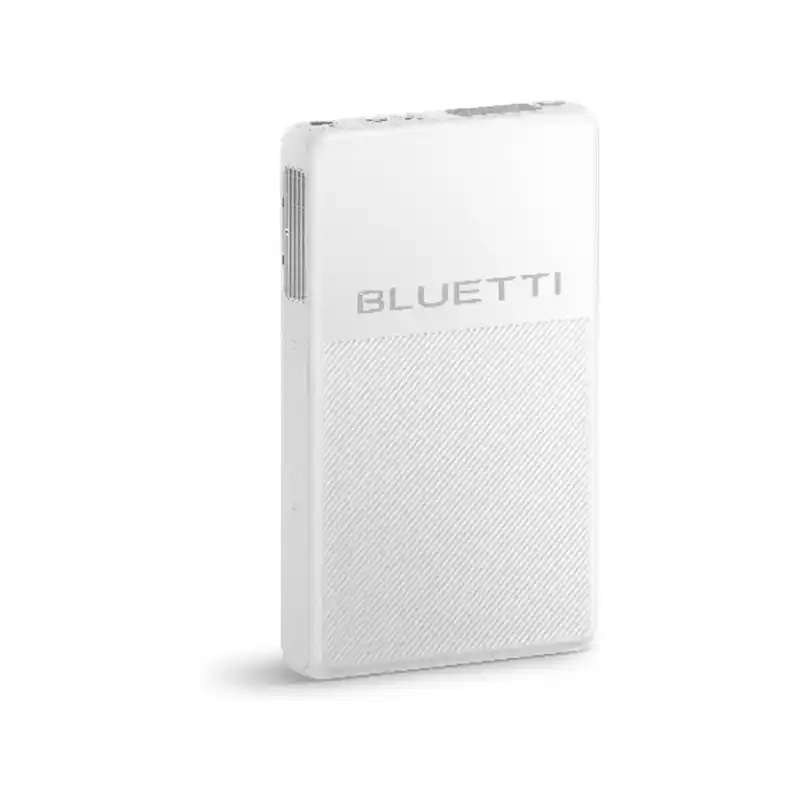
Bluetti Fridge Power Review

The Bluetti Fridge Power holds 2,016Wh behind an 1,800W inverter, crosses over in 8.7ms with a self-arming inverter, and sheds only 0.5% of its charge per hour on standby. Its 4,000-cycle cells and 1,000W solar input sit in the upper mid-range price tier at exceptional value.
My Quick Verdict
Almost every unit reviewed on this site is sold as a general-purpose machine. Charge your laptop, run your tools, back up your house, take it camping. The port arrays reflect that ambition, and so do the compromises.
This one gave up on the ambition. The USB-C port delivers 18 watts, which will charge a phone and nothing else. No twelve-volt output figure appears in the bench data at all.
What it spent the budget on instead is the backup implementation, and there it is close to the best in the dataset: an 8.7-millisecond crossover with a self-arming inverter, 4,000-cycle cells, and standby loss of just 0.5% per hour.
It is a two-kilowatt-hour appliance keeper, and judged as such,t it is very good indeed.
Best for: Emergency Home Resilience focused on refrigeration and essential appliances, where the unit is left armed and forgotten.
Not for: anyone expecting to charge laptops, run twelve-volt gear, or use it as a general-purpose station.
Key Stats
| Badge | Stats |
|---|---|
| Battery chemistry and longevity | LiFePO4 | 4,000 cycles |
| Continuous AC power output | 1,800W AC | 3,600W peak |
| Energy storage capacity | 2,016Wh | 1,700Wh usable |
| Rapid AC wall recharge | 1,440W input | 2,200W dual |
| Uninterrupted emergency backup | 8.7ms UPS | Self-arming |
| Maximum solar input and MPPT | 1,000W solar | 20A MPPT |
| USB-C power delivery | 18W only | Phone charging |
| Low-noise operational level | 51dB | Moderate under load |
| Standby retention | 0.5% per hour |
| Modular capacity expansion | Expandable | Extra battery port |
Introduction
The name is not marketing. This unit was designed around keeping a refrigerator running, and the specification sheet reads like a series of decisions made in service of that one goal.
Two kilowatt-hours of storage. An inverter sized for appliances rather than power tools. A crossover fast enough that a compressor never stutters, and an inverter that comes up on its own so nobody has to be home.
And a USB-C port rated at 18 watts, which tells you exactly how much thought went into the things it was not built for. Lithium iron phosphate throughout, 4,000 cycles claimed, five years warranted; call it eleven years if you cycle it every day.
What It Can Actually Run
The inverter sustains 1,800W and peaks at 3,600W. Modest for a pack this size, and deliberately so: it is scaled to run appliances for a long time rather than to handle heavy loads for a short time.
Rated storage is 2,016Wh. Metering the sockets produced 1,700Wh, an 84% return. Figures below work from 1,700Wh.
- Refrigerator at 150W: better than eleven hours.
- CPAP at 40W with humidifier off: over forty hours.
- Starlink dish at 50W: around thirty-four hours.
- Laptop at 70W: run it from an AC outlet, because the USB-C port can’t provide that much power.
Output measured 118 volts with 1.80% distortion, both within safe bounds, though the voltage sits nearer the bottom of the acceptable band than the middle.
Charging and Smart Features
Mains charging reaches 1,440W with stepped rate control, and mains plus panels together take 2,200W.
A thousand watts of panel capacity is available at 12 to 60 volts, and the 20-amp allowance is generous enough that rigid panels present no difficulty.
The crossover measured 8.7 milliseconds, and the inverter arms itself, so it protects a house with nobody in it. Panels can stay connected around the clock.
Upper mid-range price tier, exceptional value tier. For a unit with this backup implementation and 4,000-cycle cells, that is a strong position.
Charging Speed Benchmarks
Wall and panel recharging on the Bluetti Fridge Power, measured against the 2,000Wh to 3,000Wh capacity class, drawn from the twenty-six machines we have input figures for. Mean wall charging across the group is 1,641W and mean solar is 1,123W. Banding is internal to the bracket, so a rating here reflects performance among similar capacities and not across the whole site.
Wall charging is the softest number on this machine. 1,440W is 201W under the 1,641W class average and rests a single watt above a Low rating at the bottom of the Average band. Working through 2,016Wh at that rate needs about 1.4 hours, roughly twenty minutes longer than the 1,800W machines it shares a shelf with. Dual charging lifts the combined figure to 2,200W, which recovers most of that gap, but only when panels are producing at the same time.
Panel input of 1,000W at 20 amps falls a little short of the 1,123W class mean yet still holds an Average rating in a bracket reaching 2,400W. That is around 2.0 hours of strong sun to fill the pack. The useful detail for a permanently installed unit is that the array can stay wired around the clock, which several rivals at this capacity forbid. For a machine designed to live in a utility room and never move, continuous connection is worth more than a higher ceiling it would never reach.
Need to refill faster before a storm? The Bluetti AC200L pulls 2,400W off the mains, two-thirds more than the Fridge Power, and fills 2,048Wh in roughly 0.9 hours instead of 1.4. Solar rises to 1,200W with a 145-volt ceiling for series strings. When the storm warning gives you three hours rather than a day, that difference decides whether the pack is full when the grid drops.
Real Capacity: What You Actually Get
The conversion here is ordinary, and the DC side is blank.
Metered output reached 1,700 Wh against a claimed 2,016 Wh. Eighty-four percent, fractionally shy of what most units this size manage.
No twelve-volt yield figure appears in the bench data at all. On every other unit reviewed here, that measurement exists and often favours DC substantially. Its absence is consistent with a design that treats the AC outlets as the entire point.
Standby is where the unit shines. Awake with no load attached, the drain is half a percent an hour, which ranks among the best here and makes permanent arming effectively free.
My takeaway: 1,700Wh through the sockets, and plan on nothing else. This unit expects its loads to be plugged into wall outlets and behaves accordingly.
Power Output and Surge: What It Can Turn On
The inverter is the smallest at this capacity, and that is a design choice rather than a shortfall.
Eighteen hundred watts sustained can run a refrigerator, a freezer, lighting, and networking equipment without difficulty. What it will not do is hold a 1,500-watt space heater alongside anything else, which units at 2,400W and 3,000W manage comfortably.
Peak output of 3,600W is double the sustained rating and ample for compressor starts, which is the load this machine was built around.
The port array is where the specialisation becomes stark. An 18-watt USB-C output is roughly an eighth of what the best units at this capacity provide, and no high-output DC port is documented. Everything is expected to plug into an AC socket.
Real Appliance Runtimes
1,700 Wh converted to hours using the standard appliance loads applied to every unit reviewed here.
| Appliance | Power Draw | Runtime | What That Means |
|---|---|---|---|
| Full-size refrigerator | 150W | About 11.3 hours | The load this unit was designed for, and it holds it for most of the day. |
| CPAP machine (no humidifier) | 40W | About 42.5 hours | Most of a week of overnight use. |
| Starlink dish | 50W | About 34 hours | The dish stays live from one morning to the next. |
| Pellet grill or smoker | 100W | About 17 hours | Two full cooks between refills. |
| Laptop (70W) | 70W | About 24 recharges | Through an AC outlet. The 18W USB-C port will not do it. |
Note the laptop line. On every other unit at this capacity, charging happens over USB-C at 100 or 140 watts. Here, it has to go through the inverter, which is slower and less efficient, and it is the clearest illustration of what this unit gave up.
Recharging: Wall and Solar
From a Wall Outlet
Mains charging accepts 1,440W with rate control in stages, filling the pack in around ninety minutes.
That is slower than the fastest units at this capacity, which reach 1,800W or beyond, and quick enough for any realistic storm-warning window.
Running mains and panels together lifts the ceiling to 2,200W, which is a useful margin when time is short.
From Solar Panels
Panels feed in up to 1,000W across a 12- 60 V band at 20 A.
Twenty amps is a generous current allowance, and it means rigid panels work, not just foldables. The 60-volt ceiling is standard rather than generous, so long series strings remain out of reach.
From flat, decent sun has it full again inside about two and a half hours.
The array stays attached indefinitely, and output continues throughout a charge; precisely the arrangement a permanently sited machine needs.
Blackout Backup: The Part I Care About Most
This is the reason the unit exists, and it is executed properly.
Handover took 8.7 milliseconds. That is below the eleven-millisecond mark where genuine backup begins, and it means a compressor keeps turning and a router maintains its connection.
More significantly, the inverter arms itself. Across the seventeen units reviewed on this site, fewer than a third can do that, and the ones that cannot are not protecting anything when the house is empty.
Standby loss of 0.5% an hour makes leaving it armed genuinely free. Charge it, switch it on, and forget about it for months.
Why this matters to me: an appliance keeper only works if it is armed and full when the outage arrives. A fast crossover, a self-arming inverter, and half a percent an hour are exactly the three things that make that true, and this unit has all three.
Noise and Living With It
Fifty-one decibels under load, which sits precisely on the line I draw for rooms where someone sleeps.
For a unit likely to live in a utility room, a garage, or a kitchen corner, that is comfortably quiet. In a bedroom,m it would be noticeable without being intolerable.
Forty-three pounds, 19 kilograms. Sensible for two kilowatt-hours and lighter than a fair few competitors, though not a one-armed job.
Wi-Fi and Bluetooth are both on offer, and Bluetti staffs a phone line behind the five-year cover.
Where It Falls Short
The specialisation costs real capability. Three areas in particular.
1. An 18-Watt USB-C Port
This is the single most limiting specification on the unit. Eighteen watts charges a phone slowly and will not charge a laptop at all.
Every other unit at this capacity offers 100 or 140 watts, and several offer two such ports. If any part of your plan involves charging work equipment directly, this machine cannot participate.
2. No Documented DC Output
The bench data records no twelve-volt output and no high-output DC port. A two-kilowatt-hour unit is unusual.
It removes vehicle and camp use entirely and eliminates the efficiency advantage that running DC loads on DC normally provides.
3. The Smallest Inverter at This Capacity
Eighteen hundred watts sustained is appropriate for appliances and short of what heating loads require alongside anything else.
For its intended job, this is not a fault. But it means the unit cannot be repurposed later as a general-purpose station if your needs change.
How It Compares
The natural comparisons are the Anker SOLIX C2000 Gen 2, the strongest general-purpose unit at this capacity, and the Bluetti AC200L, its stablemate.
| Feature | Bluetti Fridge Power | Anker SOLIX C2000 Gen 2 | Bluetti AC200L |
|---|---|---|---|
| Price tier | Upper mid-range | Upper mid-range | Upper mid-range |
| Value tier | Exceptional | Exceptional | Exceptional |
| Rated capacity | 2,016Wh | 2,048Wh | 2,048Wh |
| Usable through AC | 1,700Wh (84%) | 1,760Wh (85%) | 1,830Wh (89%) |
| USB-C port | 18W | Dual 140W | 100W |
| UPS switchover | 8.7ms | 7.2ms | 13.8ms |
| Self-arming inverter | Yes | Yes | No |
| Idle drain per hour | 0.5% | 0.41% | 0.5% |
| Sustained output | 1,800W | 2,400W | 2,400W |
| Battery cycles | 4,000 | 4,000 | 3,000 |
| Weight | 43 lbs | 41 lbs | 61 lbs |
The Anker SOLIX C2000 Gen 2 does everything this unit does and adds the general-purpose capability back. It crosses over faster, holds its charge better, runs a larger inverter, and gives you two 140-watt USB-C ports instead of a single 18-watt port, all at the same price tier.
Based on the evidence, the Anker is simply the better buy unless you specifically want a machine that cannot be borrowed for other purposes.
Against its own stablemate, the AC200L, this unit trades 130 Wh of usable capacity and 600W of inverter power for a self-arming inverter, a crossover five milliseconds quicker, a thousand more cycles, and eighteen fewer pounds. For an appliance keeper left permanently in place, that exchange favours the Fridge Power decisively.
Who Should Buy It, and Who Should Skip It
Buy It If
- The job is to keep a refrigerator and essential appliances running during outages.
- You want a unit you can arm once and leave for months without checking.
- Long cell life matters, and you want 4,000 cycles at this capacity.
- Nothing in your plan involves charging laptops or running twelve-volt gear.
Skip It If
- You want a general-purpose station. The 18W USB-C port permanently removes that option.
- Vehicle or camp use is on the horizon, where the missing DC output rules it out.
- You need to run a heating appliance alongside other loads.
- You want the most usable energy per rated watt-hour at this capacity.
The Bottom Line
This unit made a decision most manufacturers avoid: it picked one job and let the others go. The backup implementation is genuinely excellent, with a self-arming inverter, a fast crossover, and standby loss low enough to leave it armed forever.
The cost is that an 18-watt USB-C port and an undocumented DC side remove every use case except the one it was designed for.
If that use case is yours, it does the job well and cheaply. If there is any chance you will want more from it later, the specification sheet has already decided that answer for you.


There are no reviews yet.