
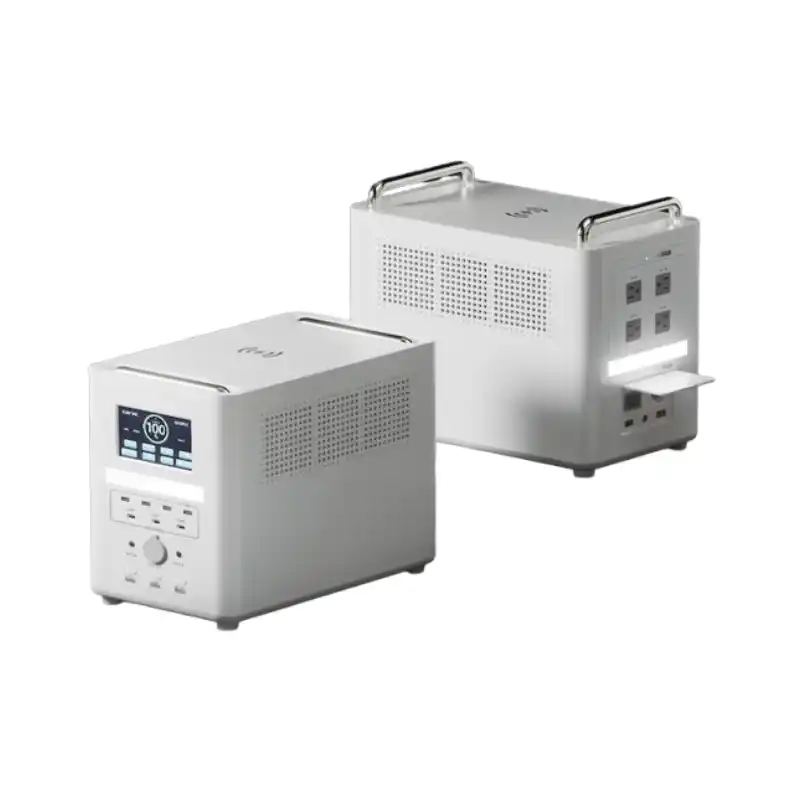
Lemi Power 1500 Review

The Lemi Power 1500 delivers 1,320 Wh of its 1,536 Wh rating behind a 1,500W inverter, with electrical noise of 905 mV, among the cleanest readings we have measured. Its switchover, however, runs to 30ms.
My Quick Verdict
Electrical noise on this machine’s inverter measures 905mv. Across everything tested for this site, only a handful of units run cleaner, and most of them cost several times as much.
That matters for sensitive equipment, and it goes hand in hand with a proper 120-volt output and a silent inverter with no audible whine.
Then the transfer time: 30 milliseconds, 10 milliseconds past the safety threshold, and the joint-slowest figure recorded anywhere in this database.
A machine that delivers unusually clean power but cannot be relied on during a blackout is a strange thing to hold.
Best for: Sensitive electronics and audio equipment in situations where the machine is switched on deliberately and not relied upon to react.
Not for: blackout backup of any kind, or anyone expecting to grow the system.
Key Stats
Introduction
Electrical noise is the specification almost nobody publishes, and almost nobody checks. It measures how much high-frequency rubbish rides along with the power leaving the inverter, and it matters most for the very equipment these machines are meant to protect.
The Lemi Power 1500 measures 905 mV, which puts it among the cleanest outputs recorded at this site. Its inverter also runs without any audible noise, and it maintains a stable 120 volts.
For a workstation, audio gear, or a medical device, that combination is genuinely valuable and rarely found at this price.
The pack claims 2,000 lithium iron phosphate cycles and comes with a 2-year warranty. No machine this size offers a weaker combination.
What It Can Actually Run
Fifteen hundred watts sustained with 3,000 in a burst. That lands precisely on the draw of a domestic heater, which leaves nothing spare once one is running.
From a 1,536Wh rating, the outlets gave back 1,320Wh, an 85.9% return that meets the class bar. Everything below uses 1,320Wh.
- Refrigerator at 150W: eight and three-quarter hours.
- CPAP at 40W without humidification: thirty-three hours.
- Starlink dish at 50W: over twenty-six hours.
- Laptop at 70W: about nineteen charges.
Output measured 120 volts with electrical noise at 905mv and no audible noise from the inverter itself; the strongest set of output-quality figures on this page.
Charging and Smart Features
Wall input is 550 watts at a single fixed rate, which is slow for a 1,536Wh pack and takes close to 3 hours to charge from empty.
Panels contribute 378 watts, available at 1- 58 volts and 10 amps. The 15-volt floor means a single small foldable panel may not engage it.
There is no dual charging, so mains and panels cannot run together.
The switchover measured 30 milliseconds. Premium price tier, luxury value tier.
Charging Speed Benchmarks
Recharge times for the Lemi Power 1500 within the 1,000Wh to 1,999Wh capacity class, measured against the 30 units our charging database holds. The bracket averages 1,085W of wall input and 641W of solar. Because bands are internal to each class, a Low rating here reflects performance among machines of similar size only.
Both inputs sit near the bottom of this bracket. Mains charging of 550W is roughly half the 1,085W class average and a clear Low rating, needing about 2.8 hours to refill 1,536Wh. In the fastest charging class on the site, where internal chargers above 1,200W are the norm and the leader accepts 2,400W, that is a long wait for a pack this size and the single figure most likely to frustrate day to day.
Panels come in at 378W, under 60 percent of the 641W class average and a Low rating where the ceiling reaches 1,400W, which puts a full solar refill at roughly 4.1 hours of flawless light. Once real conditions take their 20 to 30 percent, that will not finish inside a normal daylight window. Both channels together still fall short of what several single inputs in this class manage on their own.
Need a machine that refills in an hour? The Bluetti AC240 carries the same 1,536Wh but charges at 2,400W from the wall, over four times the Lemi Power 1500, bringing it back from empty in around 0.6 hours rather than 2.8. Solar more than doubles to 900W. It weighs 72 pounds, so it is a fixture, which is the main thing you give up.
Real Capacity: What You Actually Get
Conversion is respectable on AC and weaker on the twelve-volt side.
Against a 1,536Wh label, the sockets delivered 1,320Wh (85.9%), which is the mark machines this size are meant to hit.
Twelve volts yielded 1,253 Wh (81.5%), four points down. Against the usual pattern,n the sockets are the better route, so shifting loads to DC gains nothing.
Retention holds up: a percent an hour armed, and no detectable loss through twelve volts.
That last figure is worth noting alongside the transfer time. The machine holds its charge well and then cannot act on it quickly.
My takeaway: 1,320 Wh through the sockets, and take it from there rather than the 12-volt side. On this machine, the AC path is four points more efficient, which reverses the usual advice.
Power Output and Surge: What It Can Turn On
This is the section where the machine earns its place.
An electrical noise level of 905 mV is among the lowest readings in the database. Most machines at this capacity range from 1,500 to 2,000 mV, and several exceed 2,000 mV.
The inverter also produces no audible noise of its own, and the output holds a correct 120 volts. Three separate output-quality measurements, all good, which is uncommon at this price.
The rating itself is the limitation. Fifteen hundred watts sustained is exactly the draw of a domestic space heater, so running one leaves nothing for a refrigerator or lighting.
Compressor startup is well within the 3,000-watt burst rating, and at 180 watts, the twelve-volt socket exceeds the 150-watt threshold, so touch ports become worthwhile to use
Real Appliance Runtimes
What 1,320 Wh delivers in running time, based on the appliance loads applied to every machine reviewed here.
The CPAP line is where this machine makes its case. Thirty-three hours is unremarkable; thirty-three hours on 905mv of electrical noise and a correct 120 volts is not.
Recharging: Wall and Solar
From a Wall Outlet
Charging a 1,536Wh pack at 550W takes close to 3 hours from empty, which is slow for its capacity.
There is no rate adjustment either, so that is the only speed on offer. Machines of this size commonly draw 1,200 watts or more and refill in under 90 minutes.
Dual charging is not supported, so panels cannot shorten the wait.
For a machine likely to be charged overnight before planned use, that is manageable. For anything reactive, it is not.
From Solar Panels
Panel input is the weakest specification here after the transfer time.
Three hundred and seventy-eight watts across a 15 to 58 volt window at 10 amps. Both the wattage and the current allowance are low even for this capacity.
The 15-volt floor is worth checking against your panels. Anything folding out at under 15 volts goes unrecognised, so occasional panel charging may require a pair wired in series.
Fifty-eight volts at the top allows two rigid panels in series, which is workable if not generous.
The panels stay wired in permanently, and output continues while it charges.
Blackout Backup: The Part I Care About Most
Thirty milliseconds is the specification that decides this review.
Twenty milliseconds is where this category draws its line, and equipment underneath it usually survives a mains failure intact. This machine needs half as long again.
Take it that a PC, a NAS, or a router reboots at that speed rather than continuing. It is not a marginal case, and it ties for the slowest figure recorded anywhere in this database.
The irony is sharp. This is a machine that delivers unusually clean power to sensitive equipment, but cannot be trusted to keep doing so when the grid drops.
Why this matters to me: clean output and a slow transfer address two different questions. If your equipment is sensitive enough to care about 905 mV of electrical noise, it is almost certainly sensitive enough to care about a 30-millisecond gap.
Noise and Living With It
Fifty-five decibels under load, which sits at the upper edge of what a room with a sleeper will tolerate and is unremarkable in a garage or utility space.
Weight is 42 pounds (9.5 kilograms), which is a little heavy for 1,536 Wh but manageable.
Both Wi-Fi and Bluetooth work here, which counts for something when several machines at this price point offer no connectivity whatsoever.
Two years of cover, backed by a same-day response pledge. Against a five-year norm that is brief, and even briefer for cells rated for only 2,000 cycles.
Where It Falls Short
Four limitations, the first of which undermines the machine’s own strength.
1. A Thirty-Millisecond Switchover
Ten milliseconds past the safety threshold and the joint-slowest figure in this database.
Assume connected equipment restarts rather than rides through. That is a hard thing to accept on a machine whose main selling point is the quality of power it delivers to sensitive gear.
2. Two Thousand Cycles and a Two-Year Warranty
The shortest cell life at this capacity, and the shortest cover. At one cycle per day, the pack reaches 80% of its capacity sometime after year five.
Machines of this size now routinely offer 3,500 cycles and a 5-year warranty.
3. Slow on Both Charging Routes, With No Dual Charging
Five hundred and fifty watts from the socket at a single fixed rate, and 378 watts of solar. Neither is quick, and they cannot be combined.
The 15-volt solar floor may also exclude a single small foldable panel, which is worth checking before you buy one.
4. No Expansion Path
There is no expansion battery support, so 1,536 Wh is a hard ceiling, and growing the system means buying a second complete machine.
How It Compares
Two comparisons: the strongest machine at a similar capacity, and the other unit here, known for clean output.
Compared to the Pecron E1500LFP, which has identical capacity, this machine wins decisively on output mV quality (905 mV vs over 2,000) and for having a Bluetooth app that works off-grid. It loses on transfer speed, inverter size, charging on both routes, cycle life, and expansion support.
The Montek X1200 has less capacity and beats both on nearly everything that requires quick action: a 9.6-millisecond self-arming transfer, 92% conversion, and 1,200 watts of solar power.
If clean power to sensitive equipment is genuinely your priority and you will switch the machine on yourself, the Lemi has a case. On any broader measure, it is beaten at this capacity.
Who Should Buy It, and Who Should Skip It
Buy It If
- Output quality genuinely matters, and you will switch the machine on yourself.
- You want an app on a machine at this price, which several rivals omit.
- Your loads are modest, and nothing needs more than 1,500 watts.
- It will be charged deliberately before use rather than kept ready.
Skip It If
- Blackout protection is any part of your reason for buying.
- You need to fill the machine in under three hours.
- Solar is your recharge route, at 378 watts with a 15-volt floor.
- You want more than 2,000 cycles or more than two years of coverage.
The Bottom Line
There is a genuinely good inverter in this machine. Nine hundred and five millivolts of electrical noise, a clean 120 volts, and no audible whine put its output quality among the best measured at this site.
Almost everything about it is dated or limited: 2,000 cycles, a two-year warranty, 550 watts of charging at a fixed rate, 378 watts of solar, and no expansion path.
And the transfer time undoes the one thing it does well. A machine this careful about the power it delivers should not take thirty milliseconds to start delivering it.


There are no reviews yet.