When you buy through our links, we may earn a commission. See how we work with brands here.
Products Review Index: Every Model Tested by Brand
The complete power stations reviews directory, indexed by brand. Granular specifications, measured performance, and model-specific pros and cons for every machine.
This is the repository of individual model testing. Every machine listed below has undergone the same evaluation: granular model specifications recorded, usable capacity measured for both output paths, real-world performance flaws documented, and a score assigned across ten categories.
Use the brand index to find a specific model, or the value matrix further down to see how price and performance correlate across everything we have assessed.
How to read this index
Scores are the plain average of ten equally weighted categories. A machine scoring well on paper can still be the wrong purchase, and the review page explains why in each case.
When a machine is listed without a score, its full review is published, and its measured data is complete, but it has not yet undergone the current grading revision.
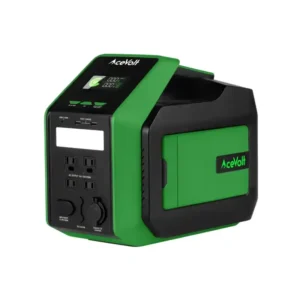
The Acevolt Campower 700 runs at 46dB, the quietest reading we have measured, and returns 89% through both AC and DC. Mains power arrives at 200W from a separate brick, with neither a handover function nor connectivity.
Across every machine tested for this site, at every capacity and from every brand, none runs quieter under load than this one. Forty-six decibels is roughly a quiet refrigerator heard across a room, and in a tent (where canvas absorbs nothing, and the unit sits an arm's length from your head) that is the specification that decides whether you sleep. It backs the quiet with an unusually consistent 89% conversion through both the AC sockets and the 12-volt output, so the choice of socket costs nothing, plus 2,500-cycle cells and a 100-watt USB-C port that charges a laptop at full speed. The costs are concentrated in how energy gets in and what the machine knows about itself: 200 watts through an external charging brick at one fixed rate, around three and a half hours from empty; a 175-watt solar ceiling capped at 28 volts that excludes nearly every rigid panel; no app of any kind; and no transfer function. The awkward comparison is the VigorPool Captain 700, one decibel louder and better in almost every other way.
Battery safety and chemistry (LiFePO4, 2,500 cycles)
6.5
Real-world efficiency and output (89% AC, 89% DC, 2.4% idle)
7.5
UPS and EPS switchover
2.5
Port selection and distribution (100W USB-C, 145W DC)
7.5
Solar charging and MPPT (175W, 28V ceiling)
3
AC recharge speed (200W via external brick)
3
Noise and thermal management (46dB, but audible inverter whine)
8.5
Portability and build quality (22 lbs)
7
Expandability and ecosystem (no expansion support)
4
App, display and telemetry
3
PROS:
Forty-six decibels under load, the quietest fan reading in our entire database.
Returns 89% through both AC and DC, so the choice of socket costs nothing.
Cells rated to 2,500 cycles, more than either rival at this capacity.
A 100W USB-C port that charges a laptop at full rate.
No measurable standby loss on the DC path, and a 145W twelve-volt socket.
Output inside the accepted voltage band, unlike several rivals at this size.
CONS:
Wall charging of 200W through an external brick, three and a half hours from empty.
No UPS mode fitted, so equipment loses power during a blackout.
No app of any kind, no monitoring, no rate control, no firmware updates.
A 175W solar ceiling capped at 28 volts, excluding most rigid panels.
Standby drain of 2.4% an hour with the inverter armed.
An audible whine from the inverter, and no expansion path.
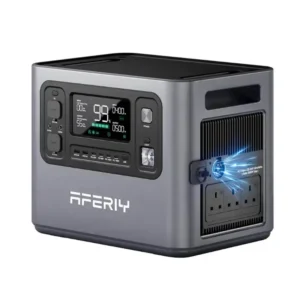
The AFERIY P280 delivers 1,880 Wh of its 2,048 Wh rated capacity to the sockets, a 91% conversion rate that is the best at this size. It runs a 2,800 W inverter with a 6,000 W surge, accepts 1,200 W of solar power across dual ports, and carries a seven-year warranty on 4,000-cycle cells.
Two numbers here are unmatched anywhere in this dataset: 91% conversion at the sockets, which is 120 to 140 watt-hours more usable energy than its closest rivals squeeze from identical nominal capacity, and a seven-year warranty where five is the class standard and several units manage three. Those cover how much you get and how long you keep it, and no other unit leads on both; while this one sits a price tier below the rivals it beats. Around them are a 2,800-watt inverter, 1,200 watts of solar across two independent ports, five-stage charging finer than anything else reviewed here, and 4,000-cycle cells. Then the firmware lets it down. The 8-millisecond crossover is genuinely quick and entirely conditional, because the inverter will not arm itself or guard a house unless someone is in it to switch it on. And at 57 decibels, the fans decide where it lives before you do. Put it in a garage, a workshop, or a vehicle,e and nothing at this capacity gives you more for the money. Ask it to sit in a cupboard and look after the house alone, and it can do so
Battery safety and chemistry (LiFePO4, 4,000 cycles)
10
Real-world efficiency and output (91% AC, 89% DC, 0.66% idle)
9.5
UPS and EPS switchover (8ms, no self-arming)
7.5
Port selection and distribution (dual 140W USB-C, 340W XT60)
9.5
Solar charging and MPPT (1,200W across dual ports)
9.5
AC recharge speed (1,800W, five-stage)
9.5
Noise and thermal management (57dB)
6
Portability and build quality (47 lbs)
7.5
Expandability and ecosystem (expansion supported)
9
Smart app and interface (Wi-Fi and Bluetooth)
7.5
PROS:
Conversion of 91% through the sockets, the best AC result recorded at this capacity.
A seven-year warranty, two years longer than anything else reviewed on this site.
Solar input of 1,200W across two independent 600W ports at 20 amps each.
A 2,800W sustained and 6,000W peak inverter, among the largest at this capacity.
Five-stage mains charging, the finest rate control of any unit reviewed here.
Cells rated to 4,000 cycles with standby loss of 0.66%pern hour, and dual 140W USB-C ports.
CONS:
The inverter cannot arm itself, so an 8ms crossover only helps when somebody switches it on.
Fans at 57dB, loud enough to exclude bedrooms, tents, and quiet offices.
AFERIY operates no telephone support, despite the longest warranty here.
The measured output of 117 volts sits at the bottom edge of the acceptable band.
Published weight figures are inconsistent between imperial and metric.
The 55-volt solar ceiling is marginally lower than the 60 volts most rivals allow.
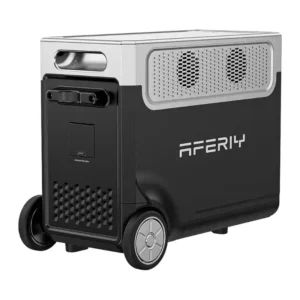
The AFERIY P310 delivers 3,630Wh of its 3,840Wh rating, a 94% conversion, beaten by only one machine we have measured. Behind it is a 3,600W inverter, 2,000W of solar accepted up to 160 volts, and seven years of coverage on 4,000-cycle cells.
Two numbers make a strong case for this machine, and two more take it apart. It converts 94% of its rated capacity into usable energy, beaten by exactly one unit across this entire dataset, and it carries a seven-year warranty, while five is the class standard and several units offer three; both at an exceptional value tier, for nearly four kilowatt-hours. Then the fans, at 63 decibels (nothing else measured at this site runs louder), eliminate every indoor space people actually occupy. And the wall input stops at 1,500 watts, the poorest charging-to-capacity ratio here, meaning close to three hours from empty and a machine that genuinely depends on its panels rather than merely benefiting from them. The solar side is well judged for that: 2,000 watts to 160 volts at 20 amps, with a low enough floor that foldables work too. Put it in an outbuilding beside a large array where nobody has to hear it, and it delivers more energy per pound spent than anything at this size. Bring it indoors,s and it is unusable.
Battery safety and chemistry (LiFePO4, 4,000 cycles)
10
Real-world efficiency and output (94% AC, 93% DC, 1.0% idle)
9.5
UPS and EPS switchover (10.1ms, no self-arming)
7
Port selection and distribution (100W USB-C, 350W XT60)
8.5
Solar charging and MPPT (2,000W, 11–160V at 20A)
9.5
AC recharge speed (1,500W into 3,840Wh, five-stage)
6
Noise and thermal management (63dB)
4
Portability and build quality (88 lbs)
4
Expandability and ecosystem (expansion support)
9
Smart app and interface (Wi-Fi and Bluetooth)
7.5
PROS:
Conversion of 94%, beaten by only one machine across this entire dataset.
A seven-year warranty, longer than anything else measured for this site.
Solar to 160 volts at 20 amps, with an 11-volt floor so foldables work without a separate channel.
Cells rated to 4,000 cycles and 3,630Wh of usable energy at an exceptional value tier.
Five-stage charge control is the finest rate adjustment offered by any machine here.
A 350W XT60 output and a 3,600W inverter at the top of its class.
CONS:
Sixty-three decibels is the loudest fan reading recorded anywhere in this data.
Wall charging at 1,500W into a 3,840Wh pack takes close to three hours to fully charge from empty.
AFERIY operates no telephone support behind that seven-year cover.
Dual charging exceeds 2,500W only below 70% state of charge, so the last third refills slowly.
The inverter will not arm itself, so an empty house is unprotected.
A surge of 5,500W is below the 7,200W most machines at this capacity provide.
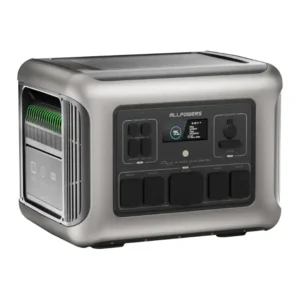
The ALLPOWERS R1500 holds 1,152Wh behind an 1,800W inverter with 3,000W of surge capacity and accepts solar input up to 95 volts—high enough to wire rigid panels in series, unlike most rivals. Four-stage charging, expansion support, and exceptional value per watt-hour in the mid-range price tier.
Everything about this unit points away from the wall socket and towards the roof. Solar accepts up to 95 volts, whereas nearly every rival stops at 60, which is the difference between wiring three rigid panels in series and making do with two foldables, and dual charging takes 1,500W combined against just 900W from the mains alone — the slowest wall input in this comparison and clearly a deliberate choice. It returned 950Wh of a rated 1,152Wh through the sockets, an 82% result that is the weakest AC conversion here, though the DC side redeems it at 87% and rewards anyone running twelve-volt loads. The 11.6-millisecond crossover is quick enough for a desktop, which makes the absence of a self-arming inverter genuinely annoying rather than merely disappointing, and ALLPOWERS runs no telephone support behind its five-year warranty. As a mains-charged backup box, it is mediocre. As the charging hub of a vehicle or a cabin with panels overhead, nothing else on this page does what it does for the money.
Battery safety and chemistry (LiFePO4, 3,000 cycles)
The AllPowers R2500 pairs 2,016Wh with a 2,500W inverter and accepts solar between 12 and 150 volts, a ceiling few units reach. It delivers 1,720 Wh to the outlets and takes an expansion battery. Upper mid-range price tier, exceptional value per watt-hour.
Twenty-two units in this dataset, every one has delivered an output voltage between 117 and 122, comfortably within the working band that household equipment expects. This one measured 112 (about seven percent low) and was the only failure of that standard recorded here. Heaters and lighting will not care, and neither will anything running on a switching supply. Motors will: they draw extra current to make up the shortfall, run hotter for it, and fail earlier, which is exactly the sort of damage that shows up as a dead compressor a year later rather than as anything you notice on the night. That is a hard problem to overlook on a machine most people would buy to protect a refrigerator. It is also a genuine shame, because the solar design is one of the best here (1,000 watts accepted up to 150 volts, high enough for a proper series string) and the 2,500-watt inverter is the largest at this capacity. Add 2.16% hourly standby drain on an inverter that will not self-arm, 63 pounds, 57 decibels, and no phone line behind the warranty, and the picture settles: fine for a workshop running resistive loads, wrong for the job most buyers have in mind.
Battery safety and chemistry (LiFePO4, 3,500 cycles)
The AllPowers S200 returns 125Wh of its 154Wh rated capacity, an 81% result, behind a 200W inverter, in a 2.87-pound chassis with wireless charging and a five-year warranty. Budget price tier.
The Allwei S300 returns 241Wh of its 280Wh rated capacity, an 86% result, behind a 300W pure sine inverter, backed by a five-year warranty. Charging is 60W through a brick. Mid-range price tier.
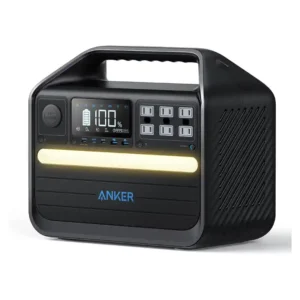
The Anker 555 PowerHouse returns 900Wh of its 1,024Wh rating and 936Wh through DC. Output measures 110 volts with audible inverter noise; fans read 60dB, there is no transfer function, and charging runs at 200W through an external brick.
Anker builds some of the best machines in this category; its SOLIX S2000 returns 95% of rated capacity and loses 0.08% an hour on standby, both the best figures we have measured anywhere. This is not one of them. The 555 PowerHouse collects five separate problems that current machines have solved: an output measuring 110 volts, below the accepted band and hard on any motor; no automatic transfer function at all, so a blackout takes connected equipment down; 200 watts of wall charging through an external brick, more than five hours from empty; 60-decibel fans with an audible whine from the inverter on top of them; and a 200-watt solar input capped at 28 volts, which excludes most rigid panels outright. What survives is real but narrow: 87.8% conversion through the sockets, 91.4% through DC, and a 145-watt car socket that makes it a decent twelve-volt camp battery. Anker's own SOLIX C1000 replaced this machine and fixes all five of those for similar money.
Battery safety and chemistry (LiFePO4, 3,000 cycles)
8
Real-world efficiency and output (87.8% AC, 91.4% DC, but 110V output)
6
UPS and EPS switchover
2
Port selection and distribution (100W USB-C, 145W 12V)
6.5
Solar charging and MPPT (200W, 28V ceiling)
2.5
AC recharge speed (200W via external brick)
2
Noise and thermal management (60dB plus inverter whine)
3.5
Portability and build quality (29 lbs)
7
Expandability and ecosystem (no expansion support)
4
Smart app and interface
3
PROS:
Conversion of 87.8% through AC and 91.4% through DC, both above the class line.
Standby drain of 1% an hour, with nothing measurable on the DC side.
A 145W car socket that carries a compressor fridge on the more efficient DC path.
Cells rated to 3,000 cycles under a five-year warranty with 24-hour support response.
Twenty-nine pounds, reasonable for 1,024Wh, with pass-through charging supported.
An internal design simple enough to have few failure points.
CONS:
Output measured 110 volts, below the accepted band and hard on motors.
No UPS mode fitted, so equipment loses power during a blackout.
Wall charging of 200W through an external brick, over five hours from empty.
Sixty decibels of fan noise plus an audible whine from the inverter itself.
A 28-volt solar ceiling that excludes most rigid panels, at 200W total.
A 1,000W inverter with only 1,500W surge, and no app or expansion path.
The Anker SOLIX C1000 Gen 2 returns 901Wh of its 1,024Wh rated capacity, an 88% result, behind a 2,000W inverter. It transfers in under 10ms with a self-arming inverter and carries dual 140W USB-C ports. High-end price tier, exceptional capability for the money.
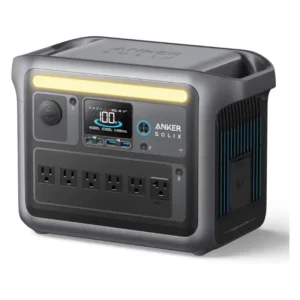
The Anker SOLIX C1000 holds 1,056Wh behind an 1,800W inverter and loses just 0.7% of its charge per hour on standby, the lowest figure in its class. Inverter distortion measures 0.8%; it's an expansion battery that sits in the entry-price tier with exceptional value.
This is a unit designed for the years it spends waiting rather than the hours it spends working, and on those terms it is excellent: 0.7% standby loss an hour is the lowest figure I have recorded in this class, meaning it is still close to full after a month in a cupboard, and 0.8% inverter distortion is less than half the class average and the cleanest power here for a CPAP motor or a laptop supply. The sockets gave back 910Wh from a 1,056Wh pack and 946Wh on the twelve-volt side, and it accepts an expansion battery that its closest rivals cannot. The problems are loud and slow. Fifty-nine decibels under load is the noisiest measurement in this class and rules out bedrooms, tents, and quiet offices entirely, and a 16.1-millisecond crossover on an inverter that will not arm itself is too close to the line for a desktop or a NAS. Put it somewhere nobody has to listen to it and where its real job is waiting: a utility room, a workshop, the back of a vehicle. On those terms, very little touches it.
Battery safety and chemistry (LiFePO4, 3,000 cycles)
The Anker SOLIX C200 DC holds 192Wh with no AC inverter, delivering 200W total across DC outputs, including a bidirectional 140W USB-C port. Fanless and silent, with 0.15% hourly idle drain. Budget price tier.
The Anker SOLIX C2000 Gen 2 stores 2,048Wh behind a 2,400W inverter, crosses over in 7.2ms with a self-arming inverter, and loses only 0.41% of its charge per hour idle, both the best figures in this dataset. Cells rate at 4,000 cycles and sit in the upper-mid-range price tier at exceptional value.
Backup power fails in two ways, and this unit posts the best figures in the dataset for both: 7.2 milliseconds to take the load, the quickest crossover recorded here, and 0.41% per hour on standby, the lowest idle drain I have measured anywhere. These are the numbers that determine whether a power station is actually protecting your equipment. A fast crossover is useless if the battery has drained itself in storage, and a full battery is useless if the handover takes too long.
It also arms itself automatically, which most units in this dataset cannot do, so there is no configuration to remember. Add 4,000 cycles, 0.60% distortion, 44 decibels, 41 pounds, and 1,760Wh delivered from a 2,048Wh battery, and the package earns an exceptional value rating. The flagship, which this unit outperforms on those measures, only reaches the good tier.
The one limitation is specific: the solar panels cannot remain connected continuously. That rules out a permanently wired solar array, but little else. If your solar setup is roof-mounted, look elsewhere. For everything else at this capacity, this is the power station I would buy.
Battery safety and chemistry (LiFePO4, 4,000 cycles)
The Anker SOLIX C800 returns 668Wh of its 768Wh rated capacity, an 87% result, behind a 1,200W inverter with 1,600W SurgePad. HyperFlash charging fills it in 58 minutes. High-end price tier, strong output for the capacity.
The Anker SOLIX F2000 delivers 1,850 Wh (90% of its 2,048 Wh rating) and is powered by a 2,400W inverter. It's 270W; the 12-volt socket is the highest-rated car outlet in this data, three USB-C ports deliver 100W each, and the fans operate at 45dB. Upper mid-range price tier, good value.
Nobody compares car sockets, which is exactly why this one is worth pointing at: 270 watts, where the rest of this field sits between 120 and 145, high enough that a compressor fridge, a diesel heater, or a run of vehicle accessories goes straight into the port it was designed for instead of through a breakout cable and an inverter. Around that sits a genuinely capable machine: 1,850Wh delivered from a 2,048Wh pack at 90%, beaten by only two units at this size; three separate 100-watt USB-C ports, which nothing else here offers; and 45 decibels behind a 2,400-watt inverter. The costs are high and specific. Sixty-seven pounds is the largest figure at this capacity anywhere in this data, a 15.1-millisecond handover on a manually armed inverter rules out protecting an empty house, mains and solar refuse to charge it together, and the app speaks Bluetooth with no Wi-Fi behind it. Put it in a van, and it earns its place. Put it in a hallway,y and Anker's own C2000 Gen 2 does the job better for the same money.
Battery safety and chemistry (LiFePO4, 3,000 cycles)
8
Real-world efficiency and output (90% AC, 84% DC, 1.5% idle)
9
UPS and EPS switchover (15.1ms, no self-arming)
6
Port selection and distribution (three 100W USB-C, 270W 12V socket)
8.5
Solar charging and MPPT (1,000W at 20A, no dual charging)
8
AC recharge speed (1,440W, no dual charging)
7.5
Noise and thermal management (45dB)
9.5
Portability and build quality (67 lbs)
4.5
Expandability and ecosystem (expansion support)
9
Smart app and interface (Bluetooth)
6.5
PROS:
A 270W twelve-volt car socket, roughly double the class norm and the highest rating in this data.
Conversion of 90% at the sockets, beaten by only two units at this size.
Three separate 100W USB-C ports, so three devices charge at full rate together.
Fans at 45dB behind a 2,400W inverter, quiet enough for a room adjoining a bedroom.
Solar input of 1,000W at 20 amps, comfortable for rigid panels, with the array able to stay wired.
Expansion is supported, with phone assistance available for five years under warranty.
CONS:
Sixty-seven pounds, the heaviest unit at this capacity, and a two-person lift.
Handover of 15.1ms with no self-arming, which rules out reliable unattended protection.
Mains and solar cannot charge it simultaneously, unlike most rivals at this price.
The app runs on Bluetooth only, so there is no monitoring from elsewhere in the house.
An idle drain of 1.5% per hour is normal, and a week armed costs a quarter of the pack.
No harmonic distortion figure appears in the bench data at all.
The Anker SOLIX F3000 holds 3,072Wh behind a 3,600W inverter and accepts 2,400W of solar, including a path reaching 165 volts that permits a real series string. It returns 91% through DC, charges at 3,840W from the wall, and sits in the upper mid-range price tier at exceptional value.
The reason to buy this machine is a number most buyers never look at: its upper solar input accepts 165 volts, where the majority of this field stops at 60. That is the difference between wiring two rigid panels in series and wiring five or six in series: lower current for the same power, thinner cable over a long run from a roof, and less energy lost warming the copper. Around it sits a genuinely strong package: 3,600 watts sustained, 2,760Wh delivered from a 3,072Wh pack, 91% through a 440-watt DC port, 4,000-cycle cells, and mains charging at 3,840 watts that refills the whole thing in under an hour; all at an exceptional value tier. What holds it back is the failure that has recurred through this entire dataset: it hands over in 9.8 milliseconds and then needs somebody to have switched the inverter on first. Its 0.66% hourly standby drain is low enough that leaving it armed costs almost nothing, which makes this the most forgivable version of that flaw I have reviewed. It is still a habit rather than a guarantee, and at 91 pounds,s this is a machine you install once and leave.
Battery safety and chemistry (LiFePO4, 4,000 cycles)
9.5
Real-world efficiency and output (89% AC, 91% DC, 0.66% idle)
9.5
UPS and EPS switchover (9.8ms, no self-arming)
7.5
Port selection and distribution (100W USB-C, 440W DC)
8.5
Solar charging and MPPT (2,400W across dual paths, 165V ceiling)
10
AC recharge speed (3,840W mains and dual)
9.5
Noise and thermal management (53dB)
7
Portability and build quality (91 lbs)
4
Expandability and ecosystem (expansion support)
9.5
Smart app and interface (Wi-Fi and Bluetooth)
8.5
PROS:
A solar path reaching 165 volts, high enough for a five- or six-panel series string.
Mains charging at 3,840W, among the fastest recorded, refilling three kilowatt-hours in under an hour.
Delivers 91% through DC via a 440W app-controlled port, enough for real twelve-volt loads.
Standby loss of 0.66% an hour, low enough that leaving it armed costs almost nothing.
A 3,600W sustained inverter at the top of its class, with 7,200W of surge.
Cells rated to 4,000 cycles under five years of cover, at an exceptional value tier.
CONS:
The inverter cannot wake itself, so protection depends on somebody having armed it.
Ninety-one pounds, a two-person lift, and twenty-eight heavier than its direct rival.
A single 100W USB-C port where cheaper machines now fit two at 140W.
Electrical noise above 2,000 mV is at the high end of this field.
Fifty-three decibels, where quieter machines exist at lower output.
Both solar paths are capped at 17 amps, so the design favors voltage over current.
The Anker SOLIX F3800 Plus runs a 6,000W split-phase inverter producing 120V and 240V, delivers 3,270Wh of its 3,840Wh rating, and draws 6,000W from a wall socket. Solar reaches 3,200W across a 165-volt path, and the inverter arms itself.
Anker sells two machines four pounds apart with the same 3,840Wh pack and the same 6,000-watt split-phase inverter, and every difference between them sits on the input side. This one takes 6,000 watts from a wall socket, whereas the standard version takes 1,800; it accepts 3,200 watts of solar at up to 165 volts, compared with 2,400 at 60; it supports pass-through charging, raises its own inverter when the grid drops, and returns five extra points through the DC path at 91%. Behind a 6,000-watt inverter, an 1,800-watt charger is a real bottleneck, so for anything wired into a transfer switch, these specifications determine whether the system keeps up during a storm week. The costs are blunt: 136 pounds in one sealed body that does not come apart, a premium value tier that puts it above its own standard version, 85% conversion and 3,000 cycles that are both the weakest at this capacity, and a 100-watt USB-C port that would look thin on a machine a fifth of the price. Buy this for the installation. The battery inside it is the least impressive thing about it.
Battery safety and chemistry (LiFePO4, 3,000 cycles)
8
Real-world efficiency and output (85% AC, 91% DC, 1.6% idle)
8
UPS and EPS switchover (14.3ms, self-arming)
8.5
Port selection and distribution (100W USB-C, 141W 12V socket)
6.5
Solar charging and MPPT (3,200W across dual 165V channels)
10
AC recharge speed (6,000W mains, pass-through supported)
10
Noise and thermal management (54dB)
6.5
Portability and build quality (136 lbs, single body)
2.5
Expandability and ecosystem (expansion and split-phase pairing)
10
Smart app and interface (Wi-Fi and Bluetooth)
8.5
PROS:
A 6,000W split-phase inverter on 120 and 240 volts, with 12,000W of surge.
Main charging of 6,000W, refilling a 3,840Wh pack in around forty minutes.
A self-arming inverter and pass-through charging, both absent on the standard F3800.
Solar of 3,200W across two independently tracked 165-volt channels.
Delivers 91% through DC, six points better than through the outlets.
Waveform distortion of 1.10%, expansion support, and a phone line behind the cover.
CONS:
One hundred and thirty-six pounds in a single sealed body that does not separate.
Premium value tier, a full tier above its own standard version.
Conversion of 85% at the sockets, the weakest among machines at this capacity.
Cells rated for 3,000 cycles, while rivals here offer 4,000 or 6,000.
A handover of 14.3ms is the slowest reading among machines of this size.
A 100W USB-C port and a 141W car socket, both ordinary at this price.
The Anker SOLIX F3800 runs a 6,000W split-phase inverter producing 120V and 240V and delivers 3,310Wh of its 3,840Wh rating. Solar accepts 2,400W with an unusually generous 27-amp channel, though wall charging is limited to 1,800W.
At full output, this machine empties its pack in about 33 minutes and takes over 2 hours to refill it, the worst balance between output and input in this dataset. The 6,000-watt split-phase inverter is genuinely excellent (120 and 240 volts, 12,000 watts of surge, 1.20% distortion, 1,500 mV of noise) and the solar side is well judged too, with a 27-amp channel among the most generous current allowances measured here. Everything governing recovery lets it down. Main charging stops at 1,800 watts; the inverter will not arm itself; standby costs 1.9% per hour; and it is the only machine reviewed on this site with no pass-through charging at all, so refilling and using are mutually exclusive. Fed by a large array in an outbuilding where daylight does the work, it is honest value,e and the current headroom earns its keep. Wired to a transfer switch and expected to ride out a storm week, it will not keep up, and Anker's own Plus version (four pounds heavier, one value tier up) is the one that does.
Battery safety and chemistry (LiFePO4, 3,000 cycles)
8
Real-world efficiency and output (86% AC, 86% DC, 1.9% idle)
7.5
UPS and EPS switchover (13.5ms, no self-arming)
6.5
Port selection and distribution (100W USB-C, 142W 12V socket)
6.5
Solar charging and MPPT (2,400W, 27A channel, 60V ceiling)
8.5
AC recharge speed (1,800W, no pass-through)
5
Noise and thermal management (55dB)
6
Portability and build quality (132 lbs, single body)
2.5
Expandability and ecosystem (expansion and split-phase pairing)
9.5
Smart app and interface (Wi-Fi and Bluetooth)
8.5
PROS:
A 6,000W split-phase inverter on 120 and 240 volts, with 12,000W of surge.
A 27-amp solar channel is among the most generous current allowances measured here.
Conversion of 86% on both AC and DC, so the choice of port costs nothing.
Electrical noise of 1,500mv and 1.20% distortion, both on the cleaner side of this field.
Good value tier, a full tier below the Plus version for the same inverter.
Expansion support with phone assistance behind a five-year warranty.
CONS:
The main 1,800W charge behind that inverter has the least balanced ratio in this data.
No pass-through charging at all, so the machine cannot supply loads while refilling.
The inverter will not arm itself, leaving an empty house unprotected.
Standby drain of 1.9% an hour, near the threshold and slow to replace.
A 60-volt solar ceiling rules out long series strings despite the strong current allowance.
Cells rated to 3,000 cycles, the shortest at this capacity, in a 132-pound sealed body.
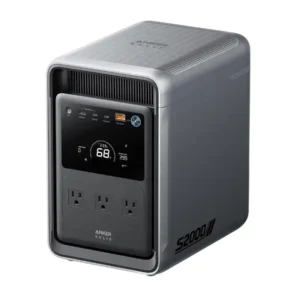
The Anker SOLIX S2000 delivers 1,920Wh of its 2,009Wh rating (a 95% conversion rate, unmatched in this data) and loses just 0.08% of its charge per hour while idle. It crosses over in 9.6ms with a self-arming inverter, weighs 35 pounds, and sits in the mid-range price tier at exceptional value.
Two numbers here are so far ahead of the field that they change how the unit should be judged. It converts 95% of its rated capacity into energy you can actually spend, whereas the next best result in this data is 92%, and the field average sits near 86%, meaning this 2,009Wh machine hands you more usable power than several 2,048Wh rivals. And it loses 0.08% of its charge per hour idle, compared with a previous best of 0.41%, which is so close to nothing that the usual trade-off between staying armed and staying charged simply vanishes. Add a self-arming inverter, a 9.6-millisecond crossover, 4,000 cycles, and 35 pounds (the lightest at this capacity by twelve), and, as a machine that waits for years and then works, it is close to ideal. Then the limits arrive hard. A 1,500-watt inverter is the smallest here, and a single space heater consumes all of it. 400 watts of solar is the lowest ceiling at this size and cannot refill the pack in a normal window, and there is no expansion path. Stay within those boundaries, and nothing in this dataset offers better value. Step outside them, and it fails at once.
Battery safety and chemistry (LiFePO4, 4,000 cycles)
9.5
Real-world efficiency and output (95% AC, 0.08% idle, 0.90% THD)
10
UPS and EPS switchover (9.6ms, self-arming)
10
Port selection and distribution (100W USB-C, no DC figure)
5
Solar charging and MPPT (400W, lowest at this capacity)
4.5
AC recharge speed (1,600W mains, 1,800W dual)
9
Noise and thermal management (53dB)
7
Portability and build quality (35 lbs)
9.5
Expandability and ecosystem (expansion support)
4
Smart app and interface (Wi-Fi and Bluetooth)
8.5
PROS:
Conversion of 95%, the best figure measured anywhere in this data, and three points clear of second place.
Standby loss of 0.08% an hour, five times better than the previous best recorded here.
A self-arming inverter with a 9.6ms crossover, so it protects an empty house without configuration.
Thirty-five pounds for two kilowatt-hours, the lightest at this capacity by twelve pounds.
Cells rated for 4,000 cycles under a five-year warranty, with phone support included.
Distortion of 0.90% and electrical noise of 1,350mv, both better than the class average.
CONS:
A 1,500W inverter, the smallest at this capacity, is consumed entirely by a single heating appliance.
The 400W solar input is the lowest for this size and cannot complete a recharge within the usual window.
No expansion battery support, making 2,009Wh a permanent ceiling.
One 100W USB-C port and no documented high-output DC socket.
No twelve-volt yield figure appears in the bench data at all.
Combined charging caps at 1,800W, modest for this capacity.
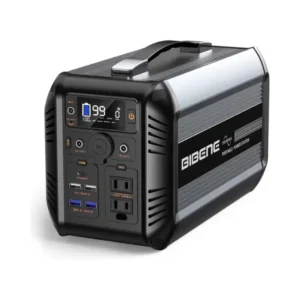
The Bibene 614Wh returns just 451Wh via AC but 561Wh via DC, an 18-Wh gap. Solar caps at 94W across a 12- to 24-volt window, among the tightest measured, and charging runs at 94W through a brick.
Two Very Different Machines Depending on Which Socket You Use
Ask this machine's AC sockets for energy, and 73% of the rated pack arrives, the joint-second-worst conversion figure in our database. Ask the twelve-volt output and 91% arrives, which is genuinely good. That eighteen-point spread is the second widest we have measured and is worth 110 watt-hours (nearly a fifth of everything you charged), so the socket you choose fundamentally changes what you own. Used on D,C, it is a reasonable camp battery: 561 Wh delivered, 16.8 pounds, and electrical noise of 1,096 mV that is cleaner than machines costing several times as much. Everything else is at or near the bottom of the category. The solar input caps at 94 watts across a 12- to 24-volt window, among the smallest ceilings and tightest ranges we have measured, which excludes essentially every rigid panel made. Wall charging runs at 94 watts through a brick, more than six hours from empty. And a 500-watt inverter delivering 110 volts is the weakest output at this capacity.
Battery safety and chemistry (LiFePO4, 2,000 cycles)
5.5
Real-world efficiency and output (73% AC, 91% DC, 110V output)
5
UPS and EPS switchover
2.5
Port selection and distribution (60W USB-C, DC output)
5
Solar charging and MPPT (94W, 24V ceiling)
2
AC recharge speed (94W via external brick)
2
Noise and thermal management
6
Portability and build quality (16.8 lbs at 614Wh)
8
Expandability and ecosystem (no expansion support)
4
App, display and telemetry
3
PROS:
Returns 91% through DC, a strong figure for camp and vehicle loads.
Electrical noise of 1,096mv, cleaner than machines costing several times as much.
Sixteen point eight pounds for 614Wh, a comfortable one-handed carry.
LiFePO4 chemistry at an exceptional value tier.
The array can stay permanently connected, with pass-through charging supported.
A 24-hour customer service response commitment behind the warranty.
CONS:
Only 73% through AC, the joint second-worst conversion in our database.
Solar capped at 94W across a 12 to 24 volt window, among the tightest measured.
A 500W inverter at 110 volts, the lowest rating at this capacity.
Wall charging of 94W through a brick, more than six hours from empty.
No UPS mode, no app, no expansion path,th and no dual charging.
No fan noise measurements are available in our data, and cells are rated for only 2,000 cycles.
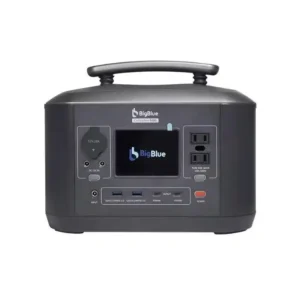
The BigBlue CellPowa 500 delivers 460Wh of its 537Wh rating at the correct 120 volts, converts at 88% efficiency via DC, and supports dual charging at 213W. Its solar input caps at 85W, the lowest we have measured.
★★★★★
More details +
Correct Voltage and Sound Conversion, With Token Solar
Few compact power stations we have reviewed deliver 110 volts or less, which makes any motor draw extra current and run hotter over repeated cycles. This one delivers a correct 120, pairs it with conversion efficiencies of 85% through the sockets and 88% through DC (at or above the class line on both paths), plus dual charging at 213 watts and a price per watt-hour that undercuts its closest rivals. What it gives up is the solar input, which holds a record at the wrong end: 85 watts is the lowest maximum of any machine in our entire database, across every capacity and brand, and it comes with a 30-volt ceiling that excludes most rigid panels and a 4-amp current limit among the lowest recorded. Wall charging is 92 watts through an external brick, taking close to six hours from empty, though dual charging brings that down to two and a half on a bright day. Two 60-watt USB-C ports also slow down a modern laptop, whereas one 100-watt port would not.
Battery safety and chemistry (LiFePO4, 2,000 cycles)
5.5
Real-world efficiency and output (85% AC, 88% DC, correct 120V)
7.5
UPS and EPS switchover
2.5
Port selection and distribution (two 60W bi-directional USB-C)
6
Solar charging and MPPT (85W, lowest ceiling measured)
2
AC recharge speed (92W via brick, 213W dual)
3.5
Noise and thermal management
6
Portability and build quality (17.1 lbs)
7
Expandability and ecosystem (no expansion support)
4
App, display and telemetry
3
PROS:
A correct 120V output, which four compact machines in our database fail to deliver.
Returns 85% through AC and 88% through DC, both at or above the class line.
Dual charging at 213W, which more than doubles the socket alone.
Two bi-directional USB-C ports that can also refill the machine.
A premium value tier rather than luxury, undercutting rivals at this capacity.
LiFePO4 chemistry with a 24-hour customer service response commitment.
CONS:
Solar capped at 85W, the lowest maximum input of any machine in our database.
Wall charging at 92W with an external brick, close to 6 hours from empty.
Two 60W USB-C ports instead of one 100W port, so laptops charge slowly.
No UPS mode, no app, and no expansion path.
A 30-volt solar ceiling and 4-amp limit, both restrictive.
The Black+Decker PPRH5B returns 143Wh of its 216Wh rated capacity, a 66% result and the weakest in our data, behind a 500W modified sine inverter. It includes 450A jump clamps and a tyre inflator. Budget price tier.
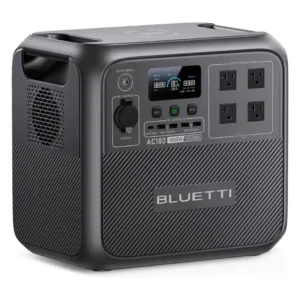
The Bluetti AC180 wraps 1,152 Wh of 3,500-cycle lithium iron phosphate around an 1,800 W inverter and crosses over in 8.7 milliseconds when the grid drops. Wall charging reaches 1,440W. It lands in the mid-range price tier while delivering exceptional value per watt-hour.
Every unit at this price is a set of compromises, and the AC180s are unusually easy to read: it spent its budget on cells and wall charging, and almost nothing on everything else. You get 990 Wh at the sockets from a 1,152 Wh pack, an 8.7-millisecond crossover that matches anything at this size, and mains charging at 1,440W that fills it within the hour. What you do not get is an inverter that arms itself, which makes that fast crossover conditional on somebody having switched it on; solar input above 500W, which is half the class standard; any expansion path at all; or fans quiet enough for a bedroom, at 54dB and 37 pounds. If capacity per dollar is genuinely the only thing you are optimizing for, it is a fair deal. If it is not, Bluetti's own Elite 100 V2 costs a tier less and beats it on four of the five things that go wrong later.
Battery safety and chemistry (LiFePO4, 3,500 cycles)
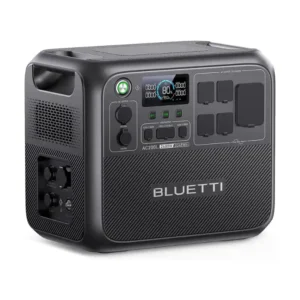
The Bluetti AC200L delivers 1,830 Wh of its 2,048 Wh rated capacity, an 89% return, powered by a 2,400W inverter. Solar accepts up to 145 volts, more than double what most units at this capacity permit, and wall charging reaches 2,400W. Upper mid-range price tier, exceptional value.
One figure here reshapes what the unit is for: the solar input accepts 145 volts, where most machines at this capacity stop at 60. That is not a marginal advantage but a different installation entirely, because it lets you wire four or five panels in a single series string the way a permanent array is designed, with lower current, thinner cable,le and smaller losses over a long run. Around it sit genuinely strong numbers: 1,830Wh delivered from a 2,048Wh pack, an 89% conversion rate second only to one rival at this capacity; 2,400 watts of wall charging that fills it from empty in under an hour; 48-decibel fans behind a 2,400-watt inverter; and a standby loss of 0.5% per hour. What decides against it are two facts that will not change. It weighs 61 pounds, the heaviest at this capacity and a two-person lift, and its inverter cannot arm itself, so a 13.8-millisecond crossover only helps while somebody is home. Install it beside a fixed array, and it is the best unit here for that job. Ask it to be portable or to guard an empty house, and it cannot do either.
Battery safety and chemistry (LiFePO4, 3,000 cycles)
8
Real-world efficiency and output (89% AC, 82% DC, 1.10% THD)
9.5
UPS and EPS switchover (13.8ms, no self-arming)
6.5
Port selection and distribution (100W USB-C, 142W 12V)
7.5
Solar charging and MPPT (1,200W, 145V ceiling)
10
AC recharge speed (2,400W mains and dual)
10
Noise and thermal management (48dB)
9
Portability and build quality (61 lbs)
5.5
Expandability and ecosystem (expansion support)
9
Smart app and interface (Wi-Fi and Bluetooth)
8.5
PROS:
Solar input to 145 volts, more than double what most units at this capacity permit and enough for a genuine series string.
Conversion of 89% at the sockets, second best at this size, and four points above most rivals.
Wall charging at 2,400 WW, filling the pack from empty in under an hour.
Fans at 48dB despite a 2,400W inverter, quiet enough for a room adjoining a bedroom.
Distortion of 1.10% and standby loss of 0.5% per hour, both better than the class average.
Solar input of 1,200W, tied highest at this capacity, with panels able to stay connected permanently.
CONS:
Sixty-one pounds, the heavy capacity at this capacity, and a two-person lift.
The inverter cannot arm itself, so a 13.8ms crossover only protects an occupied house.
Cells rate for 3,000 cycles, while the strongest rivals at this capacity offer 4,000.
The USB-C port supplies 100W, where the best units now provide 140W, often across two ports.
The DC path returns only 82; unusually, there is no efficiency gain from twelve-volt loads.
A crossover of 13.8ms is adequate, not good, and well behind the sub-nine leaders.
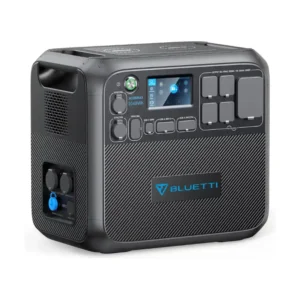
The Bluetti AC200Max has 2,048Wh of capacity, a 2,200W inverter, and delivers 1,840Wh at the outlets. Solar reaches 900W at up to 145 volts; the DC output is rated at 400W, and the cells carry a 3,500-cycle rating with four years of coverage.
Every other machine at this capacity reviewed on this site hands over to battery in some measurable time, anywhere from zero to twenty milliseconds. This one has no UPS mode fitted at all, so equipment plugged into it during a blackout simply loses power, a desktop restarts, a network drive shuts down uncleanly, a router drops. That is a missing function rather than a poor measurement, and in a category defined by backup, the specification decides everything. Underneath sits a decent battery: 1,840Wh returned from a 2,048Wh pack at 89%, standby drain of 0.6% an hour, so it holds its charge for months, a 145-volt solar ceiling that allows a proper series string, and a 400-watt DC output. The rest is dated. Wall charging is 470 watts via an external brick at a single fixed rate, over four hours from empty; connectivity is Bluetooth only, with no Wi-Fi; the warranty is four years rather than five; and per watt-hour, it lands in the luxury tier. Bluetti's own AC200L matches the capacity and conversion, adds a working switchover, and charges five times faster for a lower price tier.
Battery safety and chemistry (LiFePO4, 3,500 cycles)
8
Real-world efficiency and output (89% AC, 83% DC, 0.6% idle)
8.5
UPS and EPS switchover
5
Port selection and distribution (100W USB-C, 400W DC)
8
Solar charging and MPPT (900W to 145 volts)
8
AC recharge speed (470W via brick, single rate)
3
Noise and thermal management (54dB)
6.5
Portability and build quality (60 lbs)
5
Expandability and ecosystem (expansion support)
8.5
Smart app and interface
6
PROS:
Conversion of 89% at the outlets, stronger than most machines at this capacity.
Standby drain of 0.6% an hour, so it holds a charge through months of storage.
Solar to 145 volts, allowing a genuine series string of rigid panels.
A 400W DC output, roughly three times a typical car socket.
Cells rated to 3,500 cycles with pass-through charging and expansion support.
Fifty-four decibels, quieter than several machines at this size.
CONS:
No UPS is installed, so connected equipment loses power when the grid does.
Wall charging of 470W through an external brick, with no adjustable rate.
Luxury value tier, among the most expensive energy at two kilowatt-hours.
Bluetooth-only connectivity, with no Wi-Fi for remote monitoring.
Four-year warranty, a year short of the class standard.
Sixty pounds, heavy for the capacity, with a 2,200W inverter below the class norm.
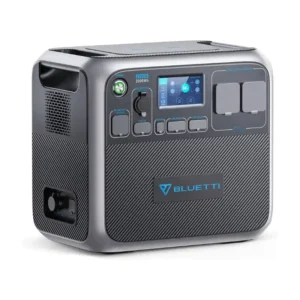
The Bluetti AC200P holds 2,000Wh behind a 2,000W inverter and returns 1,750Wh at the outlets. Solar reaches 700W at up to 150 volts, and the DC output is rated at 335 W, though there is no app, no expansion, and no transfer function.
This is the third machine from the same manufacturer in this database with no automatic transfer function at all, which stops being a quirk and becomes a generation: hardware built before switchover speed was something anyone competed on. Equipment plugged in during a blackout simply loses power. Beside that sit two more specifications from an earlier era, a USB-C port supplying 60 watts, half what nearly every rival provides and beaten by only one machine in this whole database, and 700 watts of solar, the lowest ceiling at this capacity, on an input that ignores anything below 35 volts. Wall charging is 470 watts via an external brick; there is no app of any kind, no expansion port, and the pack sheds 2% per hour while it waits. What survives is real: 88% conversion is above the class line, the 150-volt solar ceiling is among the best at this size, and a 335-watt DC output carries proper twelve-volt equipment. But Bluetti's own AC200L replaced this machine and beats it on every single line while costing a tier less.
Battery safety and chemistry (LiFePO4, 3,500 cycles)
7.5
Real-world efficiency and output (88% AC, 85% DC, 2% idle)
7.5
UPS failover speed
2
Port selection and distribution (60W USB-C, 335W DC)
5.5
Solar charging and MPPT (700W, 35 to 150 volts)
6.5
AC recharge speed (470W via external brick)
3
Noise and thermal management (54dB, silent inverter)
6.5
Portability and build quality (59 lbs)
5
Expandability and ecosystem (no expansion support)
4
Smart app and interface
3
PROS:
Conversion of 88% at the outlets, above the class line and ahead of several newer machines.
A 150-volt solar ceiling, among the highest at this capacity.
A 335W DC output, roughly two and a half times a typical car socket.
The inverter itself runs silently, with only the fans audible.
Cells rated to 3,500 cycles with pass-through charging supported.
Telephone support is behind the warranty.
CONS:
No UPS mode is fitted, so connected equipment loses power during a blackout.
A 60W USB-C port, half what nearly every rival provides.
Solar wattage is capped at 700W, the lowest at this capacity, with a 35-volt floor.
Standby drain of 2% an hour, enough to empty most of the pack in a fortnight.
No app and no expansion support, so no monitoring and no growth.
Wall charging at 470W via an external brick, with only three years of cover.
The BLUETTI Pioneer 150 (AC240) portable power station behaves less like gear and more like an appliance: 1,536Wh behind a 2,400W inverter, humming at 47dB, refilling from the wall at 2,400W. Six years of warranty and expanded battery support make it a fixture in the upper-mid-range home backup market.
The AC240 answers two different questions and earns two different verdicts. As a quiet, high-capacity fixture, it is very good: 47dB under a 2,400W inverter; 1,310 Wh of the rated 1,536 Wh delivered in independent testing; wall charging at 2,400W that refills it in under an hour when a storm warning lands; and a six-year warranty on 3,500-cycle cells. As an automatic backup, it is the weakest in its class because the measured 19.2ms switchover barely clears the safety line, and there is no auto-on setting, so an outage while it sits idle catches nothing. At 72 pounds, it is furniture, not gear, and it sits in the premium value tier while the Montek X1200 sits a tier below. Buy it to sit in a utility room and keep a refrigerator and a space heater running quietly. For protecting a PC or a NAS drive unattended, buy the EcoFlow Delta 3 Plus instead.
Battery safety and chemistry (LiFePO4, 3,500 cycles)
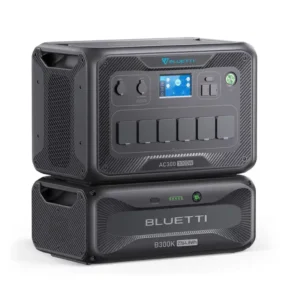
The Bluetti AC300 pairs an inverter head containing no battery with a B300K module, delivering 2,620Wh behind a 3,000W inverter. Cells are rated at 6,000 cycles, fans run at 44dB, and up to four modules can be added over time.
Every other machine on this site is one sealed object holding a fixed amount of energy behind a fixed amount of electronics; grow your needs, and you buy both again. Bluetti splits them: the AC300 head contains the inverter, controllers, display,y and port, with no cells at all, and it takes up to four B300K modules underneath. Buy the expensive half once, then add capacity as the budget allows. The supporting numbers are strong: a 6,000-cycle rating, the joint-highest in this dataset; 0.70% distortion and 990 mV of electrical noise, among the cleanest at this capacity; 44 decibels behind a 3,000-watt inverter; and 5,400 watts of combined charging. Weighed against that: 85% conversion, where sealed rivals manage 89, 127 pounds with just one module fitted, and 2% of the charge is lost for every hour it waits armed. That last figure is the discordant one, because it fights the permanent installation the whole design is built around. Buy it if the capacity you want today is not the capacity you want in three years. Otherwise, a sealed machine does more for less.
Battery safety and chemistry (LiFePO4, 6,000 cycles)
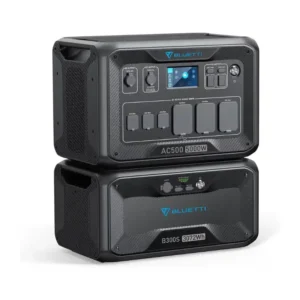
The Bluetti AC500 pairs a 5,000W inverter head, which holds no cells, with a B300S module, delivering 2,520Wh. Wall charging reaches 5,000W, and the combined input is 8,000W, both among the highest recorded, with 3,000W from solar across two 150-volt channels.
Five thousand watts from a wall socket is the highest mains input recorded for any machine on this site, eight thousand with panels alongside is near the top too, and a 5,000-watt continuous inverter is the largest single-phase output reviewed here; a system that empties under heavy load and recovers within half an hour, which is exactly what fails on slower rivals across a storm week. The waveform is excellent as well, with 0.70% distortion and 985 mV. Then you meter the outlets and find 2,520 Wh from a 3,072 Wh rating, 82%, the weakest conversion at this capacity, with the DC path worse again at 77%, among the lowest figures in the whole dataset. From the same rating, a 91% machine hands back roughly 280 watt-hours more. Paying the highest price per watt-hour at this size and receiving the smallest share of it is a hard combination to defend, and the 16-millisecond handover on an inverter that will not arm itself does not help. If you need 5,000 watts continuously, nothing else here delivers it. If 3,000 would do, Bluetti's own AC300 beats this on conversion, cycles, noise, weight, and value.
Battery safety and chemistry (LiFePO4, 3,500 cycles)
8.5
Real-world efficiency and output (82% AC, 77% DC, 0.70% THD)
6.5
UPS and EPS switchover (16ms, no self-arming)
6
Port selection and distribution (100W USB-C, 400W DC)
8
Solar charging and MPPT (3,000W across dual 150V channels)
10
AC recharge speed (5,000W mains, 8,000W combined)
10
Noise and thermal management (55dB)
6
Portability and build quality (149 lbs, separates)
2.5
Expandability and ecosystem (modular head plus modules)
10
Smart app and interface (Wi-Fi and Bluetooth)
8.5
PROS:
Wall charging of 5,000W, the highest mains input recorded on this site, refilling a module in under half an hour.
Combined charging of 8,000W with solar is prioritized, among the highest figures measured here.
A 5,000W continuous inverter with 10,000W of surge, the largest single-phase output reviewed here.
Distortion of 0.70% and 985mv of electrical noise, among the cleanest at this capacity.
Solar of 3,000W across two independently tracked 150-volt channels with a 12-volt floor.
Modular architecture, so capacity grows without replacing the electronics.
CONS:
Conversion of 82% through AC, the weakest at this capacity.
Only 77% through DC, among the lowest figures in the entire dataset.
A 16ms handover on an inverter that will not arm itself.
Premium value tier, roughly double the cost per watt-hour of the best value machines at this size.
One hundred and forty-nine pounds for a head and one module, before expansion.
Cells are rated for 3,500 cycles, whereas the smaller AC300 in the same family offers 6,000.
The Bluetti AC70 returns 660Wh of its 768Wh rated capacity, an 86% result, behind a 1,000W inverter that lifts to 2,000W on resistive loads. It expands with B80 and B230 batteries and supports 500W of solar, placing it in a high-end price tier.
The Bluetti EB200P stores 2,048Wh behind a 2,200W inverter and returns 1,780Wh at the outlets. Solar reaches 900 W at up to 145 V, and the DC output is rated at 400 W, though there is no app and no expansion support.
Manufacturers routinely sell two machines built on the same hardware, one with features enabled and one without, and the gap is usually modest. Here it is not. The EB200P shares a pack, an inverter, and a solar input with Bluetti's AC200Max, and comes with no app at all, no expansion port, 3 points less AC conversion, 5 points less through DC, and more than 3 times the standby drain at 2% an hour. It inherits both of its siblings' worst traits too: a 470-watt external charging brick at a single fixed rate, over four hours from empty, and no automatic transfer function whatsoever — equipment plugged in during a blackout simply loses power. What survives intact is the solar input, and it is genuinely good: 900 watts accepted from 10 volts up to 145, which allows a proper series string of rigid panels while still working with foldables. As a battery charged by panels for planned trips, it does its job. For waiting, monitoring,g or growing a system, Bluetti's AC200L beats both of these machines and costs a tier less.
Battery safety and chemistry (LiFePO4, 3,500 cycles)
8
Real-world efficiency and output (86% AC, 78% DC, 2% idle)
6.5
UPS and EPS switchover
5
Port selection and distribution (100W USB-C, 400W DC)
8
Solar charging and MPPT (900W to 145 volts)
8
AC recharge speed (470W via brick, single rate)
3
Noise and thermal management (54dB)
6.5
Portability and build quality (61 lbs)
5
Expandability and ecosystem (no expansion support)
4
Smart app and interface
3
PROS:
Solar to 145 volts at 900W, allowing a proper series string of rigid panels.
A 400W DC output, roughly three times a typical car socket.
Cells rated to 3,500 cycles with pass-through charging supported.
A 10-volt solar floor, so foldable panels work alongside a rigid string.
Conversion of 86% at the outlets, over the class line.
Combined charging of 1,400W, marginally better than the AC200Max.
CONS:
No UPS mode is fitted, so connected equipment loses power during a blackout.
No app of any kind — no Bluetooth, no Wi-Fi, no firmware updates.
No expansion battery support, so capacity is permanently fixed.
Standby drain of 2% per hour, more than three times that of its sibling.
Wall charging of 470W via an external brick at a single fixed rate.
Sixty-one pounds and a four-year warranty, both behind current rivals.
The Bluetti EB3A packs a 20ms transfer, a 600W inverter, and 430W internal charging into a 268Wh unit, with a Bluetooth app and 49dB operation. It sheds 5% of its charge every hour the inverter is armed.
Power stations at 268Wh normally charge devices quietly and do nothing else. This one carries a 600-watt inverter (more output than several units holding twice as much), a 20-millisecond transfer function that makes it the smallest machine in our database to offer one at all, 430 watts of internal charging that fills the pack in around thirty-seven minutes, adjustable charge rates, dual charging, a Bluetooth app that works off-grid, a correct 120-volt output and 49 decibels. For 10.1 pounds,s that is an extraordinary specification sheet. Then the standby figure: 5% of the charge disappears every hour the inverter sits armed (the worst idle loss recorded on any machine we have tested at any capacity), and it empties a full pack in roughly 20 hours of doing nothing. That cancels most of what the transfer function exists for, since waiting for a power cut is precisely what drains it. Charge it, use it, switch it off, and it is genuinely clever.
Battery safety and chemistry (LiFePO4, 2,000 cycles)
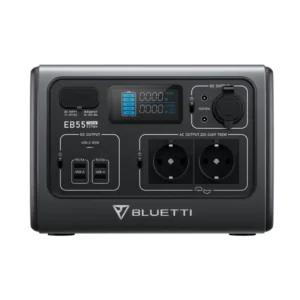
The Bluetti EB55 delivers 468Wh of its 537Wh rating, features a 700W inverter, runs at 48dB, and supports dual charging at 400W. Output measures 110 volts, charging runs through an external brick, and there is no app.
Judged on performance, this is a decent compact machine: 87% returned through the sockets and 89% through DC, both above the class line; 48 decibels, quiet enough to sleep beside in a tent; a 700-watt inverter that is generous for 537Wh; a 100-watt USB-C port; and dual charging at 400 watts combined, the highest figure of any compact unit we have measured. Judged on price, it sits among the most expensive machines per watt-hour we have reviewed, ahead of the flagship split-phase systems and the modular home installations several times its size. What that premium buys is an external 200-watt charging brick, no app of any kind, no transfer function, a 28-volt solar ceiling that excludes rigid panels, 2,000-cycle cells under two years of cover, and an output measuring 110 volts, below the accepted band and harder on any motor. The Pecron E600LFP offers greater capacity, converts four points more efficiently, outputs the correct voltage, delivers 1,500 more cycles, and takes nearly triple the solar, for considerably less per watt-hour.
Battery safety and chemistry (LiFePO4, 2,000 cycles)
5.5
Real-world efficiency and output (87% AC, 89% DC, 110V output)
6.5
UPS and EPS switchover
2.5
Port selection and distribution (100W USB-C, 135W DC)
7
Solar charging and MPPT (155W, refills within window)
5.5
AC recharge speed (200W via brick, 400W dual)
5
Noise and thermal management (48dB with inverter whine)
8
Portability and build quality (16.5 lbs)
7.5
Expandability and ecosystem (no expansion support)
4
App, display and telemetry
3
PROS:
Forty-eight decibels under load, quiet enough to sleep beside in a tent.
Returns 87% through AC and 89% through DC, both above the class line.
Dual charging at 400W combined, the highest of any compact machine we have tested.
A 700W inverter, generous for 537Wh, with a 100W USB-C port.
Solar that can refill the pack within the usual window, with the array permanently connectable.
Bluetti's support network with a 24-hour response commitment.
CONS:
The highest price per watt-hour of any machine in our entire database.
Output measured 110 volts, below the accepted band and hard on motors.
Wall charging of 200W through an external brick with no adjustable rate.
A 28-volt solar ceiling that excludes most rigid panels.
No UPS mode, no app, and no expansion path.
Two thousand cycles under two years of cover, and an audible inverter whine.
The Bluetti EB70 runs at 48dB, among the quietest machines in its class, and delivers 580 Wh of its 716 Wh rating via DC at 86% efficiency. Mains power arrives at 200W via a separate brick, with no handover function and no connectivity.
Quiet Enough for a Tent, and a Generation Behind Everywhere Else
Noise says more about a camping power station than most buyers expect, because a tent offers no sound insulation, and a power station two feet from your head is either tolerable or not. The EB70 reads 48 decibels under load, while its closest rivals at this capacity run at 60, and that 12-decibel gap is the whole reason to consider it. Two 100-watt USB-C ports are generous at this size too, and the DC path returns a solid 86%. Everything else belongs to an earlier generation: 200 watts of wall charging through an external brick, more than three and a half hours from empty; an output measuring 110 volts, below the accepted band and harder on motors; a 175-watt solar ceiling capped at 28 volts that excludes most rigid panels; 2,000 cycles under a two-year warranty; and no app or transfer function at all. The uncomfortable comparison is the Acevolt Campower 700, which is quieter still at 46 decibels, converts s7points better, outputs the correct voltage, and charges 2.5 times faster.
Battery safety and chemistry (LiFePO4, 2,000 cycles)
5.5
Real-world efficiency and output (81% AC, 86% DC, 110V output)
5
UPS failover speed
2.5
Port selection and distribution (two 100W USB-C, 132W DC)
7.5
Solar charging and MPPT (175W, 28V ceiling)
3
AC recharge speed (200W via external brick)
3
Noise and thermal management (48dB, but audible inverter whine)
8
Portability and build quality (21.4 lbs)
7
Expandability and ecosystem (no expansion support)
4
App, display and telemetry
3
PROS:
Forty-eight decibels under load, quiet enough to sleep beside in a tent.
Two 100W USB-C ports, where most rivals at this size fit one.
Returns 86% through DC, clearing the class line on the twelve-volt path.
A 132W DC socket and pass-through charging, with the array able to stay connected.
Bluetti's support network, with a 24-hour response commitment, is behind the warranty.
LiFePO4 chemistry rather than older NMC cells.
CONS:
Wall charging at 200W with an external brick, from empty to full in over 3.5 hours.
Output measured 110 volts, below the accepted band and hard on motors.
Only 81% through AC, four points below where machines this size should land.
A 175W solar ceiling capped at 28 volts, excluding most rigid panels.
No UPS mode, no app, and no expansion path.
Two thousand cycles under two years of cover, the shortest pairing at this capacity.
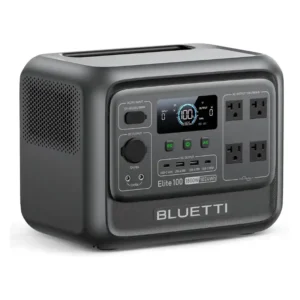
The Bluetti Elite 100 V2 pairs 1,024Wh of 4,000-cycle lithium iron phosphate with an 1,800W inverter that spikes to 3,600W for motor startups. Its 8.7ms failover is among the quickest at this capacity, and it lands in the entry price tier while delivering exceptional value.
If somebody asks me what to buy first, this is the unit I name, because it does the difficult part well and asks very little in return: 8.7 milliseconds to catch a blackout, an inverter that arms itself, and standby losses near 1% an hour that mean it is still full when you finally need it. The meter returned 890 Wh of the rated 1,024 Wh, a solid 86%. The 51dB fans are louder than I would like beside a bed, the 12V socket falls just short of useful, and the total absence of an expansion path is a permanent ceiling rather than an inconvenience. But it sits in both the entry-price and exceptional-value tiers at once, which almost nothing else here manages, so if you know that 1kWh is all you will ever need, this is the one I would buy.
Battery safety and chemistry (LiFePO4, 4,000 cycles)
The Bluetti Elite 300 delivers 2,760Wh of its 3,014Wh rating, a 91% conversion efficiency, and an 8.1ms handover for its inverter. Cells are rated for 4,000 cycles; a 140W USB-C port and a 400W XT90 output are available; and it weighs 57 pounds. Upper mid-range price tier, exceptional value.
Most of the machines reviewed on this site fail at some point, which is a deciding factor for those who should not buy them. This one has a single such failure, and it is stated on the box: there is no expansion battery, and 3,014 Whis has a permanent ceiling. Everything else is unusually good. It returns 2,760 Wh at the outlets, a 91% conversion rate, among the strongest recorded here, and 93% through DC. It arms its own inverter with an 8.1-millisecond handover and sheds 0.5% per hour, a combination that actually makes automatic backup work and that most of its price tier cannot manage. It weighs 57 pounds for three kilowatt-hours, lighter than several two-kilowatt-hour units in this data, and it lands in the exceptional value tier; the cheapest three kilowatt-hours measured anywhere here. Sixty-nine hours of CPAP runtime from a sealed unit, one person can shift, is a genuinely different proposition for anyone dependent on overnight medical equipment. Just be certain about the ceiling before you buy, because buyers reaching this capacity are usually building toward more rather than settling.
Battery safety and chemistry (LiFePO4, 4,000 cycles)
9.5
Real-world efficiency and output (91% AC, 93% DC, 0.70% THD)
9.5
UPS and EPS switchover (8.1ms, self-arming)
10
Port selection and distribution (140W USB-C, 400W XT90)
9.5
Solar charging and MPPT (1,200W at 22A)
8.5
AC recharge speed (1,800W mains, 2,400W dual)
9
Noise and thermal management (52dB)
7
Portability and build quality (57 lbs for 3kWh)
7
Expandability and ecosystem (no expansion support)
4
Smart app and interface (Wi-Fi and Bluetooth)
8.5
PROS:
Conversion of 91% through AC and 93% through DC, among the best figures recorded here.
A self-arming inverter with an 8.1ms handover at an exceptional value tier.
Fifty-seven pounds for three kilowatt-hours, lighter than several 2kWh units reviewed here.
Sixty-nine hours of CPAP runtime, the longest recorded on this site.
Cells rated to 4,000 cycles with standby loss of just 0.5% an hour.
A 140W USB-C port, a 400W XT90 output, and 0.70% distortion.
CONS:
No expansion battery support, so 3,014Wh is a permanent ceiling.
A 2,400W inverter, the same rating as several two-kilowatt-hour units carry.
Electrical noise above 2,000mv, at the high end of this field.
The 60-volt solar ceiling rules out long series strings.
Combined charging at 2,400W is adequate, rather than generous, for a pack this size.
Fifty-two decibels sit just above what a bedroom can comfortably absorb.
The Bluetti Fridge Power holds 2,016Wh behind an 1,800W inverter, crosses over in 8.7ms with a self-arming inverter, and sheds only 0.5% of its charge per hour on standby. Its 4,000-cycle cells and 1,000W solar input sit in the upper mid-range price tier at exceptional value.
This is the rare unit that picked a single job and let everything else go, and that job is the one most people actually buy a power station for. The backup implementation is excellent: an 8.7-millisecond crossover, an inverter that arms itself-which fewer than a third of the units reviewed here can manage-and a standby loss of 0.5% per hour, so arming it and forgetting it for months costs almost nothing. Add 4,000-cycle cells, 1,000 watts of solar at 20 amps, 43 pounds, and 51 decibels, and, as an appliance kept permanently in a utility room, it is very hard to fault. What it gave up is startling. The USB-C port supplies 18 watts, an eighth of what rivals at this capacity provide, so a laptop has to be charged through an AC outlet instead. No twelve-volt yield or high-output DC port appears in the data at all. And at 1,800 watts, it runs the smallest inverter in this size class. Buy it knowing it can never be repurposed, because that decision has already been made for you.
Battery safety and chemistry (LiFePO4, 4,000 cycles)
9.5
Real-world efficiency and output (84% AC, DC untested, 0.5% idle)
8
UPS and EPS switchover (8.7ms, self-arming)
10
Port selection and distribution (18W USB-C, no DC figure)
3
Solar charging and MPPT (1,000W, 20A)
9
AC recharge speed (1,440W mains, 2,200W dual)
9
Noise and thermal management (51dB)
8
Portability and build quality (43 lbs)
8
Expandability and ecosystem (expansion supported)
9
App, display and telemetry (Wi-Fi and Bluetooth)
8
PROS:
A self-arming inverter with an 8.7ms crossover, which fewer than a third of the units reviewed here can match.
Standby loss of 0.5% an hour, so leaving it armed for months costs almost nothing.
Cells rated to 4,000 cycles, roughly eleven years of daily use, under five years of cover.
Solar input of 1,000W at 20 amps, generous enough for rigid panels.
Forty-three pounds and 51dB, both better than most rivals at two kilowatt-hours.
Dual charging to 2,200W, with panels able to stay connected permanently.
CONS:
An 18W USB-C port that charges a phone but cannot charge a laptop at all.
No twelve-volt yield or high-output DC port appears in the bench data.
An 84% conversion is just under the line most units at this capacity clear.
The smallest inverter at this capacity, so heating loads cannot run alongside anything else.
The output measured 118 volts, closer to the bottom of the acceptable band than to the middle.
The 1,440W charger trails the 1,800W units at this capacity.
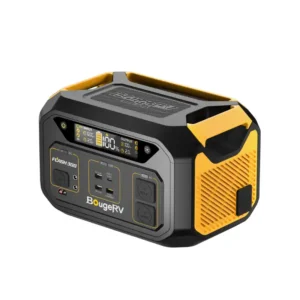
The BougeRV Flash 300 accepts 600W of solar on a 286Wh pack and charges from the wall at 600W, filling in under half an hour. Behind it sit NMC cells rated for 700 cycles, and with a shutoff, there is no way to switch them off.
Twice the Solar Input of Its Own Battery, at the Highest Price Per Watt-Hour
Solar input is normally sized to the pack behind it, and a 286Wh machine typically accepts 60 to 160 watts. This one accepts 600 across a 12- to 45-volt window at 25 amps, a panel input more than twice the size of its own battery, and a ratio that nothing else in our database approaches. Wall charging matches it at 600 watts through an internal charger, filling the machine in around twenty-nine minutes. That is the case for it, and it is real. Everything about living with it points the other way: NMC cells rated for 700 cycles, roughly two years at daily use where LiFePO4 rivals offer 2,000; an automatic shutoff the grading data records as impossible to disable, which stops low-draw loads unattended; 58 decibels plus an audible inverter whine; an output measuring 110 volts; an eighteen-month warranty; and the highest price per watt-hour of any machine in our entire database, by a clear margin over second place.
Battery safety and chemistry (NMC, 700 cycles, 18-month warranty)
2.5
Real-world efficiency and output (83% AC, 85% DC, 110V output)
5.5
UPS and EPS switchover
2
Port selection and distribution (100W bi-directional USB-C, 152W DC)
7.5
Solar charging and MPPT (600W at 25A on a 286Wh pack)
9.5
AC recharge speed (600W internal, under 30 minutes)
9
Noise and thermal management (58dB with inverter whine)
3.5
Portability and build quality (14.2 lbs at 286Wh)
5.5
Expandability and ecosystem (no expansion support)
5
App, display and telemetry
3
PROS:
Six hundred watts of solar on a 286Wh pack, a ratio unmatched anywhere in our database.
Internal wall charging at 600W, filling the pack in under half an hour.
Twenty-five amps of solar current, matching machines ten times its capacity.
A 600W inverter and a 100W bi-directional USB-C port.
A 45-volt solar ceiling, allowing a small series pair where most compact machines cannot.
An internal charger rather than an external brick, unusual at this size.
CONS:
The most expensive machine per watt-hour we have tested, by a clear margin.
NMC cells rated for 700 cycles, roughly two years at daily use.
An auto shutoff that cannot be disabled, which stops low-draw loads unattended.
Fifty-eight decibels with an audible inverter whine, too loud for a tent.
Output measured 110 volts, below the accepted band and hard on motors.
An eighteen-month warranty, no app, and no dual charging.
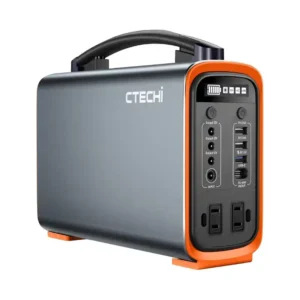
The CTECHi GT200 240Wh portable power station is the smallest machine we have tested, weighing 7.9 pounds and delivering 190Wh at the correct 120 volts. Its 200W inverter is the smallest in our database.
Two hundred and forty watt-hours behind a 200-watt inverter makes this the smallest machine in our database on both counts, and at 7.9 pounds it is the second lightest we have weighed. There is a real argument for something this modest: if your loads are a laptop, a camera, some lighting and a phone, anything larger is weight and money carried for nothing. It also gets one thing right: four compact machines four times its size do not. Output measures a correct 120 volts, so the small things you run are treated properly. It returns 87% through the twelve-volt path, supports dual charging at 120 watts combined, and costs less per watt-hour than anything else at this capacity. The limits are plain and mostly definitional. The 200-watt inverter rules out everything beyond devices and lighting. Wall charging is 60 watts via an external brick, taking 4 hours from empty, and the solar ceiling of roughly 60 watts is among the lowest we have recorded. Cover runs for a single year.
Battery safety and chemistry (LiFePO4, 2,000 cycles)
4.5
Real-world efficiency and output (79% AC, 87% DC, correct 120V)
6.5
UPS and EPS switchover
2.5
Port selection and distribution (60W bi-directional USB-C)
5
Solar charging and MPPT (about 60W)
2
AC recharge speed (60W via brick, 120W dual)
3
Noise and thermal management
6
Portability and build quality (7.9 lbs, in the lightest group)
9
Expandability and ecosystem (no expansion support)
4
App, display and telemetry
3
PROS:
The smallest and cheapest machine in our database, at an entry price tier.
Seven point nine pounds, the second lightest machine we have weighed.
A correct 120V output, which four compact machines in our database fail to deliver.
Returns 87% through DC, clearing the class line on the twelve-volt path.
Dual charging at 120W combined, which halves the wait in decent sun.
LiFePO4 cells rated to 2,000 cycles with the array permanently connectable.
CONS:
A 200W inverter, the smallest continuous output we have recorded.
Wall charging at 60W with an external brick, around 4 hours from empty.
Solar of about 60W, among the lowest ceilings in our data.
Only 79% through AC, six points below where machines this size should land.
No app, no transfer function, and no expansion path.
No fan noise or electrical noise is present in our data, and the cover runs for one year.
The CTechi 500Wh runs at 45dB and outputs a correct 115 volts, returning 420 Wh of its 518 Wh rating. It has no pass-through charging and carries a one-year warranty, the shortest in our database.
Compact power stations live in tents and vehicles, where quiet matters more than any figure on the box, and this one measures 45 decibels, with the inverter recorded as silent, among the quietest readings in our database. It also delivers 115 volts, within the accepted band, which four compact machines we have tested fail to manage, and fits a 167-watt twelve-volt socket, the best in its class, alongside 87.6% DC conversion and the only dual charging of the three units at this capacity. Two things count against it heavily. It is one of just two machines in our entire database with no pass-through charging at all (the other holds seven times the capacity), so filling and using are mutually exclusive, which, on a four-and-a-half-hour wall charge, means most of an afternoon doing nothing for you. And the warranty runs for one year, the shortest we have recorded, on cells rated to last five and a half years.
Battery safety and chemistry (LiFePO4, 2,000 cycles)
4.5
Real-world efficiency and output (81% AC, 87.6% DC, 115V output)
6.5
UPS and EPS switchover
2.5
Port selection and distribution (60W USB-C, 167W DC)
6.5
Solar charging and MPPT (101W, voltage window unrecorded)
3
AC recharge speed (120W via brick, 175W dual, no pass-through)
3
Noise and thermal management (45dB, silent inverter)
9
Portability and build quality (15.4 lbs at 518Wh)
8
Expandability and ecosystem (no expansion support)
4
App, display and telemetry
3
PROS:
Forty-five decibels with a silent inverter, among the quietest in our database.
Output at 115 volts, inside the accepted band where four compact rivals fall below it.
A 167W twelve-volt socket, comfortably clearing the 150-watt threshold.
Returns 87.6% through DC, clearing the line on the twelve-volt path.
Dual charging at 175W, which neither rival at this capacity offers.
Fifteen point four pounds and a premium value tier.
CONS:
No pass-through charging, so the machine cannot supply loads while it refills.
A one-year warranty, the shortest cover of any machine we have tested.
Only 81% through AC, four points below the class line.
Wall charging at 120W through a brick, around 4.5 hours from empty.
A 60W USB-C port that slows a modern laptop, and no app.
Solar caps around 101W, with no voltage window recorded in our data.
The CTechi GT200 returns 204Wh of its 240Wh rated capacity, an 85% result, behind a 200W inverter, on LiFePO4 cells rated at 3,500 cycles. Dual charging fills it in about 2.5 hours. Mid-range price tier, exceptional cost per cycle.
The Dabbsson 1000 Pro pairs 1,024Wh with a 2,000W inverter and a 4,000W surge, and its lithium iron phosphate cells carry a 4,500-cycle rating—the longest life measured in this class. Solar input reaches 1,200W at 25 amps, fans stay at 47dB, and it lands in the mid-range price tier.
No unit on this site presents a sharper contradiction. Its cells carry a 4,500-cycle rating, the longest measured anywhere in this dataset and roughly equivalent to twelve years of daily use, and it pairs that with a 2,000W inverter, 47dB fans, and a 25-amp solar ceiling, the most generous here. Then it loses 3.6% of its charge every hour it sits idle with the inverter awake, the worst standby figure recorded, and empties a full pack in under two days. Conversion is weak as well, at 83.9% through the sockets and 81.5% through DC, both below the line most rivals clear. Since the inverter cannot self-arm, you choose between a unit that drains itself while it waits and one that catches nothing when the power goes out. For a workshop or a vehicle where it is used and recharged constantly, the cycle rating and the solar headroom make it a serious tool. As something to charge and leave in a cupboard against a storm, it is close to the worst choice here.
Battery safety and chemistry (LiFePO4, 4,500 cycles)
The DeWalt DXAEPS2 returns 177Wh of its 264Wh rated capacity, a 67% result, behind a 1,000W modified sine inverter. It is primarily a 2,800-peak-amp jump starter with a 120-PSI compressor. Mid-range price tier.
The DJI Power 1000 pairs 1,024Wh with a 2,200W inverter and 4,400W surge, in a 28-pound case carrying a 140W USB-C port and a 320W fast-charge output. Cells are rated for 3,500 cycles, and it sits in the entry-price tier with exceptional value per watt-hour.
A drone company built this, and every design decision follows from that: a 140-watt USB-C port, a 320-watt fast-charge output for camera and drone batteries, 28 pounds on the scale, and a 2,200-watt inverter with 4,400 watts of surge crammed into a kilowatt-hour case. As a field production unit, it is genuinely excellent,t and nothing here competes with it. As a power state, it has two hard-to-forgive problems. Conversion came in at 80% through the sockets, the weakest AC figure across this entire review set, so a 1,024Wh pack behaves like an 820Wh one while rivals from the same nominal capacity hand back 880Wh or more. And the solar input runs from 11 to 30 volts; the narrowest window in the dataset, which excludes most rigid panels, makes series wiring impossible and requires external MPPT controllers to reach its rated figure. The DC path at 86.5% partly rescues the first problem. Nothing rescues the second. Buy it to charge cameras from a truck, not to build a solar setup or to sit in a cupboard waiting for a storm.
Battery safety and chemistry (LiFePO4, 3,500 cycles)
The DJI Power 2000 stores 22,048 Wh behind a 33,000 Wh inverter with a 6,000 W surge, and transfers to the battery with no measurable gal. Solar input reaches 1,800W over a 43-amp path, the most current any unit here accepts, and dual charging takes 2,300W. Upper mid-range price tier, exceptional value.
Only one unit reviewed here before this had a transfer time of zero, and it was a premium-tier fixture from a solar company that surrendered nearly everything else to achieve it. This one matches that figure while carrying a 3,000-watt inverter, 1,800 watts of solar input arriving over a 43-amp path (the largest current allowance recorded anywhere here), and an exceptional value tier rating. It also returns 86% at the sockets, better than several rivals costing more, and its 140-watt USB-C and 300-watt fast-charge ports are inherited from DJI's own equipment ecosystem. Two measurements spoil it. The fans hit 62 decibels, tied for the loudest reading ever recorded on this site, which decides where the unit can live before anything else gets a say. And only 75% of the pack reaches you through the twelve-volt path, eleven points below its own AC figure and tied for the worst DC result here, which undercuts precisely the vehicle and camp builds that a solar input this large would otherwise suit. One loose end worth chasing before you buy: the zero transfer sits alongside a grading entry recording no self-arming capability, and the sources do not reconcile it.
Battery safety and chemistry (LiFePO4, 3,000 cycles)
8
Real-world efficiency and output (86% AC, 75% DC, 0.66% idle)
7.5
UPS and EPS switchover (0ms transfer, self-arming unresolved)
9.5
Port selection and distribution (140W USB-C, 300W SDC)
9.5
Solar charging and MPPT (1,800W at 43A, highest current here)
10
AC recharge speed (1,800W mains, 2,300W dual, two speeds)
8.5
Noise and thermal management (62dB)
4.5
Portability and build quality (48 lbs)
7.5
Expandability and ecosystem (expansion support)
9
Smart app and interface (Wi-Fi and Bluetooth)
8.5
PROS:
Transfer to battery with no measurable gap, matching a unit two value tiers above it.
Solar input of 1,800W with a 43-amp low-voltage path, the largest current allowance recorded here.
A 3,000W sustained and 6,000W peak inverter, among the largest at this capacity.
Conversion of 86% at the sockets, above the class line and better than several pricier rivals.
A 140W USB-C port and a 300W SDC fast-charge output for camera and drone batteries.
Exceptional value tier despite the inverter size and solar ceiling.
CONS:
Fans at 62dB, tied for the loudest measurement recorded on this site.
Only 75% of the pack reaches you through DC, eleven points below its own AC figure.
Wall charging offers just two speeds, with no gentle overnight setting.
The zero transfer time sits alongside a grading entry that records no self-arming, which remains unresolved.
Electrical noise exceeds 2,000 mV at the high end of the field.
Cells rated for 3,000 cycles, while the best rivals at this capacity reach 4,000.
The Duracell Power Source 660 returns 449Wh of its 660Wh rated capacity, a 68% result and the weakest in our data, behind a 1,440W modified sine inverter. It accepts external 12V lead-acid batteries - in the high-end price tier.
The EcoFlow Delta 2 Max carries 2,048Wh behind a 2,400W inverter, runs at 46dB, and sheds only 0.8% of its charge per hour on standby. Distortion measures 0.90%, dual charging reaches 2,600W, and it weighs 51 pounds. Upper mid-range price tier, good value.
Placed beside its own smaller sibling, this unit is a study in what a manufacturer chose to fix. The kilowatt-hour Delta 2 is the loudest machine in this entire dataset at 62 decibels; scaled up to two kilowatt-hours behind a larger inverter, it runs at 46, which is a transformation rather than an improvement and makes it genuinely usable in a room where someone sleeps. Conversion improved to 87%, distortion dropped to 0.90%, dual charging reached 2,600 watts (the smaller unit supports none at all), and a standby drain of 0.8% per hour means it holds its charge through months of storage. What EcoFlow left alone is the handover, at 17.5 milliseconds; the second slowest at this capacity, clearing the safety line by very little, on an inverter that still will not wake by itself. That combination keeps it out of the job most buyers want a power station for. Buy it as a quiet, efficient battery for a house where someone lives. For automatic protection, EcoFlow's Delta 3 Max Plus fixed this precisely at the same price tier.
Battery safety and chemistry (LiFePO4, 3,000 cycles)
8
Real-world efficiency and output (87% AC, 81% DC, 0.90% THD)
8.5
UPS and EPS switchover (17.5ms, no self-arming)
5
Port selection and distribution (two 100W USB-C, 139W 12V)
7
Solar charging and MPPT (1,000W across dual-tracked ports)
9
AC recharge speed (1,800W mains, 2,600W dual)
10
Noise and thermal management (46dB)
9.5
Portability and build quality (51 lbs)
7
Expandability and ecosystem (expansion support)
9
Smart app and interface (Wi-Fi and Bluetooth)
8.5
PROS:
Forty-six decibels under load, sixteen decibels quieter than the smaller unit in the same family.
Standby drain of 0.8% an hour, near the top of this dataset, so leaving it armed is practical.
Distortion of 0.90%, under half the class average, and well suited to sensitive equipment.
Conversion of 87% at the sockets, four points better than the kilowatt-hour Delta 2.
Combined charging to 2,600W, among the highest ceilings at this size.
Two independently tracked 500W solar ports, so shaded and unshaded arrays do not average out.
CONS:
A handover of 17.5ms is the second slowest at this capacity and clears the safety line by a small margin.
The inverter will not wake on its own, so automatic protection is not available.
The DC path returns 81% against 87% on AC, reversing the usual efficiency advantage.
Cells rated to 3,000 cycles,s where the best units at this capacity reach 4,000.
The 139W car socket is ordinary and falls short of the 150-watt mark.
Fifty-one pounds is mid-field, heavier than the lightest units at this capacity.
The EcoFlow Delta 2 carries 1,024Wh behind an 1,800W inverter with X-Boost, weighs 27 pounds, and loses just 0.8% of its charge per hour on standby. Cells are rated for 3,000 cycles over five years of coverage, and they sit in the mid-range price tier at good value.
This was the default recommendation in its category for a long time, and reviewing it now means separating that reputation from what you can actually buy today. Two things still stand out: standby loss of 0.8% per hour is among the lowest figures I have recorded, meaning it holds a charge through months of storage better than almost anything, and at 27 pounds, it is the lightest kilowatt-hour unit on this site. Everything else has been overtaken, much of it by EcoFlow's own successors. It returned 850Wh of the rated 1,024Wh, crossed over in 19.2 milliseconds, clearing the safety line by under a millisecond, will not arm its own inverter, accepts only 500W of solar, and carries 3,000 cycles, while rivals now offer 4,000. Then there are the fans, at 62 decibels, the loudest reading from any unit of any size in this entire review set, which rules out bedrooms, tents, and offices outright. The Delta 3 Plus costs the same tier and beats it on nearly every line. Buy this one only if long-term storage is the whole job and it lives somewhere nobody has to hear it.
Battery safety and chemistry (LiFePO4, 3,500 cycles)
The EcoFlow DELTA 3 Classic returns 901Wh of its 1,024Wh rated capacity, an 88% result, behind a 1,800W inverter. It transfers in under 10ms with a self-arming inverter and runs at 30dB under moderate load. High-end price tier, exceptional value on noise and backup capability.
The EcoFlow Delta 3 Max Plus holds 2,048Wh behind a 3,000W inverter with 6,000W of surge, crossing over in 7.9ms with a self-arming inverter. Distortion measures 0.30% “the cleanest recorded” fans stay at 42dB, and dual charging reaches 2,600W. Upper mid-range price tier, good value.
On almost all power stations we have reviewed, nearly every one has carried a defect that decides who should not buy it: fans too loud for a bedroom, an inverter that will not arm itself, a solar window too narrow for real panels, a pack that drains while it waits. This is the first one in which the shortcomings are matters of degree rather than exclusion. It crosses over in 7.9 milliseconds and arms itself, which only three of the previous thirteen could do, and it loses just 0.9% an hour, so leaving it armed costs nothing. Distortion measured 0.30%, around a fifth of the field average,e and the cleanest waveform recorded anywhere here, and the fans hold 42 decibels despite a 3,000-watt inverter behind them. Dual charging reaches 2,600 watts across two independent solar ports. What it does not do is deliver cheap energy: 84% conversion is the only ordinary figure on the sheet; it weighs 48 pounds and sits in the good value tier, while rivals at this capacity reach exceptional. You are paying a price tier for finished engineering rather than for watt-hours, which is rare enough in this category to be worth saying plainly.
Battery safety and chemistry (LiFePO4, 3,500 cycles)
Built on 4,000-cycle LiFePO4 cells, EcoFlow Delta 3 Plus 1,024Wh power station delivers 1,800W of continuous output and a 3,600W surge, enough to start a full-size refrigerator. Whisper-quiet 41dB fans and a 10.2ms blackout switchover make it a mid-range pick for indoor emergency backup.
I judge every unit in the High-Demand Utility Class by one question: would I trust it to sit in a closet for a year and then work perfectly on the worst night of the winter? The Delta 3 Plus is one of the few I answer yes to. It delivered 880Wh of the rated 1,024Wh, switches over in 10.2 milliseconds, and runs at 41dB, the quietest in this class by a wide margin. The idle drain and the underpowered 12V socket are real flaws, and the Bluetti Elite 100 V2 sits a full tier below it on value. But if you are buying this to protect a refrigerator, a CPAP machine, and a router through a multi-day outage, the quiet fans, the fast switchover, and the auto-on inverter earn the premium.
Battery safety and chemistry (LiFePO4, 4,000 cycles)
10
Real-world inverter efficiency (85%)
7.5
UPS failover speed (10.2ms, auto-on)
9.5
Port selection and power distribution
7.5
Solar charging and MPPT performance (1,000W)
9.5
AC wall recharge speed (1,500W, adjustable)
10
Noise and thermal management (41dB)
10
Portability and build quality (27 lbs)
8
Expandability and ecosystem
8
Smart app and interface
8.5
PROS:
Whisper-quiet 41dB fans. The quietest in its class by a wide margin so it can sit in a bedroom.
10.2ms switchover with an auto-on inverter. Your PC and router stay up, even when nobody is home.
4,000-cycle LiFePO4 cells. Over ten years of daily use before it drops to 80% capacity.
Takes an expansion battery, so you can start at 1kWh and grow later.
1,500W wall charging with step-by-step speed control, plus 1,000W of solar input.
140W USB-C port charges a laptop with no wall brick.
CONS:
Sits in the premium value tier, while same-capacity units in this class sit in the exceptional tier.
Loses about 2.5% of its charge per hour when the AC inverter idles. Remember to switch it off.
The 12V car socket caps at 139W, which is short of the 150W I look for.
At 27 pounds, it is a two-hand carry. Fine for the house, less fun on a long walk.
Expansion batteries are proprietary, so you are locked into EcoFlow's ecosystem.
Inverter electrical noise measured high, which may matter for sensitive radio gear.
The EcoFlow Delta Max delivers 1,830Wh of its 2,016Wh rating, a 90% return, and is backed by a 2,400W inverter. At 48 pounds, it is light for its capacity and charges at 1,800W from the wall, though its NMC cells are rated for only 800 cycles.
Of the power stations tested for this site, three still use NMC cells rather than lithium iron phosphate, and this is one of them. The rating is 800 charge cycles, compared to the 3,000 to 4,000 its rivals carry; at one cycle a day, that's a little over two years to the 80% mark, whereas competitors reach 11. That single line governs everything else, because the rest of the machine is genuinely competent: 1,830Wh returned from a 2,016Wh pack at 90%, which beats most of this capacity class; 48 pounds, light for two kilowatt-hours; 1,800 watts of adjustable wall charging and 2,600 combined, far better than the 470-watt bricks on the older Bluettis it competes with; and 0.5% hourly standby. Two things compound the chemistry problem. The switchover measured 30 milliseconds, the slowest reading on this site and half again past the twenty-millisecond threshold, so assume equipment restarts rather than rides through. And it runs at 60 decibels with audible inverter noise recorded separately. Buy it only if heavily discounted; for lightweight, rarely cycled. EcoFlow's own Delta 2 Max fixes the chemistry, the noise, and the switchover at a lower price tier.
Battery safety and chemistry (NMC, 800 cycles)
3
Real-world efficiency and output (90% AC, 81% DC, 0.5% idle)
8.5
UPS and EPS switchover (30ms, above the threshold)
3
Port selection and distribution (two 100W USB-C, 135W 12V)
7
Solar charging and MPPT (800W to 100 volts)
7.5
AC recharge speed (1,800W adjustable, 2,600W combined)
9.5
Noise and thermal management (60dB)
4.5
Portability and build quality (48 lbs at 2,016Wh)
7
Expandability and ecosystem (expansion support)
8.5
Smart app and interface (Wi-Fi and Bluetooth)
8.5
PROS:
Conversion of 90% at the sockets, beaten by only a handful of machines at any capacity.
Forty-eight pounds for two kilowatt-hours, light for the class.
Wall charging: 1,800W with adjustable rate; 2,600W combined.
Two 100W USB-C ports rather than the single port most of this cohort provides.
Standby drain of 0.5% an hour, so it holds a charge well between uses.
Solar to 100 volts with an 11-volt floor and expansion support.
CONS:
NMC cells are rated for 800 cycles, compared to 3,000 to 4,000 for LiFePO4 rivals.
A 30ms switchover, the slowest recorded on this site and past the safety threshold.
Sixty decibels under load, with audible inverter noise recorded separately.
Luxury value tier, the most expensive energy at two kilowatt-hours in our data.
The 135W car socket falls short of the 150-watt threshold.
The DC path returns 81% against 90% on AC, a nine-point gap.
The EcoFlow Delta Pro 3 delivers 3,810Wh of its 4,096Wh rating through a 4,000W split-phase inverter that produces both 120V and 240V. It arms itself, hands over in 9.7ms, accepts 2,600W of solar power, and recharges at 7,000W from both inputs combined.
Everything reviewed on this site until now has been a machine you plug things into. This one is wired into a panel, and the specification that moves it across that line is split-phase output: 120 and 240 volts, which brings well pumps, electric ranges, and anything else on a two-pole breaker into scope for the first time. Behind that sit 4,000 watts held continuously and 8,000 available in a burst, a 93% return that puts 3,810Wh of a 4,096Wh pack at your disposal (a figure exactly one machine in this data betters) and a mains input of 4,000 watts that empties-to-full in under sixty minutes. It also arms its own inverter and hands over in 9.7 milliseconds, which, for something tied to a transfer switch,h is not a luxury but the entire point. The costs are real and mostly physical: 113 pounds for permanently settled portability, the single 100-watt USB-C port is meager for a premium-tier machine, and per watt-hour it lands in the good-value tier while cheaper units reach the exceptional tier. Most households do not need this. The ones that do have nothing else in the range to consider.
Battery safety and chemistry (LiFePO4, 4,000 cycles)
9.5
Real-world efficiency and output (93% AC, 89% DC, 0.91% idle)
9.5
UPS and EPS switchover (9.7ms, self-arming)
10
Port selection and distribution (100W USB-C, 400W DC)
7
Solar charging and MPPT (2,600W across dual paths, 150V ceiling)
10
AC recharge speed (4,000W mains, 7,000W dual)
10
Noise and thermal management (53dB)
7
Portability and build quality (113 lbs)
3.5
Expandability and ecosystem (expansion and split-phase pairing)
10
Smart app and interface (Wi-Fi and Bluetooth)
8.5
PROS:
Split-phase 120V and 240V output: the first unit reviewed here can serve two-pole circuits.
Conversion of 93%, beaten by a single machine anywhere in this dataset.
A self-arming inverter with a 9.7ms handover is essential for anything wired into a transfer switch.
Mains charging at 4,000W and 7,000W from both inputs, filling the pack inside an hour.
Solar of 2,600W across two independently tracked paths, one reaching 150 volts.
Cells rated to 4,000 cycles with standby loss of 0.91% per hour and expansion support.
CONS:
One hundred and thirteen pounds, which makes installation the only realistic option.
A single 100W USB-C port on a premium-tier machine, where cheaper units fit two at 140W.
Good value tier rather than exceptional, so the cost per watt-hour is beaten lower down the range.
Fifty-three decibels, where several smaller machines run in the low forties.
A distortion of 1.60% is within limits but well behind the cleanest units reviewed here.
At four kilowatt-hours, recharging rather than capacity becomes the planning constraint.
The EcoFlow Delta Pro Ultra holds 6,144Wh behind a 7,200W split-phase inverter, delivers 5,620Wh at the outlets, and transfers to battery with no measurable gap while arming itself. Solar accepts 5,600W across a path reaching 450 volts.
A genuine home backup needs two things: a takeover with no gap and no requirement for anyone to be present when it happens. Across forty machines measured for this site, this is the only one that does both—others transfer instantaneously but wait to be armed, and plenty arm themselves but take ten or fifteen milliseconds to hand over. Around that sit the largest figures in the dataset: 7,200 watts continuous on split phase, 7,200 watts of mains charging and 8,800 combined, and a solar input reaching 450 volts, roughly triple anything else here and the range a rooftop array actually operates at when wired to a string inverter. It converts 91% of a 6,144Wh pack, holds 42 decibels behind that inverter, and loses 0.58% an hour on standby. The costs are all physical and financial rather than functional: 188 pounds, the heaviest machine measured here; premium-tier energy at a flagship price; only 80% returned through DC; and 3,500 cycles where larger rivals offer more. For a property wired to a transfer switch, nothing else in this data does the job. Anything short of that, and the cheque covers hardware that sits idle.
Battery safety and chemistry (LiFePO4, 3,500 cycles)
The EcoFlow River 2 Pro charges from a wall socket at 940W and refills in under an hour, weighs 17 pounds for 768Wh, and has Wi-Fi and Bluetooth apps. Its fans read 60 dB, and the switchover measures 30ms.
Fastest Charging Under a Kilowatt-Hour, and Among the Loudest
Most power stations of this size normally charge via an external brick at 90 to 200 watts and take four to six hours to recharge. This one takes 940 watts through an internal charger and is full in under an hour, which is a generational rather than an incremental difference, and it does so in 17 pounds, returning 45.2 watt-hours per pound, the best energy density of any machine under a kilowatt-hour we have weighed. It also features a bidirectional 100-watt USB-C port, a Wi-Fi and Bluetooth app, 3,000-cycle cells, and a five-year warranty. The costs are concentrated and severe. Sixty decibels, with an audible whine from the inverter on top, on a machine sold for camping, where a tent offers no sound insulation. A 30-millisecond switchover, tied for the slowest reading anywhere in our database. 80% conversion through the outlets vs. 88% through DC. And 2.4% hourly standby drain while armed, which costs roughly 40% of the pack over a week of waiting. Charge it fast, use the DC side, and keep it outside the tent.
Battery safety and chemistry (LiFePO4, 3,000 cycles)
8.5
Real-world efficiency and output (80% AC, 88% DC, 2.4% idle)
6
UPS and EPS switchover (30ms, above the threshold)
3
Port selection and distribution (100W bi-directional USB-C, 140W DC)
7
Solar charging and MPPT (220W, cannot refill in window)
4.5
AC recharge speed (940W internal, adjustable)
9.5
Noise and thermal management (60dB plus inverter whine)
3.5
Portability and build quality (17 lbs, 45.2 Wh per pound)
9
Expandability and ecosystem (no expansion support)
4
Smart app and interface (Wi-Fi and Bluetooth)
8.5
PROS:
Wall charging of 940W through an internal charger, refilling in under an hour.
Seventeen pounds for 768Wh, 45.2 Wh per pound, the best density under a kilowatt-hour.
Returns 88% through DC, a genuinely strong figure with only 0.13% hourly loss on that path.
A bi-directional 100W USB-C port that charges a laptop at full rate.
Cells rated to 3,000 cycles under five years of warranty, with a Wi-Fi and Bluetooth app.
Adjustable charging speed and a correct 120V output.
CONS:
Sixty decibels with an audible inverter whine, unusually loud for this size.
A 30ms switchover, the joint slowest recorded anywhere in our database.
Only 80% through AC, five points below the class line.
Standby drain of 2.4% an hour with the inverter armed.
No dual charging, and 220W of solar that cannot refill the pack in the usual window.
An 800W inverter that rules out every heating appliance.
The EcoFlow River 2 weighs 7.4 pounds, the lightest in our database, and charges internally at 360W. It delivers just 190 Wh of its 256 Wh rating via AC but 228 Wh via DC, and includes Wi-Fi and Bluetooth app support.
At 7.4 pounds, this is the lightest machine we have put on a scale across 81 units spanning 240Wh to 6,144Wh, and for something carried rather than installed,d that counts for more than almost any other figure. EcoFlow pairs it with specifications that nothing else this small offers: 360 watts of internal charging that fills the pack in around forty-three minutes, adjustable rates, both Wi-Fi and Bluetooth, 3,000-cycle cells, and a five-year warranty—the longest coverage at this capacity. Then the conversion. Seventy-four percent reaches the AC sockets, compared with 89% through the twelve-volt path, a fifteen-point gap worth 38 watt-hours on a battery that was small to begin with. The inverter also sheds 4.4% of the charge every hour it sits armed, emptying the pack in roughly a day, and its 30-millisecond transfer ties for the slowest we have measured. Route everything onto DC and USB, switch the inverter off between sessions, and it is an excellent thing to carry.
Battery safety and chemistry (LiFePO4, 3,000 cycles)
The EcoFlow River 3 returns 211Wh of its 245Wh rated capacity, an 86% result, behind a 300W inverter with X-Boost to 600W. It transfers in under 10ms with a self-arming inverter and runs under 30dB. Budget price tier, exceptional backup capability for the size.
The EcoFlow River Pro returns just 530 Wh of its 720 Wh rating via AC, but 665 Wh via DC, the widest gap we have measured. It charges internally at 660W, weighs 16.8 pounds, and uses NMC cells rated for 800 cycles.
Most machines differ by three to five points between their AC and DC output paths. This one differs by nineteen “73% through the mains sockets versus 92% through the twelve-volt output,” the widest spread in our database, meaning the socket you choose changes what you receive by 135 watt-hours. That 73% is also the joint second-worst AC conversion we have measured, so more than a quarter of what you charge never reaches the outlets. Used on DC through its 158-watt socket, it becomes a decent camp battery: 665 Wh delivered, 16.8 pounds, internal charging at 660 watts with adjustable speed, expansion support, and a proper app. Three things limit it badly. The cells are NMC-rated for 800 cycles, the shortest life of any machine we have tested, and roughly two years of daily use. The solar input stops at 25 volts, the narrowest window in our database, which excludes nearly every rigid panel. And 58 decibels rules out the tent; this machine's weight otherwise suits.
Battery safety and chemistry (NMC, 800 cycles)
3
Real-world efficiency and output (73% AC, 92% DC)
6
UPS and EPS switchover (no UPS mode fitted)
2.5
Port selection and distribution (100W USB-C, 158W DC)
7.5
Solar charging and MPPT (197W, 25V ceiling)
2.5
AC recharge speed (660W internal, adjustable)
8
Noise and thermal management (58dB, silent inverter)
5
Portability and build quality (16.8 lbs)
8.5
Expandability and ecosystem (expansion supported)
7.5
Smart app and interface (Wi-Fi and Bluetooth)
8.5
PROS:
Returns 92% through DC, a genuinely strong figure paired with a 158W twelve-volt output.
Internal wall charging at 660W with adjustable speed, refilling in about an hour and a quarter.
Sixteen point eight pounds for 720Wh, a comfortable one-handed carry.
Expansion battery support and a Wi-Fi and Bluetooth app with a five-year warranty.
A correct 120V output with no audible whine from the inverter itself.
Priced in the premium value tier rather than luxury.
CONS:
Only 73% through AC, the joint second-worst conversion in our database.
NMC cells rated for 800 cycles, the shortest life of any machine we have tested.
A 25-volt solar ceiling, the narrowest in our database, excluding nearly all rigid panels.
Fifty-eight decibels, too loud for a tent or a bedroom.
No UPS mode fitted, and no dual charging.
A 600W inverter with 1,200W of surge, the lowest at this capacity.
The EGO Power+ Nexus PST3042 delivers 2,000W of continuous power from EGO 56V tool batteries, holds 840Wh with four packs, and returns 722Wh to the outlets. The inverter disables while charging. Premium price tier before batteries.
The Energiser 320Wh weighs nine pounds, the lightest machine in our database, and runs at 43dB. From a 320Wh label, it hands back 260Wh at a proper 120 volts, though refilling runs at 63W from a brick in the cable.
The Lightest and Third Quietest Machine We Have Measured
Across power stations we have tested and reviewed ranging from 240Wh to 6,144Wh, nothing in our database weighs less than 9 pounds, and only two run quieter than 43 decibels. For a backpacking trip or a small tent, that pairing counts for more than almost any other line on a specification sheet, and this machine adds a correct 120-volt output, an inverter recorded as silent, 1,316mv of electrical noise that is clean for its size, an 89% return through the twelve-volt path and a 155-watt DC socket that clears the useful threshold. The costs depend on how much energy you put in and how much you can draw. Wall charging is 63 watts through an external brick, more than five hours from empty, with no dual charging to help. The solar ceiling of 65 watts is the lowest maximum input of any machine in our entire database, on a 3-amp limit and a 23.5-volt window that excludes essentially every rigid panel. And the 300-watt inverter is the smallest continuous output we have recorded, ruling out most appliances.
Battery safety and chemistry (LiFePO4, 2,000 cycles)
5.5
Real-world efficiency and output (81% AC, 89% DC, correct 120V)
7
UPS and EPS switchover
2.5
Port selection and distribution (100W bi-directional USB-C, 155W DC)
7.5
Solar charging and MPPT (65W, lowest input measured)
1.5
AC recharge speed (63W via brick, no dual charging)
1.6
Noise and thermal management (43dB, silent inverter)
9.5
Portability and build quality (9 lbs, lightest in the database)
9.5
Expandability and ecosystem (no expansion support)
4
App, display and telemetry
3
PROS:
Nine pounds, the lightest machine in our entire database.
Forty-three decibels with a silent inverter, the third quietest reading measured.
Returns 89% through DC, a strong figure for a machine this small.
A correct 120V output with 1,316mv of electrical noise, clean for this size.
A 100W bi-directional USB-C port and a 155W twelve-volt socket.
LiFePO4 cells at a premium value tier with a 24-hour response commitment.
CONS:
Sixty-five watts of solar, the lowest maximum input we have recorded.
Wall charging of 63W through an external brick, over five hours from empty.
A 300W inverter, the smallest continuous output in our database.
Only 81% through AC, four points below the class line.
No UPS mode, no app, no dual charging and no expansion path.
A 23.5-volt solar ceiling that excludes essentially every rigid panel.
The Energizer PPS2000W has a 2,150Wh capacity, a 2,100W inverter, and delivers 1,780Wh at the outlets. Wall charging runs through an external brick at 470W; there is no app or expansion support, and cells are rated for 2,000 cycles.
★★★★★
More details +
Four hundred and seventy watts into a 2,150Wh pack, delivered through an external charging brick rather than an internal charger, is the worst charging-to-capacity ratio anywhere in this database, more than four and a half hours from empty, where rivals at this capacity manage a little over one. That single figure would be survivable if the rest held up, and it does not. Conversion is 82% through the outlets and 76% through DC, both the weakest at this size; the cells carry 2,000 cycles where rivals offer 4,000; there is no expansion path; there is no app of any kind, so no remote monitoring and no firmware updates ever; standby drain sits at 2% an hour; and per watt-hour it is the most expensive machine at two kilowatt-hours in our data. One specification genuinely stands out: the solar input reaches 145 volts, well above the class norm, which is well-suited to a permanent series array. If that is how you will refill it and you never touch a socket, the picture softens. On any other basis, two machines at this capacity beat it on every measure while costing less.
Battery safety and chemistry (LiFePO4, 2,000 cycles)
5.5
Real-world efficiency and output (82% AC, 76% DC, 2% idle)
6
UPS failover speed
5
Port selection and distribution (100W USB-C, no DC socket)
6
Solar charging and MPPT (900W to 145 volts)
8
AC recharge speed (470W via external brick)
5
Noise and thermal management
6.5
Portability and build quality (66 lbs)
5
Expandability and ecosystem (no expansion support)
5
Smart app and interface
3
PROS:
Solar input to 145 volts, well above the 60 volts most machines at this capacity allow.
A 2,100W inverter with 4,200W of surge is sufficient for ordinary household loads.
A wide 10-volt solar floor, so foldable panels work alongside a rigid string.
LiFePO4 chemistry rather than older NMC cells.
Electrical noise of 1,671mv, mid-field for the category.
A recognizable brand name, if that carries weight for you.
CONS:
Wall charging of 470W via an external brick has the worst charging-to-capacity ratio in this data.
No app of any kind, so no remote monitoring, rate control, or firmware updates.
Cells rated to 2,000 cycles, the shortest life at this capacity.
Conversion of 82% through AC and 76% through DC, both the weakest at this capacity.
No expansion support and no switchover figure were recorded in our data.
Luxury value tier, the most expensive energy at two kilowatt-hours.
The Enginstar R300 returns 252Wh of its 296Wh rated capacity, an 85% result, behind a 300W pure sine inverter, at $0.57 per watt-hour. Charging is 65W. Mid-range price tier, best value in its class.
The Enphase IQ PowerPack 1500 holds 1,532 Wh and runs a true zero-transfer inverter, so connected equipment never experiences a gap when the grid fails. Electrical noise measures 85 mV, about 20 times cleaner than the field, and the fans stay at 46dB. It sits in the premium price tier.
Every other unit on this site protects your equipment by switching it to an inverter when the grid dies, and the whole argument in this category is about how quickly that switch happens. Enphase sidestepped the question: the inverter runs continuously, your equipment always draws from it, and the mains only replenish the battery behind it, so the measured transfer time is zero because the event never occurs. There is nothing to arm and nothing to forget, which matters more than it sounds, given that six of the ten units reviewed here cannot arm themselves at all. Add electrical noise of 85 mV against a field between 700 and 2,000, and for a workstation or medical equipment, this is a genuinely different class of machine. The cost is severe. It returns just 75% through DC, the worst figure recorded anywhere here. Its 440W solar input with a hard 10-amp ceiling cannot realistically recharge it; the USB-C port manages only 60W, there is no expansion path, and it weighs 55 pounds while sitting in the luxury value tier. This is a fixture with a carry handle. Install it beside the equipment that must never blink, and never move it again.
Battery safety and chemistry (LiFePO4, 2,500 cycles)
The FFpower BP2000 (marketed as Oukitel BP2000) transfers to battery in 6.2ms, the fastest measurable switchover we have recorded. It has a 2,048 Wh capacity, is powered by a 2,200W inverter, charges internally at 1,800W, and accepts an expansion battery.
Leaving aside the handful of machines that show no measurable gap at all, nothing tested for this site transfers faster than this one: 6.2 milliseconds, ahead of every branded rival, including several premium-tier systems from manufacturers with vastly larger marketing budgets. At that speed, no processor registers the changeover; a desktop keeps running; a network drive stays mounted. It backs that with internal charging at 1,800 watts, where three machines it competes with on price still use 470-watt external bricks and take over four hours; 2,500 watts from both inputs combined; a usefully wide 12- to 120-volt solar range; two 100-watt USB-C ports; and expansion support. The compromises sit on the periphery: no app of any kind, 77% returned through DC against 87% on AC, and 59-decibel fans that rule out quiet rooms. One question remains unanswered in our data, and worth settling before you buy: whether the inverter arms itself. A 6.2-millisecond transfer that still needs somebody to switch it on is only half a product.
Battery safety and chemistry (LiFePO4, 3,500 cycles)
7.5
Real-world efficiency and output (87% AC, 77% DC, 1.6% idle)
7
UPS and EPS switchover (6.2ms, self-arming unrecorded)
9
Port selection and distribution (two 100W USB-C, 191W DC)
8
Solar charging and MPPT (1,000W across 12 to 120 volts)
8.5
AC recharge speed (1,800W internal, 2,500W combined)
9.5
Noise and thermal management (59dB)
5
Portability and build quality (52 lbs)
6.5
Expandability and ecosystem (expansion support)
8.5
Smart app and interface
3
PROS:
A 6.2ms transfer, the fastest measurable switchover recorded anywhere in this database.
Internal wall charging at 1,800W and 2,500W combined, with no external brick to carry.
Two 100W USB-C ports, where several machines in this cohort fit one, or manage 60W.
Solar of 1,000W across a wide 12 to 120 volt range, covering foldables and rigid strings.
Conversion of 87% at the outlets, ahead of several better-known machines at this capacity.
Expansion battery support, a 191W DC socket and a 2,200W inverter.
CONS:
No app of any kind, no monitoring, no rate control, and no firmware updates.
Only 77% returned through DC, ten points behind its own AC path.
Fifty-nine decibels, beyond what any occupied indoor room will tolerate.
Whether the inverter arms itself is recorded in our data.
Standby drain of 1.6% an hour, middling rather than good.
Electrical noise above 2,000mv, with no distortion figure recorded, and a three-year warranty.
The FFpower P2001 delivers 1,570Wh of its 2,048Wh rating, backed by a 2,000W inverter with 4,000W of surge power. It hands over in 12.4ms with a 225W DC output, though the output measures 110 volts, and there is no app or expansion path.
This is the third badge on a design we have now measured three times, and there is little to add that was not true of the first two. Forty-eight pounds, a 12.4-millisecond transfer, a 110-volt output, 500 watts of solar across a 12 to 48 volt window at 20 amps, and a 1,100-watt charger, identical across all three. What separates them is the number of cells, inverter size, and price, and this is the cheapest. It is also the weakest converter of the three at 78% through the outlets and 74% through DC, so 478 watt-hours of the rated pack never reach you. Two things genuinely count in its favor: a working transfer function that several far better-known machines in this database lack entirely, and standby drain of 1% an hour that beats units costing considerably more. Against that: 110 volts is below the accepted range and hard on motors; the cells support 2,000 cycles; there is no app or expansion path; and the array cannot remain connected between sessions. If this chassis is what you want, this is the cheapest way to own it.
Battery safety and chemistry (LiFePO4, 2,000 cycles)
5.5
Real-world efficiency and output (78% AC, 74% DC, 110V output)
4
UPS and EPS switchover (12.4ms, self-arming unrecorded)
7.5
Port selection and distribution (two 100W USB-C, 225W DC)
7.5
Solar charging and MPPT (500W at 20A, 48V ceiling)
4.5
AC recharge speed (1,100W single rate, 1,600W combined)
5.5
Noise and thermal management (53dB plus inverter noise)
5.5
Portability and build quality (48 lbs)
6.5
Expandability and ecosystem (no expansion support)
4
Smart app and interface
3
PROS:
The cheapest of three identical machines, and the best value position of the group.
A working 12.4ms transfer, which several better-known machines cannot match at all.
Two 100W USB-C ports and a 225W DC output that clears the 150-watt threshold.
Standby drain of 1% per hour, better than several machines that cost far more.
Twenty amps of solar current, generous for a parallel bank of panels.
Fifty-three decibels, the quietest of the three siblings.
CONS:
Conversion of 78% through AC and 74% through DC, the weakest of the three siblings.
Output measured 110 volts, below the accepted band and hard on motors.
Cells rated to 2,000 cycles, about five and a half years of daily use.
No app, no expansion path, and no adjustable charging speed.
The array cannot stay connected between sessions, and the ceiling is 48 volts.
A two-year warranty against a five-year class standard.
The Flashfish E200 returns 119Wh of its 151Wh rated capacity, a 79% result, behind a 200W modified sine inverter with no pass-through charging. Budget price tier.
The FOSSiBOT F2400 delivers 1,650Wh of its 2,048Wh rating, backed by a 2,400W inverter with 4,800W of surge power. Cells are rated at 3,500 cycles, and it hands over in 12.4ms, though the output measures 110 volts and there is no app.
Three machines we have reviewed weigh 48 pounds, hand over in 12.4 milliseconds, output 110 volts, accept 500 watts of solar over the same 20-amp input,t and charge at 1,100 watts. They wear three different badges. The FOSSiBOT is the version that got the better parts: a 2,400-watt inverter (its siblings have 2,000), cells rated for 3,500 cycles (their 2,000), adjustable charging speed that neither sibling offers, a 330-watt DC output, and the highest usable capacity of the three at 1,650Wh. That makes it the one to choose if these three are your shortlist. What it cannot escape is the shared design: 110 volts sits below the accepted working band and makes motors draw extra current and run hotter; 80% conversion leaves roughly 220 watt-hours on the table against a strong performer at this size; there is no app of any kind, no expansion path, and the solar array has to be disconnected between charging sessions. A working transfer function is a real advantage over several better-known machines that have none at all.
Battery safety and chemistry (LiFePO4, 3,500 cycles)
7
Real-world efficiency and output (80% AC, 78% DC, 110V output)
5
UPS and EPS switchover (12.4ms, self-arming unrecorded)
7.5
Port selection and distribution (100W USB-C, 330W DC)
7
Solar charging and MPPT (500W at 20A, cannot stay connected)
5
AC recharge speed (1,100W adjustable, 1,600W combined)
6
Noise and thermal management (59dB plus inverter noise)
4
Portability and build quality (48 lbs)
6.5
Expandability and ecosystem (no expansion support)
4
Smart app and interface
3
PROS:
A 2,400W inverter with 4,800W of surge, 400W larger than either sibling machine.
Cells rated to 3,500 cycles, where both siblings manage 2,000.
A working 12.4ms transfer, which three older machines in this database lack entirely.
Adjustable charging speed, the only one of the three siblings to offer it.
A 330W DC output and 20 amps of solar current, both generous for the price.
Dual charging at 1,600W and pass-through charging are supported.
CONS:
Output measured 110 volts, below the accepted working band and hard on motors.
Conversion of 80% at the outlets; below-the-line machines at this capacity normally clear.
No app of any kind, no monitoring, no rate control, no firmware updates.
The solar array cannot stay connected between charging sessions.
Fifty-nine decibels with audible inverter noise recorded separately.
No expansion support and a two-year warranty against a five-year class standard.
The Geneverse HomePower ONE PRO returns 932Wh of its 1,210Wh rated capacity, a 77% result, behind a 1,200W inverter. It transfers in under 10ms with a self-arming inverter and takes 800W of solar, filling in about 1.8 hours. Premium price tier at $1.07 per watt-hour.
The Goal Zero Yeti 1000X returns 836Wh of its 983Wh rated capacity, an 85% result, behind a 1,500W inverter. Cells are NMC rated at 500 cycles, and there is no transfer function. Premium price tier, weak value at $1.32 per watt-hour.
The Goal Zero Yeti 1500X returns 1,258Wh of its 1,516Wh rated capacity, an 83% result, behind a 2,000W inverter. Cells are NMC-rated at 500 cycles; charging is 600W via an external brick; and there is no UPS function. Premium price tier, weak value at $1.19 per watt-hour.
The GoLabs R500 returns just 370 Wh of its 518 Wh rating via AC, the lowest conversion figure in our database. It charges at 86W via an external brick, and its solar input is capped at 23.5 V.
Across the power stations we have tested and reviewed, ranging from 240Wh to 6,144Wh, none returns less of its rated pack through the AC sockets than this one. Seventy-one percent means 148 watt-hours of a 518Wh battery never reach you, more than a quarter of what you charged, and roughly the entire capacity of a small camping unit. The twelve-volt path is better at 79%, yet still below what most machines achieve on their weaker route. Everything else belongs to the same generation: 86 watts of wall charging through an external brick, around six hours from empty with no dual charging to help; a solar input capped at 23.5 volts and 5 amps, among the narrowest windows and the lowest current limit we have recorded, which excludes essentially every rigid panel; an output measuring 110 volts; and no app of any kind. What it genuinely offers is 14.3 pounds, the lightest at this capacity, and a 100-watt bi-directional USB-C port. Both rivals at this size return 14 to 16 more points from their battery.
Battery safety and chemistry (LiFePO4, 2,000 cycles)
5.4
Real-world efficiency and output (71% AC, 79% DC, 110V output)
2.5
UPS and EPS switchover
2.5
Port selection and distribution (100W bi-directional USB-C)
6
Solar charging and MPPT (105W, 23.5V ceiling, 5A)
2
AC recharge speed (86W via brick, no dual charging)
2
Noise and thermal management
6
Portability and build quality (14.3 lbs at 518Wh)
8
Expandability and ecosystem (no expansion support)
4
App, display and telemetry
3
PROS:
Fourteen point three pounds for 518Wh, the lightest of the three at this capacity.
A 100W bi-directional USB-C port that charges a laptop at full rate.
LiFePO4 chemistry with a 24-hour customer service response commitment.
The array can stay permanently connected, with pass-through charging supported.
Two thousand rated cycles, matching both rivals at this capacity.
A simple design with few points of failure.
CONS:
Conversion of 71% through AC, the weakest figure in our entire database.
Wall charging at 86W with an external brick, around 6 hours from empty.
A 23.5-volt solar ceiling at 5 amps, among the most restrictive in our data.
Output measured 110 volts, below the accepted band and hard on motors.
No UPS mode, no app, no dual charging, and no expansion path.
The Grecell T-300 returns 248Wh of its 288Wh rated capacity, an 86% result, behind a 330W pure sine inverter with 60W USB-C. Charging is 60W through a brick. Mid-range price tier.
The Growatt VITA 550 returns 463Wh of its 538Wh rated capacity, an 86% result, behind a 600W inverter with a Watt+ boost to around 1,050W. Solar fills it in about 2.3 hours. AC output is disabled while charging. Mid-range price tier, priced above its band at $0.98 per watt-hour.
The Jackery Explorer 1000 Plus returns 1,100Wh of its 1,264Wh rated capacity, an 87% result, behind a 2,000W inverter. It expands past 5kWh with Battery Pack 1000 modules and takes 800W of solar. Premium price tier, strong expandability.
The Jackery Explorer 1000 v2 returns 931Wh of its 1,070Wh rated capacity, an 87% result, behind a 1,500W inverter. It transfers in under 10ms with a self-arming inverter and refills in about an hour at 1,500W. High-end price tier, strong backup capability.
The Jackery Explorer 1500 Pro returns 1,300Wh of its 1,512Wh rated capacity, an 86% result, behind a 1,800W inverter. It accepts 1,400W of dual solar input, filling in about 2 hours, on NMC cells rated at 1,000 cycles. Premium price tier, weak value on cycle life.
The Jackery Explorer 2000 Plus delivers 1,780Wh of its 2,042Wh rating, powered by a 3,000W inverter with a 6,000W surge. Solar input reaches 1,400W at 24 amps, the second-highest at this capacity, and electrical noise measures a clean 750 mV. Upper mid-range price tier, good value.
One number here needs reading twice. Jackery advertises 4,000 charge cycles, which looks identical to the 4,000-cycle ratings on rival units at this capacity; except this one is measured to 70% of original capacity, whereas the rest of the field measures to 80%. Letting a pack fall a further ten points before declaring it worn out is a materially easier test, so the headline figure is not interchangeable with a competitor's; however, the shelf tags invite you to compare them. Set that aside, and there is a strong machine underneath: 1,400 watts of solar accepted at 24 amps, the second-highest input at this size and unusually generous on current, which is what actually stops most large arrays from s working; a 3,000-watt inverter with 6,000 of surge; 1,780Wh delivered from 2,042Wh; and electrical noise of 750mv, among the cleanest measured anywhere in this data. Against it: 61.5 pounds, combined charging capped at 1,800 watts, only two wall speeds, and an inverter that will not wake on its own. Buy it for the panels and the inverter, not for the cycle count.
Battery safety and chemistry (LiFePO4, 4,000 cycles)
7.5
Real-world efficiency and output (87% AC, 89% DC, 750mv noise)
9
UPS and EPS switchover (12.8ms, no self-arming)
6.5
Port selection and distribution (two 100W USB-C, 155W 12V)
8
Solar charging and MPPT (1,400W at 24A)
9.5
AC recharge speed (1,500W mains, 1,800W dual, two speeds)
8
Noise and thermal management (53dB)
7
Portability and build quality (61.5 lbs)
5.5
Expandability and ecosystem (expansion support)
9
Smart app and interface (Wi-Fi and Bluetooth)
8.5
PROS:
Solar input of 1,400W at 24 amps, second highest at this capacity and generous on current.
A 3,000W sustained and 6,000W peak inverter, among the largest at this size.
An electrical noise level of 750 mV is among the cleanest readings in this dataset.
Conversion of 87% at the sockets and 89% through DC, both above the class line.
A 155W car socket, one of the few here to clear the 150-watt mark.
Wi-Fi and Bluetooth support, with phone assistance, backed by a five-year warranty.
CONS:
The 4,000-cycle rating is measured at 70% capacity, not the 80% every rival here uses.
Combined charging caps at 1,800W, well behind the 2,400W and 2,600W units.
Wall charging offers only two speeds, with no gentle overnight setting.
Sixty-one and a half pounds, a two-person lift, and heavy for the capacity.
The inverter cannot arm itself, so a 12.8ms handover only helps an occupied house.
Idle drain of 1.15% an hour costs a third of the pack over a fortnight left armed.
The Jackery Explorer 240 returns 204Wh of its 240Wh rated capacity, an 85% result, behind a 200W inverter. Cells are NMC-rated at 500 cycles, and charging runs through an external 90W brick. Mid-range price tier, weak value at $0.83 per watt-hour.
The Jackery Explorer 300 returns 252Wh of its 293Wh rated capacity, an 86% result, behind a 300W inverter. Dual AC and USB-C charging fills it in about two hours, on NMC cells rated at 500 cycles. Mid-range price tier.
The Jackery Explorer 500 returns 445Wh of its 518Wh rated capacity, an 86% result, behind a 500W inverter. Cells are NMC rated at 500 cycles, and solar input is 100W, taking about 7.5 hours. High-end price tier, weak value at $0.96 per watt-hour.
The Jackery Explorer 5000 Plus delivers 4,380Wh of its 5,040Wh rating, backed by a 7,200W split-phase inverter with 14,400W of surge, the largest peak rating measured here. Solar accepts 4,000W across a path reaching 450 volts.
Fourteen thousand four hundred watts of peak output is the largest surge figure across all machines measured at this site, and it means the question of whether lesser inverters (whether a well pump or a big compressor) will actually start never arises here. Behind it sit 7,200 watts continuous on split-phase, 1.10% distortion, 700 mV of electrical noise, and 49 decibels, which, for an inverter this size, is genuinely good engineering. The solar side matches that ambition with a 135- to 450-volt channel that takes 4,000 watts, the range a rooftop string array actually produces. Then the input side falls apart. Main charging stops at 1,800 watts into a 5,040Wh pack, close to three hours from empty and the worst ratio at this size; pass-through is absent, so those three hours are also downtime; and the inverter will not arm itself, so an empty house is uncovered regardless of whether the 0ms or the 15.5ms switchover figure applies. Fill it from a large array, and it is formidable. Ask it to ride out a storm for a week on a wall socket, and it cannot keep up.
Battery safety and chemistry (LiFePO4, 4,000 cycles)
9.5
Real-world efficiency and output (86% AC, 82% DC, 1.10% THD)
8.5
UPS and EPS switchover (0ms / 15.5ms, no self-arming)
7
Port selection and distribution (100W USB-C, 172W car socket)
7.5
Solar charging and MPPT (4,000W across dual paths, 450V ceiling)
10
AC recharge speed (1,800W, no pass-through)
4.5
Noise and thermal management (49dB)
8.5
Portability and build quality (132 lbs)
2.5
Expandability and ecosystem (expansion and split-phase pairing)
9.5
Smart app and interface (Wi-Fi and Bluetooth)
8.5
PROS:
A 14,400W peak rating, the largest surge figure measured anywhere in this dataset.
A 7,200W split-phase inverter matching the largest sustained output here.
Solar to 450 volts, the range a rooftop string array actually produces.
Distortion of 1.10% and 700 mV of electrical noise, both clean at this scale.
Forty-nine decibels behind a 7,200W inverter, quieter than several smaller machines.
Cells rated to 4,000 cycles, and a 172W car socket that clears the 150-watt mark.
CONS:
Wall charging at 1,800W into a 5,040 Wh pack is the worst ratio at this size.
No pass-through charging, so refilling and using the machine are mutually exclusive.
The inverter will not arm itself, so an empty house is unprotected.
Switchover data records two different figures, 0ms and 15.5ms, without explanation.
One hundred and thirty-two pounds in a single body, and a premium value tier.
Two charging speeds only, with no gentle overnight rate available.
The Jackery HomePower 3600 Plus delivers 3,210Wh of its 3,584Wh rating, is powered by a 3,600W inverter, and weighs 77 pounds, while rivals at this capacity weigh over 130 pounds. Cells are rated for 6,000 cycles, and standby drain is less than 1% per hour.
Machines holding three and a half kilowatt-hours are typically installed and left in place; the two closest rivals here weigh 132 and 136 pounds. This one weighs 77, the same as a mid-range two-kilowatt-hour unit that carries nearly twice the energy, and that alone makes it a different proposition. The battery specifications back this up: 6,000 cycles, jointly highest in this dataset; 89% conversion, better than either heavier rival; 0.83% hourly standby drain, so it holds a charge through months of storage; 51 decibels; and a 9-millisecond handover. Then you look at the ports and find no high-output DC socket at all (not undersized, not unmeasured, simply absent), whereas every rival has at least a car socket, and most have an XT60 between 300 and 440 watts. On a machine light enough to be carried into a vehicle or a campsite, where twelve-volt loads actually live, that is a genuinely strange omission. Solar caps at 1,000 watts, too low to refill the pack in the window its rivals manage. Buy it as a portable household battery, and it is the best at this size. Ask it to feed anything on twelve volts,s and it cannot.
Battery safety and chemistry (LiFePO4, 6,000 cycles)
10
Real-world efficiency and output (89% AC, 0.83% idle, no DC path)
8.5
UPS and EPS switchover (9ms, no self-arming)
7.5
Port selection and distribution (100W USB-C, no DC socket)
4
Solar charging and MPPT (1,000W, cannot complete a recharge in window)
5.5
AC recharge speed (1,700W mains, 2,700W dual)
7
Noise and thermal management (51dB)
8
Portability and build quality (77 lbs at 3,584Wh)
6
Expandability and ecosystem (expansion support)
9
Smart app and interface (Wi-Fi and Bluetooth)
8.5
PROS:
Seventy-seven pounds, holding 3,584 Wh, lighter than anything else reviewed above three and a half kilowatt-hours.
Cells rated at 6,000 cycles, the joint highest figure recorded in this dataset.
Standby drain of 0.83% an hour, so it holds a charge through months of storage.
Conversion of 89% at the sockets, better than either heavier rival at this capacity.
A 9ms handover, among the quicker figures at this capacity.
Fifty-one decibels and dual independently tracked solar ports.
CONS:
No high-output DC socket at all, so every load must run through the inverter.
Solar capped at 1,000W, too low to complete a recharge in the window rivals meet.
Main charging at 1,700 W means over two hours from empty.
The inverter will not arm itself, so an empty house is unprotected.
Output is 120 volts only, with no split-phase option for two-pole circuits.
Electrical noise above 2,000mv sits at the noisier end of this field.
The Jackery SG HomePower 3000 delivers 2,820 Wh of its 3,072 Wh rating, with a 91% conversion efficiency, powered by a 3,600W inverter. At 59 pounds, it is among the lightest machines in this capacity, with 4,000-cycle cells and a standby drain of less than 1 percent per hour.
Past about eighty pounds, a power station stops being something you reposition and becomes something you install, which is why fifty-nine pounds holding 3,072Wh is the specification that defines this machine; roughly what a good two-kilowatt-hour unit weighs, with half again the energy. It backs that with a 91% conversion, among the stronger figures in this data, so it gives you more usable energy than several rivals with larger packs on paper, and 0.83% hourly standby means it is still nearly full whenever you get to it. A 3,600-watt inverter, a 169-watt car socket that clears a threshold most machines here miss, and 52 decibels round out a genuinely good battery. The system around it is closed and slow. There is no expansion support at all; wall charging stops at 1,800 watts, solar stops at 1,000, and cannot refill the pack in the window rivals manage, and running both together does not lift the ceiling. Buy it because you need to carry three kilowatt-hours. For a machine that stays put, both rivals at this capacity do more for a lower price tier.
Battery safety and chemistry (LiFePO4, 4,000 cycles)
9.5
Real-world efficiency and output (91% AC, 89% DC, 0.83% idle)
9.5
UPS and EPS switchover (13.3ms, no self-arming)
6.5
Port selection and distribution (100W USB-C, 169W car socket)
8
Solar charging and MPPT (1,000W at 24A, cannot refill in window)
6
AC recharge speed (1,800W, no gain from dual charging)
6.5
Noise and thermal management (52dB)
7.5
Portability and build quality (59 lbs at 3,072Wh)
8
Expandability and ecosystem (no expansion support)
4
Smart app and interface (Wi-Fi and Bluetooth)
8.5
PROS:
Fifty-nine pounds holding 3,072Wh, among the lightest machines at this capacity.
A 91% conversion rate at the sockets is one of the strongest figures in this data.
Standby drain of 0.83% an hour, so it holds a charge through months of storage.
A 3,600W inverter with 7,200W of surge, at the top of its class.
A 169W car socket, exceeding the 150-watt limit, is missing from most of the sockets in this data.
Fifty-two decibels and a 24-amp solar current allowance, both better than several rivals.
CONS:
No expansion battery support, so the capacity is permanently fixed.
Wall charging at 1,800 W, close to two hours from empty.
Running solar alongside mains does not raise the charging ceiling above 1,800W.
Solar caps at 1,000W and cannot complete a recharge in the window rivals meet.
The inverter will not arm itself, leaving an empty house unprotected.
Electrical noise above 2,000mv sits at the higher end of this field.
The Klein Tools KTB5 returns 470Wh of its 546Wh rated capacity, an 86% result, behind a 500W pure sine inverter at under 2% distortion. It supports 120V pass-through and runs at 47dB. High-end price tier, expensive for the capacity.
The Lemi Power 1500 delivers 1,320 Wh of its 1,536 Wh rating behind a 1,500W inverter, with electrical noise of 905 mV, among the cleanest readings we have measured. Its switchover, however, runs to 30ms.
Electrical noise is the specification almost nobody publishes, and it measures the high-frequency rubbish riding along with the power leaving an inverter: the thing that matters most to the very equipment people buy these machines to protect. This one reads 905 mV, among the cleanest figures recorded for this site, where most machines at this capacity sit between 1,500 and 2,000 mV. Add a correct 120-volt output and an inverter that produces no audible whine of its own, and the output quality here is genuinely uncommon at this price. Then the transfer: 30 milliseconds, 10 milliseconds past the safety threshold and tied for the slowest figure in this database, which means a desktop or a network drive should be assumed to restart rather than ride through. That is a difficult contradiction to hold. Around it sit 2,000-cycle cells, a two-year warranty, 550 watts of charging at one fixed rate, 378 watts of solar with a 15-volt floor, and no expansion path. The inverter deserves a better machine around it.
Battery safety and chemistry (LiFePO4, 2,000 cycles)
5.5
Real-world efficiency and output (85.9% AC, 81.5% DC, 905mv noise)
8.5
UPS and EPS switchover (30ms, above the threshold)
3
Port selection and distribution (100W USB-C, 180W DC)
7.5
Solar charging and MPPT (378W, 15V floor)
4
AC recharge speed (550W single rate, no dual charging)
4
Noise and thermal management (55dB, silent inverter)
6.5
Portability and build quality (42 lbs)
6.5
Expandability and ecosystem (no expansion support)
4
Smart app and interface (Wi-Fi and Bluetooth)
8.5
PROS:
Electrical noise of 905mv, among the cleanest readings recorded for this site.
A correct 120-volt output with no audible noise from the inverter itself.
Conversion of 85.9% at the outlets, clearing the class line.
Standby drain of 1% an hour, with nothing measurable on the DC side.
A Wi-Fi and Bluetooth app, which several machines at this price omit entirely.
A 180W DC output, clearing the 150-watt threshold for a usable twelve-volt socket.
CONS:
A 30ms switchover, ten past the safety threshold and joint slowest in this database.
Cells rated to 2,000 cycles under a two-year warranty, the weakest pair at this capacity.
Wall charging at 550W at a single fixed rate, about 3 hours from empty.
Solar of 378W with a 15-volt floor that may exclude small foldable panels.
No dual charging and no expansion path.
A 1,500W inverter that a single space heater consumes entirely.
The Lipower PA300 delivers 252Wh of its 296Wh rated capacity, an 85% result, compared to a 300W pure sine inverter. Charging is 45W, the slowest we have recorded, taking about 6.5 hours. Mid-range price tier.
The Mango Power E has a 33,532 Wh battery and delivers 33,010 Wh to the outlets via a 3,000W inverter. Cells are rated at 4,000 cycles, the handover measures 8.5ms, and solar accepts 2,000W, but only from 60 volts upward.
Buyers read solar specifications from top to bottom (the wattage, then the upper voltage), and the lower figure is normally so low it never registers. On this machine,e it is the number that matters most: the input accepts 60 to 150 volts, and since foldable panels typically produce between 18 and 40, none of them will work at all. Reaching the floor takes two rigid panels in series, and operating comfortably above it through a cloudy afternoon takes three or four. Nothing about the headline 2,000-watt figure warns you. There is a sound machine underneath: 4,000-cycle cells, an 8.5-millisecond handover among the quicker at this size, 0.7% hourly standby, so leaving it armed costs little, and 3,010Wh delivered from a 3,532Wh pack. But it weighs 100 pounds, runs at 60 decibels, charges at one fixed rate, and combines mains and solar to a lower ceiling than the wall socket manages alone, which is unlike anything else recorded here. Wired to a permanent rigid array in an outbuilding,g it is fine. Bought expecting to unfold a panel next to it, it is the wrong machine entirely.
Battery safety and chemistry (LiFePO4, 4,000 cycles)
9.5
Real-world efficiency and output (85% AC, 84% DC, 0.7% idle)
8
UPS and EPS switchover (8.5ms, no self-arming)
7.5
Port selection and distribution (100W USB-C, 133W 12V socket)
6
Solar charging and MPPT (2,000W, but a 60V minimum)
6.5
AC recharge speed (3,000W single speed, dual lower than mains)
7.5
Noise and thermal management (60dB)
4.5
Portability and build quality (100 lbs)
3.5
Expandability and ecosystem (expansion support)
9
Smart app and interface (Wi-Fi and Bluetooth)
8.5
PROS:
A handover of 8.5ms, among the quicker figures at this capacity.
Standby drain of 0.7% an hour, so leaving the inverter armed costs little.
Cells rated to 4,000 cycles under five years of cover, at an exceptional value tier.
Mains charging at 3,000 W refills the pack in a little over an hour.
Solar to 150 volts at 20 amps, suited to a properly wired rigid array.
Expansion is supported, with phone assistance behind the warranty.
CONS:
The solar input recognizes nothing below 60 volts, so foldable panels will not work at all.
Combined mains and solar charging caps below what the wall input manages alone.
Sixty decibels rule out every indoor space where people spend time.
One hundred pounds in a single body, and a fixed single charging rate.
A 4,800W surge is narrower than the 7,200W offered by several rivals in this size class.
A 133W car socket and 2,000mv of electrical noise, both unremarkable.
The Marbero M88 returns 67Wh of its 88Wh rated capacity, a 76% result, behind an 80W modified sine inverter. Idle drain is 5.1% per hour, the highest in our data. Budget price tier.
The Milwaukee M18 Carry-on Inverter delivers 1,800W continuous from four M18 packs, holding 864Wh with 12.0Ah High Output cells and returning 752Wh. It cannot discharge while grid-connected. Premium price tier before batteries.
The Montek X1000 delivers 910Wh of its 1,010Wh rating, a 90% return, with a 260W twelve-volt output and 89% DC efficiency. It uses NMC cells rated for 2,000 cycles and has no automatic transfer function.
Ninety percent of this machine's rated capacity reaches the outlets, and 89% reaches the twelve-volt socket, which are among the strongest conversion figures we have recorded at any capacity. The DC side is fed by a 260-watt output, nearly double what most machines this size can provide. For a camp fridge, a diesel heater, or vehicle accessories, that combination is genuinely well matched, and 25 pounds makes it a one-handed carry. Then the chemistry: NMC cells rated for 2,000 cycles, one of only five NMC machines left in our database, backed by a two-year warranty. At one cycle a day, that runs out past year five,e where LiFePO4 rivals at this capacity reach eleven. Around it sit a 1,000-watt inverter that excludes heating appliances entirely, 210 watts of wall charging that takes close to five hours, 59-decibel fans, no app at all, and no automatic transfer function. Montek's own X1200 offers the same efficiency and fixes nearly all of those issues, which makes the smaller machine hard to recommend at anything but a steep discount.
Battery safety and chemistry (NMC, 2,000 cycles, 2-year warranty)
4
Real-world efficiency and output (90% AC, 89% DC, 1% idle)
9
UPS and EPS switchover
2
Port selection and distribution (100W USB-C, 260W DC)
8.5
Solar charging and MPPT (360W, refills within window)
6.5
AC recharge speed (210W internal, 560W dual)
4.5
Noise and thermal management (59dB, silent inverter)
5
Portability and build quality (25 lbs)
8
Expandability and ecosystem (no expansion support)
4
App, display and telemetry
3
PROS:
Conversion of 90% at the outlets, among the strongest figures we have recorded at any capacity.
A 260W twelve-volt output with 89% DC efficiency, well suited to camp and vehicle loads.
Standby drain of 1% an hour, so it holds a charge through long storage.
An internal charger rather than an external brick, with dual charging at 560W.
Solar to 70 volts with a 12-volt floor, and the array can stay permanently connected.
Twenty-five pounds for 1,010Wh, a genuine one-handed carry, with a silent inverter.
CONS:
NMC cells rated for 2,000 cycles, roughly five years of daily use, compared with 111for LiFePO4 rivals.
No UPS mode fitted, so connected equipment loses power during a blackout.
A 1,000W inverter, the lowest at this capacity, which excludes heating appliances.
Wall charging at 210W, about 5 hours from empty at a single fixed rate.
No app of any kind and no expansion path.
Fifty-nine decibels and a two-year warranty, both at the weak end of this class.
The Montek X1200 answers one question better than anything at its size: will it start the tool? A 7,000W surge ceiling swallows motor inrush that trips lesser inverters, 1,280Wh returns a class-leading 92% at the outlets, and solar accepts panels up to 150 volts.
Everything about this unit points to one moment: the instant a motor tries to start and the inverter either holds or quits. A 7,000W ceiling, roughly double what anything else at this capacity offers, is the whole reason it exists. Independent testing pulled 1,190Wh from the rated 1,280Wh, a 92% result that is the best I have seen in this size range and means it out-delivers some larger units. The 9.6ms switchover and auto-on inverter make it a credible home backup too. But 57dB fans put it well past comfortable bedside use; 2,500 cycles are short of the 4,000 its rivals carry; and there is no phone support if something goes wrong. Buy it for a garage, a workshop, or a truck bed, where the surge and the 150-volt solar input earn their keep. For a bedroom, the Bluetti AC240 is the better answer.
Battery safety and chemistry (LiFePO4, 2,500 cycles)
The OKMO G1000 returns 955Wh of its 1,110Wh rated capacity, an 86% result, behind a 1,000W inverter. Idle drain is 1.0% per hour, but charging is limited to 200W, which takes about 6 hours. High-end price tier, weak value at $0.90 per watt-hour.
The Oukitel P2001 delivers 1,590Wh of its 2,048Wh rating, backed by a 2,000W inverter with 4,000W of surge power. It hands over in 12.4ms and offers a 225W DC output, though the output measures 110 volts and there is no app or expansion path.
Two machines in this database carry the model number P2001 and share a chassis, a weight, a 12.4-millisecond transfer, a 110-volt output, an identical solar specification, the same 1,100-watt charging ceiling, and the same 2,000-cycle cells. Our bench figures put them 20 watt-hours apart. The Oukitel is the more expensive one, and what the extra money buys is those 20 watt-hours and one decibel of quiet. There is something real here worth acknowledging: a working transfer function that three far better-known machines in this database do not have at all, plus a 225-watt DC socket that clears the threshold most twelve-volt outlets miss and two 100-watt USB-C ports. Against that sits 79% conversion, so nearly 460 watt-hours of the rated pack never reach you; a 110-volt output that makes motors run hot; 2,000 cycles, or about five and a half years of daily use; no app; no expansion; and an array that must be disconnected between sessions. If these badges are your shortlist, the FOSSiBOT version of the same chassis is the better machine.
Battery safety and chemistry (LiFePO4, 2,000 cycles)
5.5
Real-world efficiency and output (79% AC, 76% DC, 110V output)
4.5
UPS and EPS switchover (12.4ms, self-arming unrecorded)
7.5
Port selection and distribution (two 100W USB-C, 225W DC)
7.5
Solar charging and MPPT (500W at 20A, 48V ceiling)
4.5
AC recharge speed (1,100W single rate, 1,600W combined)
5.5
Noise and thermal management (54dB plus inverter noise)
5.5
Portability and build quality (48 lbs)
6.5
Expandability and ecosystem (no expansion support)
4
Smart app and interface
3
PROS:
A working 12.4ms transfer, which three better-known machines in this database lack entirely.
A 225W DC output, clearing the 150-watt threshold for a genuinely useful twelve-volt socket.
Two 100W USB-C ports, better than several machines at this capacity provide.
Standby drain of 1% an hour, the best retention of the three siblings.
Twenty amps of solar current, generous for a parallel bank of panels.
Dual charging at 1,600W with pass-through supported.
CONS:
Priced above the FFpower P2001, which is the same machine with a different badge.
Output measured 110 volts, below the accepted band and hard on motors.
Conversion of 79% through AC, leaving nearly 460 watt-hours unreachable.
Cells rated to 2,000 cycles, roughly five and a half years of daily use.
No app, no expansion, and no adjustable charging speed.
The array cannot stay connected between sessions, and the solar ceiling is 48 volts.
The Oukitel P501 uses NMC cells rated for just 500 cycles, the shortest life in our database, and has an automatic shutoff that turns the machine off under light loads. It returns 430 Wh of its 505 Wh rating.
Across the power stations we have tested, nothing is rated for fewer charge cycles than this. Five hundred cycles on NMC chemistry amounts to only a few months with one charge a day, with the nearest comparison in our database being 800. Most machines at this capacity offer 2,000. The second problem affects every use, not just the long term: an automatic shutoff that the grading data records as impossible to disable. Machines with this feature turn themselves off when the draw falls below a few watts, assuming nothing is connected, which a CPAP between breaths, a fridge between compressor cycles, or a camera battery near full can all trigger. What the machine does well is genuine but narrow: 92% returned through DC, the strongest twelve-volt figure of the three at this capacity; 12.3 pounds, the lightest we have weighed at this size; and a full 100-watt USB-C port. Test any overnight load before you depend on it.
Battery safety and chemistry (NMC, 500 cycles)
2
Real-world efficiency and output (85% AC, 92% DC, 110V output)
6
UPS and EPS switchover (no UPS mode, auto shutoff fitted)
2
Port selection and distribution (100W USB-C)
7
Solar charging and MPPT (110W, voltage window unrecorded)
3
AC recharge speed (122W via brick, no dual charging)
3
Noise and thermal management
6
Portability and build quality (12.3 lbs at 505Wh)
8.5
Expandability and ecosystem (no expansion support)
4
App, display and telemetry
3
PROS:
Returns 92% through DC, the strongest twelve-volt figure of the three at this capacity.
Twelve point three pounds, the lightest machine we have weighed at this capacity.
A 100W USB-C port that charges a laptop at full rate.
Meets the class line at 85% through the AC sockets.
The array can stay permanently connected, with pass-through charging supported.
A premium value tier with a 24-hour customer service response commitment.
CONS:
NMC cells rated for 500 cycles, the shortest life of any machine in our database.
An automatic shutoff that cannot be disabled, which stops low-draw loads unattended.
Output measured at 110 volts, below the accepted band and hard on motors.
Wall charging at 122W with an external brick, around 4 hours from empty.
No app, no dual charging, and no expansion path.
Neither a solar voltage window nor a fan noise figure is recorded in our data.
The Oupes 1100 delivers 810 Wh of its 992 Wh rating through a 1,100 W inverter. Main power comes in at 180W via a separate brick; panels stop at 161W and 30 volts, and neither a handover function nor connectivity is fitted.
By the third machine from a manufacturer, a repeated flaw stops being a coincidence. Across the Oupes 600, this 1100, and the Oupes 1800, the same list appears every time: no automatic transfer function, mains charging through an external brick, no app of any kind, and a solar input that stops around 30 volts, thereby excluding most rigid panels. This is the middle machine of that group, and it adds a 110-volt output that falls below the accepted band and is harder on any motor, plus it has the weakest conversion of the three at 81.6% through the sockets and 80% through DC. Charging runs at 180 watts and takes more than five hours from empty, with no dual charging to shorten it. What works is genuine but modest: a 1,100-watt inverter with a comfortable 2x surge margin, 52 decibels, and 24 pounds. The Bluetti Elite 100 V, at almost the same capacity, charges nearly seven times faster, hands over in 8.7 milliseconds while arming itself, and outputs the correct voltage.
Battery safety and chemistry (LiFePO4, 2,000 cycles)
The Oupes 1800 delivers 1,320Wh of its 1,488Wh rating, backed by an 1,800W inverter with 4,000W of surge power. Wall charging runs at 375W through an external brick; there is no app or transfer function, and output measures 110 volts.
Divide the pack by the charger, and this machine takes nearly four hours to recover (375 watts through an external brick into a 1,488Wh pack), the worst charging-to-capacity ratio recorded anywhere on this site, at any capacity. Its own inverter can empty that pack in about forty-five minutes. The solar side offers no relief either: 415 watts across a 12- to 30-volt window, a ceiling narrow enough to exclude most rigid panels outright, leaving you with low-voltage foldables and a slow refill. Add no automatic transfer function at all, so a blackout takes connected equipment down; a 110-volt output that makes motors run hot; a 60-watt USB-C port; no app; and no expansion path. What the machine does well is convert, at 88.7% through the sockets, which is above the class line and better than several pricier rivals, and it holds its charge at 1% an hour. Those are genuine strengths attached to a design that are replaced by what it spends or reacts when it matters.
Battery safety and chemistry (LiFePO4, 2,500 cycles)
6
Real-world efficiency and output (88.7% AC, 81.3% DC, 110V output)
6
UPS and EPS switchover
2
Port selection and distribution (60W USB-C, 135W DC)
4.5
Solar charging and MPPT (415W, 30V ceiling)
3
AC recharge speed (375W via external brick)
2
Noise and thermal management (56dB, silent inverter)
6
Portability and build quality (40 lbs)
7
Expandability and ecosystem (no expansion support)
4
App, display and telemetry
3
PROS:
Conversion of 88.7% at the outlets, above the class line and better than several pricier machines.
Standby drain of 1% an hour, with nothing measurable on the DC side.
An 1,800W inverter with 4,000W of surge capacity, properly sized for the load.
The inverter itself runs silently, so the fans are the only noise source.
Cells rated to 2,500 cycles, with pass-through charging and a permanently connectable array.
Forty pounds, reasonable for the capacity.
CONS:
Wall charging of 375W through an external brick, the worst ratio measured anywhere here.
No UPS mode fitted, so connected equipment loses power during a blackout.
A 30-volt solar ceiling that excludes most rigid panels entirely.
Output measured 110 volts, below the accepted band and hard on motors.
A 60W USB-C port, no app of any kind, and no expansion path.
Luxury value tier, with a two-year warranty against a five-year standard.
The Oupes 600 delivers 470Wh of its 595Wh rating, is powered by a 600W inverter, weighs 14.9 pounds, and charges at 97W via an external brick. Output measures 110 volts, and there is no transfer function or app.
We have tested several Oupes power stations, and all share the same list: mains charging through an external brick, no automatic transfer function, no app of any kind, and a solar input capped around 30 volts that excludes most rigid panels. The smallest of them repeats every one, then adds an output measuring 110 volts and conversion of 78% through the sockets, seven points below where machines this size should land. Charging runs at 97 watts, more than six hours from empty, though dual charging at least lifts the combined figure to 160. What it genuinely offers is weight: 14.9 pounds is the lightest of any machine at this capacity we have put on a scale, a real one-handed carry-over distance, and the 160-watt, twelve-volt socket clears the threshold most compact machines miss. The Pecron E600LFP, at almost identical capacity, converts 13 points better, carries double the inverter, takes more than 3 times the solar, and costs less per watt-hour.
Battery safety and chemistry (LiFePO4, 2,000 cycles)
5.5
Real-world efficiency and output (78% AC, 84% DC, 110V output)
4.5
UPS and EPS switchover
2.5
Port selection and distribution (60W USB-C, 160W DC)
6
Solar charging and MPPT (115W, 30V ceiling)
2.5
AC recharge speed (97W via brick, 160W dual)
2.5
Noise and thermal management (51dB with inverter whine)
6.5
Portability and build quality (14.9 lbs at 595Wh)
8.5
Expandability and ecosystem (no expansion support)
4
App, display and telemetry
3
PROS:
Fourteen point nine pounds, the lightest machine at this capacity we have weighed.
Dual charging supported at 160W, which its own rivals at this capacity lack.
Returns 84% through DC, six points better than the AC path.
A 160W twelve-volt socket that clears the 150-watt threshold.
A bi-directional 60W USB-C port and an exceptional value tier.
LiFePO4 chemistry with a 24-hour customer service response commitment.
CONS:
Wall charging of 97W through an external brick, over six hours from empty.
Only 78% through AC, seven points below the class line.
Output measured 110 volts, below the accepted band and hard on motors.
Solar capped at 115W with a 30-volt ceiling that excludes most rigid panels.
No UPS mode, no app, and no expansion path.
Fifty-one decibels with an audible inverter whine, and 2,000-cycle cells.
Every machine is logged against price and measured performance, which lets you see where the cost-to-benefit ratio breaks down. The pattern is consistent and worth understanding before you shop.
Three findings hold across the whole index.
Price predicts capability, not quality. The highest-scoring machines are not the most expensive, and several of the weakest results in our testing come from machines costing well above the median.
Cost per watt-hour falls as capacity rises, then rises again at the top. Large machines spread their electronics cost across more cells, until split-phase inverters and modular architecture push the figure back up
Brand recognition is a poor guide. Several of the strongest conversion figures and the best value results in our index belong to brands most buyers have never heard of.
Critical Structural Deep-Dives
Some findings only emerge when the whole index is read together. These are the recurring flaws worth knowing before you shop for any brand.
Rebadged chassis
Three machines in this index share a single physical design under three different brand names, with identical weight, transfer time, and output voltage. Compare them on price and support rather than specifications.
External charging bricks
Charging via a separate brick rather than an internal charger is dramatically slower, and the brick is a component that can be lost or damaged. It is the strongest single predictor of a slow machine.
Missing transfer functions
A substantial share of machines in this index cannot withstand a power cut at all, including several capable units from well-known brands. The specification sheet rarely says so plainly.
Undervoltage output
Some machines deliver their rated watts below the accepted band, which makes any motor draw extra current and run hotter over repeated cycles.
Automatic shutoff
A few machines turn themselves off when the draw falls low, which can be triggered by a CPAP between breaths or a fridge between compressor cycles. Test any overnight load before relying on it.
The index tells you what each machine measures. These guides explain what the measurements mean and which specification decides your purchase.
Capacity guide: how to calculate what you actually need and why usable capacity differs from the rating on the box.
Pricing guide: cost-per-watt-hour benchmarks by capacity band, plus the hidden costs most reviews leave out.
Continuous output guide: running watts against surge watts, with an appliance reference chart.
Charging and solar guide: recharge speeds, voltage windows and why panel voltage matters more than wattage.
Noise and weight guides: measured decibel levels and weights for every machine we have assessed.
Warranty guide: coverage tiers, exclusions, and how to make a claim that succeeds.
Brand guide: every manufacturer is compared on measured conversion, noise, warranty, and value.
How We Test
Usable capacity is measured separately at the AC outlets and the 12-volt output, and every runtime figure across the site uses those measured values rather than the rating on the box.
Switchover is timed under genuine grid failure, and whether the inverter arms itself is recorded as a separate question.
Fan noise is measured under load at a fixed distance, with inverter noise recorded separately, because some machines whine independently of any airflow.
Output voltage, harmonic distortion, and electrical noise are recorded where available because power quality matters as much as quantity for sensitive equipment.
Scores are the simple average of ten equally weighted categories, calculated before anyone checks which affiliate program a product belongs to.
The Bottom Line
This index exists so you can check a specific model rather than trusting a badge. In this market, the two are often not the same, and the difference is measurable.
Find your model above, read the full review, then use the comparison pages if two machines are genuinely close.